
What comes after Flyers? KET, PET and First explained for parents
5 October 20269 min read
In brief
- After A2 Flyers, the last Cambridge exam for children, come the for Schools exams: A2 Key (the old KET), B1 Preliminary (the PET) and B2 First (the FCE).
- Flyers and KET certify the same CEFR level, A2: KET is not a step up in level but a teenage exam, with longer writing, a grade and a certificate that count outside school too.
- There are three routes: consolidate with KET, jump to PET if Flyers went very well, or wait. As for timings, Cambridge estimates about 180–200 guided hours for A2 and 350–400 for B1, counted from zero.
“What now?” It is the question that arrives right on cue when the Flyers certificate lands at home, shields and all. Parents search for it all the time: “what comes after Flyers” is one of the most frequent questions among families following the Cambridge exams. The short answer is A2 Key for Schools, B1 Preliminary for Schools and B2 First for Schools. The useful answer takes two minutes more, because the right choice depends on how Flyers went, on age and on how much English there is in the week.
What level comes after Flyers?
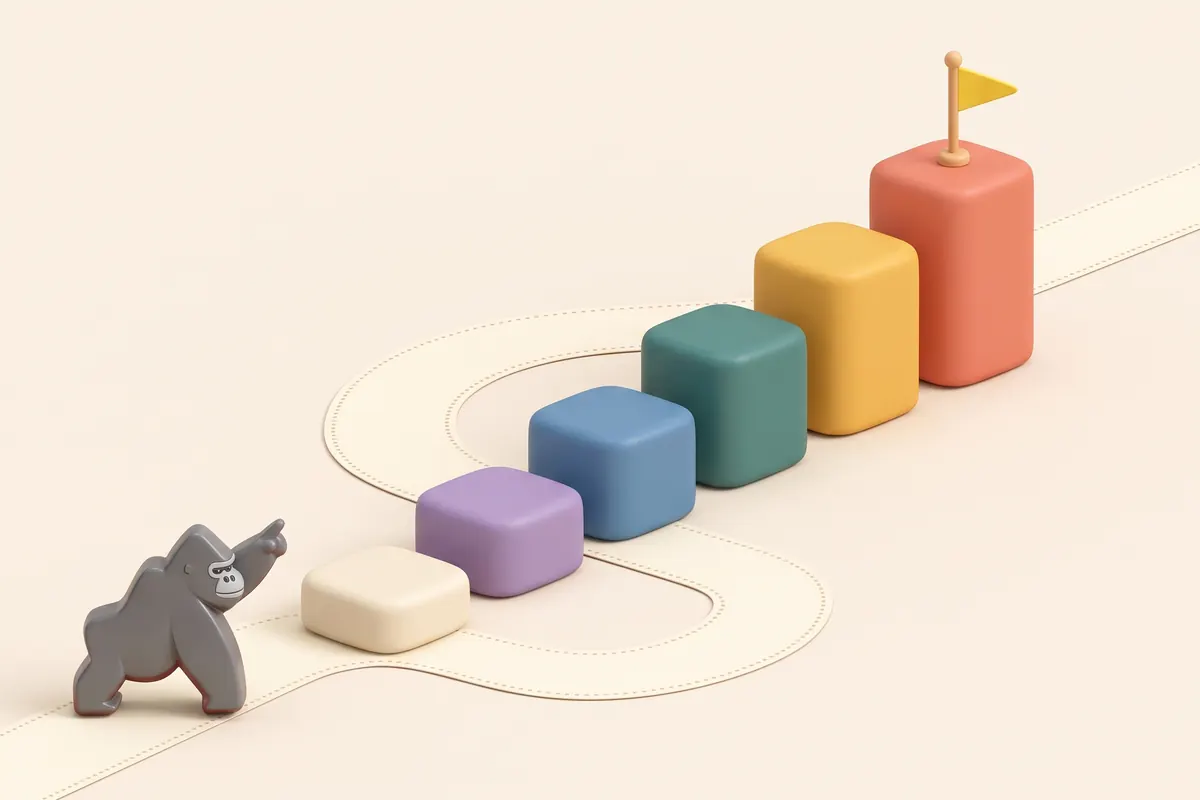
Pre A1 Starters, A1 Movers and A2 Flyers are the Cambridge exams for children, described in our guide to Starters, Movers and Flyers. After them you move on to the Cambridge English Qualifications for teenagers. Many parents know these by their old names, KET, PET and FCE, which are still used everywhere: Cambridge now puts the level first in the name.
| Current name | Old name | CEFR level | Papers and length |
|---|---|---|---|
| A2 Flyers | Flyers (YLE) | A2 | Listening, Reading and Writing, Speaking: about 1 hour 15 minutes |
| A2 Key for Schools | KET | A2 | Reading and Writing (1 hour), Listening (30 minutes), Speaking (8–10 minutes in pairs): about 2 hours |
| B1 Preliminary for Schools | PET | B1 | Reading (45 minutes), Writing (45 minutes), Listening (30 minutes), Speaking (10–12 minutes in pairs) |
| B2 First for Schools | FCE | B2 | Reading and Use of English (1 hour 15 minutes), Writing (1 hour 20 minutes), Listening (about 40 minutes), Speaking (14 minutes in pairs) |
The exams can be taken on paper or on computer: the format and the certificate are the same. After B2 First come C1 Advanced and C2 Proficiency, which do not have a for Schools version.
Are Flyers and KET the same thing?
No, even though they certify the same level, A2. It is the most common doubt, and it has a precise answer: the exam and the way it is marked change, not the language target.
- The content. Flyers speaks the world of children: pictures, colours, illustrated stories. KET for Schools speaks the world of teenagers: messages, emails, notices, short articles, free time.
- The writing. At KET you really write: an email or message of at least 25 words and a short story of at least 35 words based on three pictures.
- The Speaking test. At Flyers you talk on your own with the examiner; at KET you talk in a pair with another candidate, in front of two examiners, and you discuss together. The questions are like this: or
- The result. Nobody ever fails Flyers: children receive shields, up to 5 per paper. KET gives a score on the Cambridge English Scale and a grade: with 120–139 points you get the A2 certificate; with 140–150, Grade A, the certificate shows level B1; between 100 and 119 the certificate shows A1.
In practice, KET is the first “grown-up” Cambridge exam: it measures the same level as Flyers in a teenage format, and whoever passes it with Grade A takes home a B1 certificate already.
What are the routes after Flyers?
Cambridge suggests a simple rule: if a child gets 4 or 5 shields in every skill at Flyers, they are ready to start preparing for the next exam. From there, there are three routes.
| Situation after Flyers | Recommended route | Why |
|---|---|---|
| 4–5 shields in every skill, aged 10–12 | A2 Key for Schools within one or two years | It consolidates A2 in the teenage format and trains writing and paired Speaking. With Grade A, it certifies B1 |
| Almost all 5 shields, reads and writes confidently, aged 12–13 | B1 Preliminary for Schools, even skipping KET | If A2 is already solid, KET risks being a repeat: better to aim for B1 without rushing |
| Uneven shields (for example 5 in listening and 2 in writing) | No exam this year: work on the weaker skills | An exam attempted too early leaves a bad memory; one taken at the right moment builds confidence |
You can skip KET: it is not a requirement for PET. But it is only worth it when reading and writing are really solid, because B1 Preliminary asks for texts of about 100 words and a grasp of longer, more complex texts.
What is the difference between KET, PET and First?
Each step matches a concrete leap in what a teenager can do with English.
- A2 Key (KET): understands common sentences and expressions, introduces themselves, asks for and gives simple information, writes short messages. It is the level that Italy’s national curriculum guidelines set for the end of middle school (age 13).
- B1 Preliminary (PET): the first “independent” level. Understands the main points of clear speech on familiar topics, gets by when travelling, tells stories about experiences and gives reasons for an opinion. In the Speaking test, for example, they describe a photograph for about a minute.
- B2 First (FCE): argues, discusses, writes essays and reviews of 140–190 words, understands films and natural conversation. It is a level often required at university and at work. With Grade A, the certificate shows C1.
To see what A2 means in practice, and how it is measured at school, we wrote a guide to the level of English at the end of middle school.
How long does it take to move from one level to the next?
Cambridge publishes an estimate of the hours of guided learning, that is with a teacher, needed to reach each level starting from zero: about 180–200 hours for A2, 350–400 for B1, 500–600 for B2. These are indications, not promises: every teenager has their own pace.
Let us do the sums. Between A2 and B1 there are, on average, between 150 and 200 guided hours. With two 60-minute sessions a week, over a year of about 30 weeks, that makes 60 hours in the classroom. Counting only the classroom, then, it takes two or three years to go from a freshly reached A2 to a solid B1. That is why what happens outside the classroom matters so much: every extra hour of real English, at home or on holiday, shortens the road.
What is the difference between the for Schools version and the standard one?
None in level or value: the certificate is the same. What changes are the topics, chosen for the interests of school-age teenagers (school, friends, sport) rather than for adults. For a student in middle or secondary school, the for Schools version is almost always the most natural choice.
Does a Cambridge certificate expire?
No. According to Cambridge, the result and the certificate are valid indefinitely, because they show the level reached on a given date. Universities, institutions and employers can, however, decide how far back they will accept it, and some ask for certificates from the last two or three years. A B2 First taken at 15 stays valid, but at 19 a more recent one may be needed: that is why it is better to think of certificates as steps on a pathway, not as an isolated goal.
When does it make no sense to take the exam?
We say this frankly, because we believe it: a Cambridge exam is useful when it comes as a consequence of a pathway, not when it becomes the only goal. It makes no sense to enter a teenager who experiences it as a burden, who is halfway through a particularly tiring school year, or whose preparation boils down to practising the format without the language growing. In those cases, one more year of real English is worth more than a certificate taken in a rush.
How we work at KOKOland after Flyers
At KOKOland, Cambridge exams are taken on site from age 7 and are always optional: the family chooses if and when, and it is the teaching team who suggest the exam when the student is ready. With Junior (ages 11–13) we work towards A2 Key for Schools and B1 Preliminary for Schools; with Teens (ages 14–18) towards B1 Preliminary and B2 First for Schools.
The week has two 60-minute sessions, in groups of up to 6: LANGUAGE LAB, where grammar and vocabulary are built, and SPEAK UP, the speaking workshop with international calls and My Writing Pal. The paired Speaking test of KET and PET, for someone who speaks every week in a group of six, becomes a conversation like any other. At home, with KOKO Play, students have 20-minute sessions in their own world, with exam practice assigned by the teacher: altogether, over 4 hours of English a week. That is how we shorten the time between one level and the next.

Frequently asked questions
What level comes after Flyers?
After A2 Flyers come the Cambridge exams for teenagers: A2 Key for Schools (the old KET), B1 Preliminary for Schools (the PET) and B2 First for Schools (the FCE). Flyers and KET are both CEFR level A2; PET is B1 and First is B2.
What is the difference between Flyers and KET?
They certify the same level, A2, but KET is designed for teenagers: texts for older learners, longer writing, a paired Speaking test and a score on the Cambridge English Scale. Nobody fails Flyers and children receive shields; at KET, with a Grade A, the certificate already shows level B1.
Can you take PET after Flyers and skip KET?
Yes, KET is not compulsory. It makes sense when Flyers went very well, with 4 or 5 shields in every skill, and when reading and writing are solid, because B1 Preliminary asks for texts of about 100 words and broader comprehension.
What is the difference between PET and First?
PET certifies B1, the first independent level: you understand the main points of clear speech and can talk about yourself. First certifies B2: you argue a case, take part in discussions and write texts of 140–190 words. First is longer and considerably more demanding.
How long does it take to go from A2 to B1?
According to Cambridge’s estimates, reaching A2 from scratch takes about 180–200 hours of guided learning and B1 about 350–400. That leaves an average of 150–200 hours between the two levels: with 60 classroom hours a year, two or three years, shortened by English done outside the classroom.
Does a Cambridge certificate expire?
No: Cambridge states that results and certificates are valid indefinitely. Universities, institutions and employers may, however, ask for recent certificates, for example from the last two or three years.
Not sure which exam is the right one?
If you want to know where to start, our online English test gives a first indication in about 20 minutes. For tailored advice, on the Cambridge exams page you can send us a request: we look at level, age and goals together, and tell you which exam to prepare and when.
Sources
- Cambridge English, A2 Key and A2 Key for Schools: exam format
- Cambridge English, B1 Preliminary and B1 Preliminary for Schools: exam format
- Cambridge English, B2 First and B2 First for Schools: exam format
- Cambridge English, A2 Flyers: results and shields
- Cambridge English Support, Guided learning hours
- Cambridge English Support, How long are my results/certificate valid for?
Keep reading


Free Demo Day
Book a free Demo Day.
A real, free lesson in a KOKOland class of children the same age. You stay at the school and we explain the method.