KOKO Primary is KOKOland's English pathway for children aged 7 to 10. Every week there are two 60-minute sessions: dynamic learning, with children of the same level in groups of up to 6 formed by age, and the Creative Lab. From age 7, children can sit the first Cambridge exams on site: Starters, Movers and Flyers.
Get to know the method and find the right pathway.
In brief
KOKO Primary
Age
7 to 10, in three levels: Primary 1 (age 7), Primary 2 (age 8) and Primary 3 (ages 9 and 10)
Every week
120 minutes, in two 60-minute sessions
Dynamic learning
With children of the same level, in groups of up to 6 formed by age
Creative Lab
Mixed ages 7 to 10, in groups of 10 to 16 children, 2 native-speaker or bilingual teachers
Teachers
Native-speaker or fully bilingual only, all certified
Levels
From Pre A1 to A2 on the CEFR, covering all four skills
Cambridge
Starters, Movers and Flyers on site, optional
When
September to June
At home and in the app
Cambridge One (ages 3 to 18, optional) and the KOKOland Live app with the teachers' activities
The level map
The levels: Primary 1, Primary 2 and Primary 3
One level for each year, each with its own goal. In dynamic learning, children are always with peers their own age, and every year they move up a step.
Two 60-minute sessions: 120 minutes of English, every week.
60′
max 6, same age
Dynamic learning
One topic returns in different forms: games, the Cambridge book, songs, stories and roleplay. With native-speaking or bilingual teachers, in same-age groups of up to 6.
60′
10 to 16, mixed ages
Creative Lab
Cooking, gardening, yoga, art, drama, experiments and music: English becomes a way to create and do things together. Mixed-age groups of 10 to 16 children, with 2 native-speaking or bilingual teachers.
15′minutes
the activity changes about every 15′
The same topic. A different game each time.
During 60 minutes of dynamic learning, the activity changes about every 15 minutes. The topic stays the same, the way of exploring it changes, keeping attention high.
Explore an activity
Explore the topic through games and movement.
Stories, words and pictures give shape to new discoveries.
Create something using English.
Try out the words in a real-life situation.
An illustrative example: the order of activities changes from week to week.
At age 7, children start reading and writing in earnest, and school can also bring a fear of getting things wrong. The first thing we do is take that fear away: at KOKOland, English is an enjoyable activity, not something imposed, and every child feels valued. In a group of up to 6, everyone speaks, tries, gets things wrong and tries again, and no one is left behind.
Once a child is hooked, the effort doesn't feel like a chore: grammar arrives as a natural result of everything they do, read and say in English.
Inside our method
How dynamic learning works
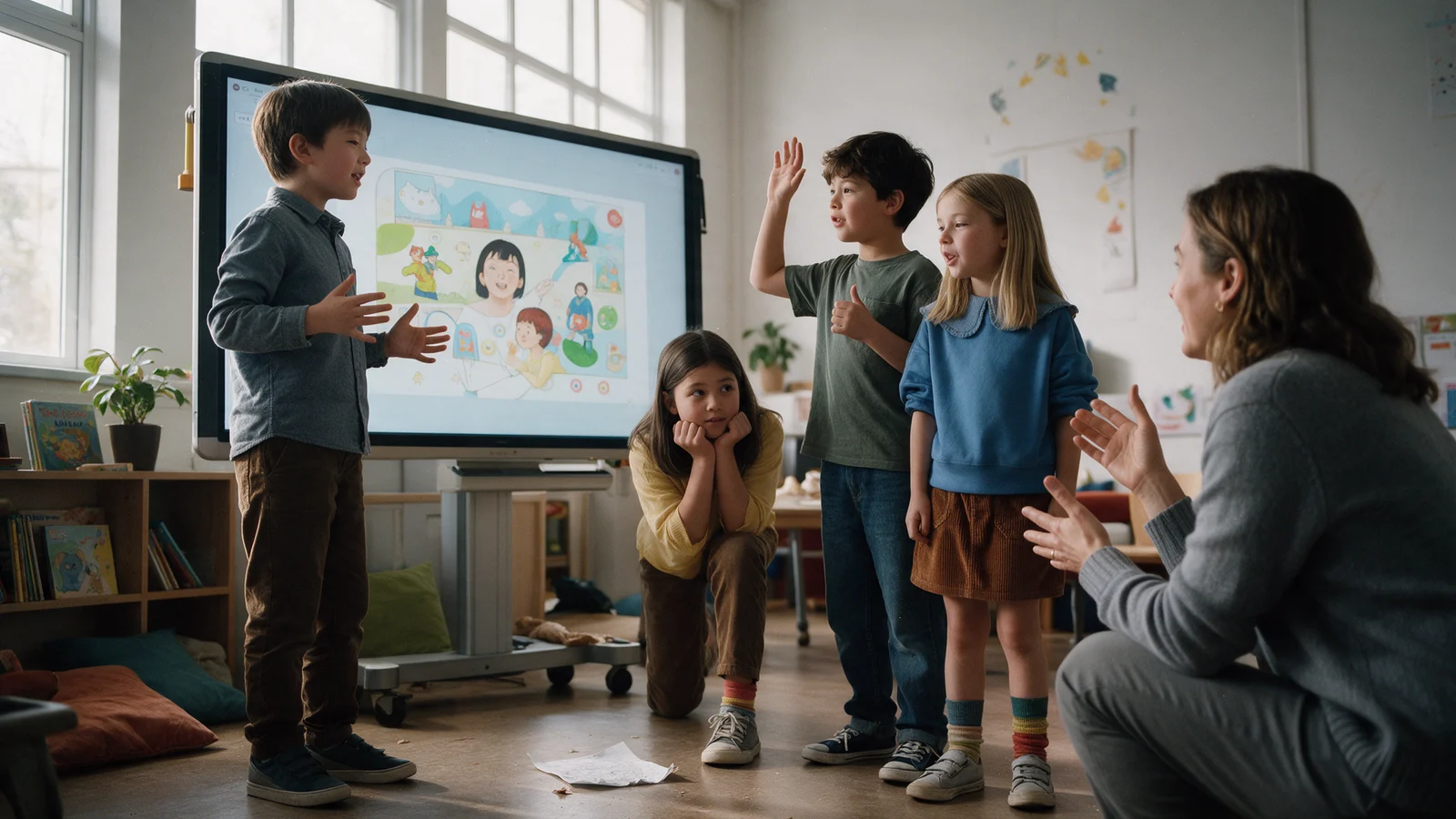
Dynamic learning is the first session of the week: 60 minutes with children of the same level, always split by age: Primary 1 (age 7), Primary 2 (age 8) and Primary 3 (ages 9 and 10). At its heart is the theme of the week, which KOKOland's own method repeats in different forms. Activities change roughly every 15 minutes: there's a lot of repetition, but no one gets bored.
At this age, reading and writing come into play, and the ingredients grow with the children:
Interactive whiteboard games
Designed for children aged 7 to 10: team quizzes, words to drag into place, reading challenges.
The Cambridge book
For reading, listening and writing: rules are discovered through examples, and children work out for themselves how a sentence works.
Role play and dialogues
To put new phrases straight into use in everyday situations.
Songs, chants and movement games
Which fix vocabulary in place and bring energy back to the group.
The change of pace keeps attention high for all 60 minutes: it's designed for today's children, and the goal is to have 100% of their attention, from the first minute to the last.
The method is our own, and it grows with the children: we update it every year. In Primary 1, there's more play and more speaking; from Primary 2 onwards, year after year, reading, writing and Cambridge-style activities take up more space.
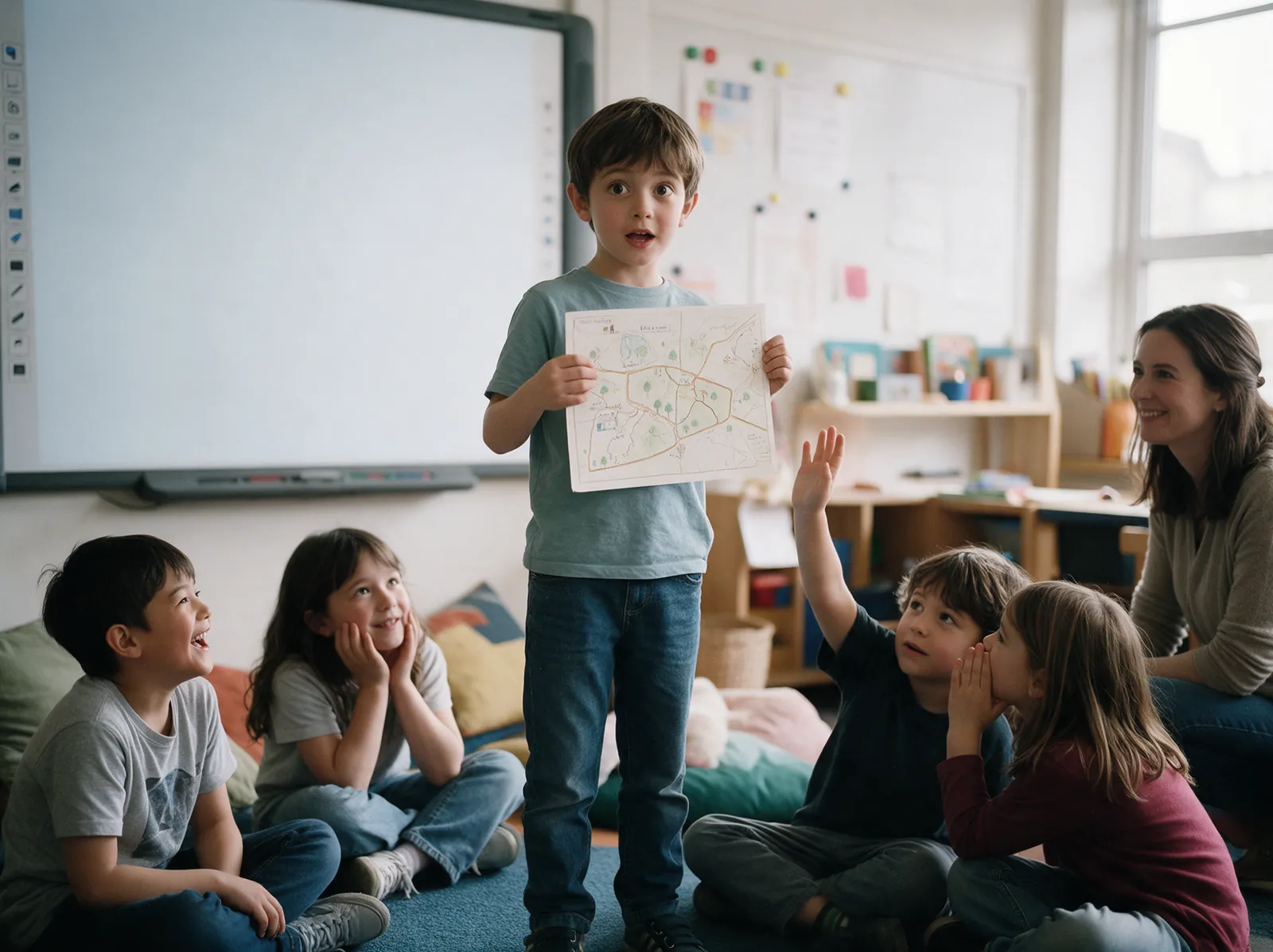
The second session of the week is the Creative Lab: 60 minutes where English is used to make, build, cook, perform. Here, Primary 1, 2 and 3 work together: children aged 7 to 10, in groups of 10 to 16, with 2 native-speaker or bilingual teachers.
Mixed ages are a deliberate teaching choice. In dynamic learning, children stay with their own level; in the Creative Lab, the younger ones learn by watching the older ones, while the older ones explain, guide and consolidate what they know. Everyone experiences the same activity at their own level, and everyone speaks.
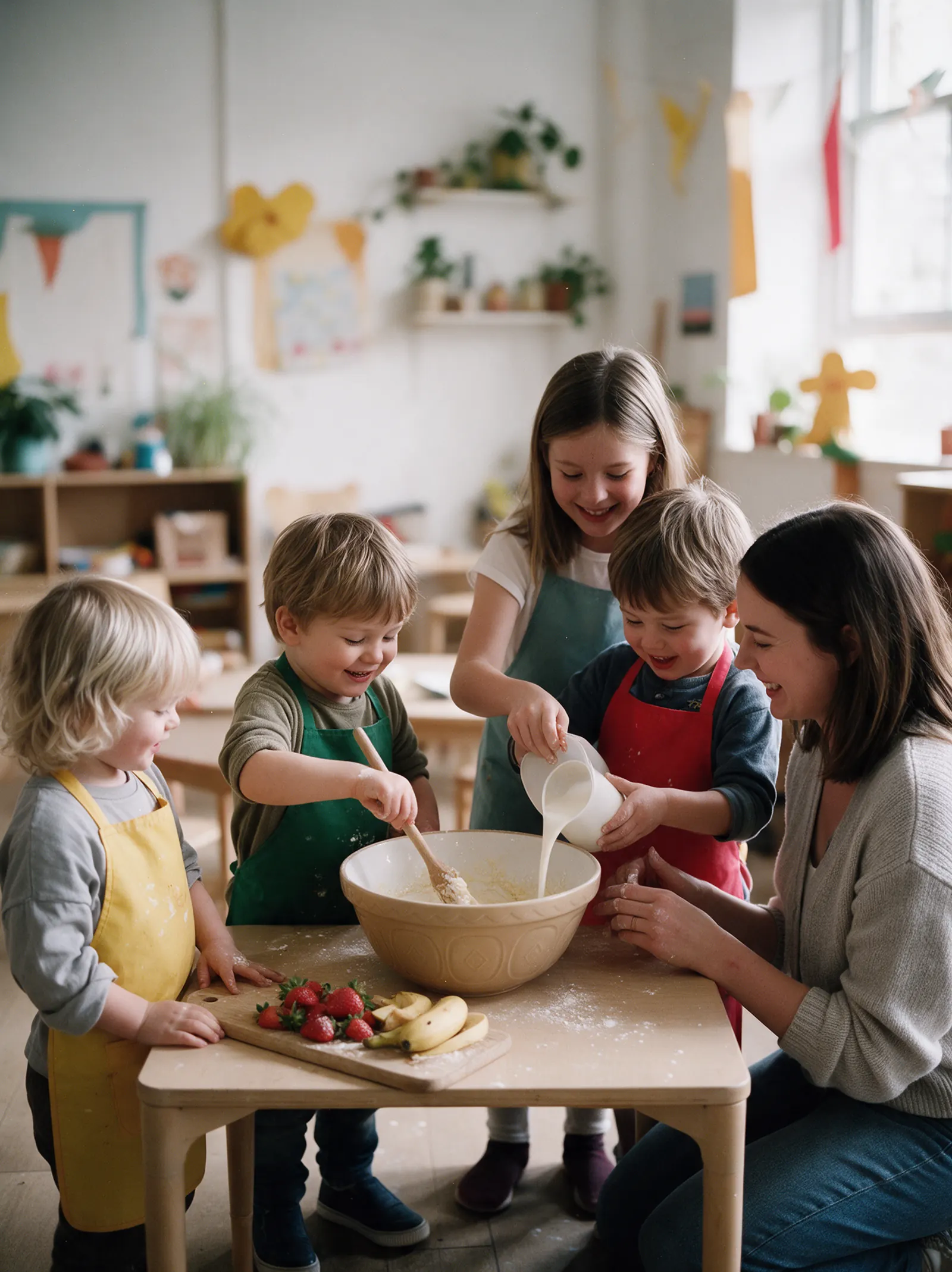
Cooking
Reading the recipe, weighing the ingredients, following the method in English.
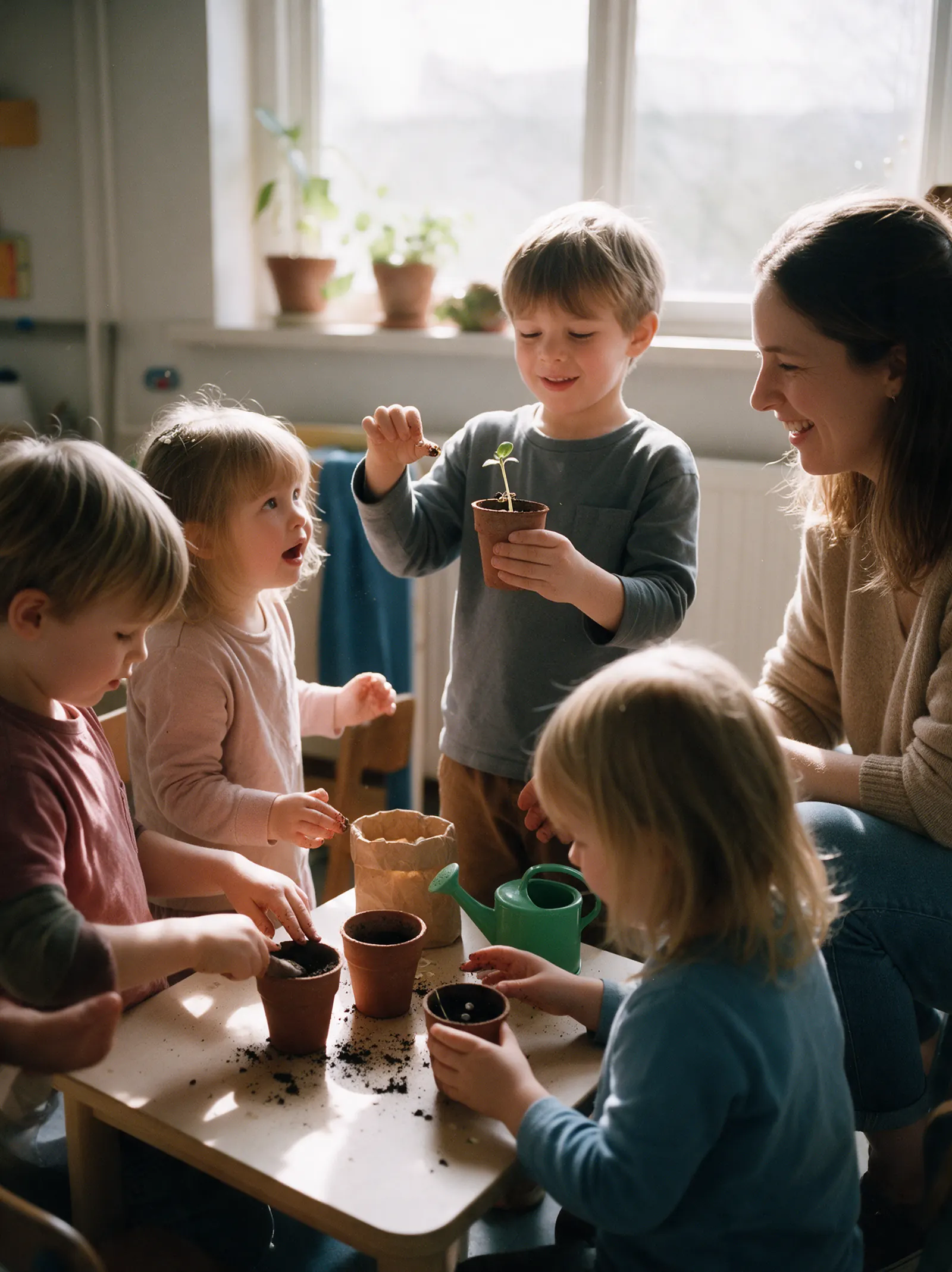
Gardening
Planting, observing, noting down how things grow, week after week.
Yoga and movement
Instructions to catch on the fly, balance, breathing.
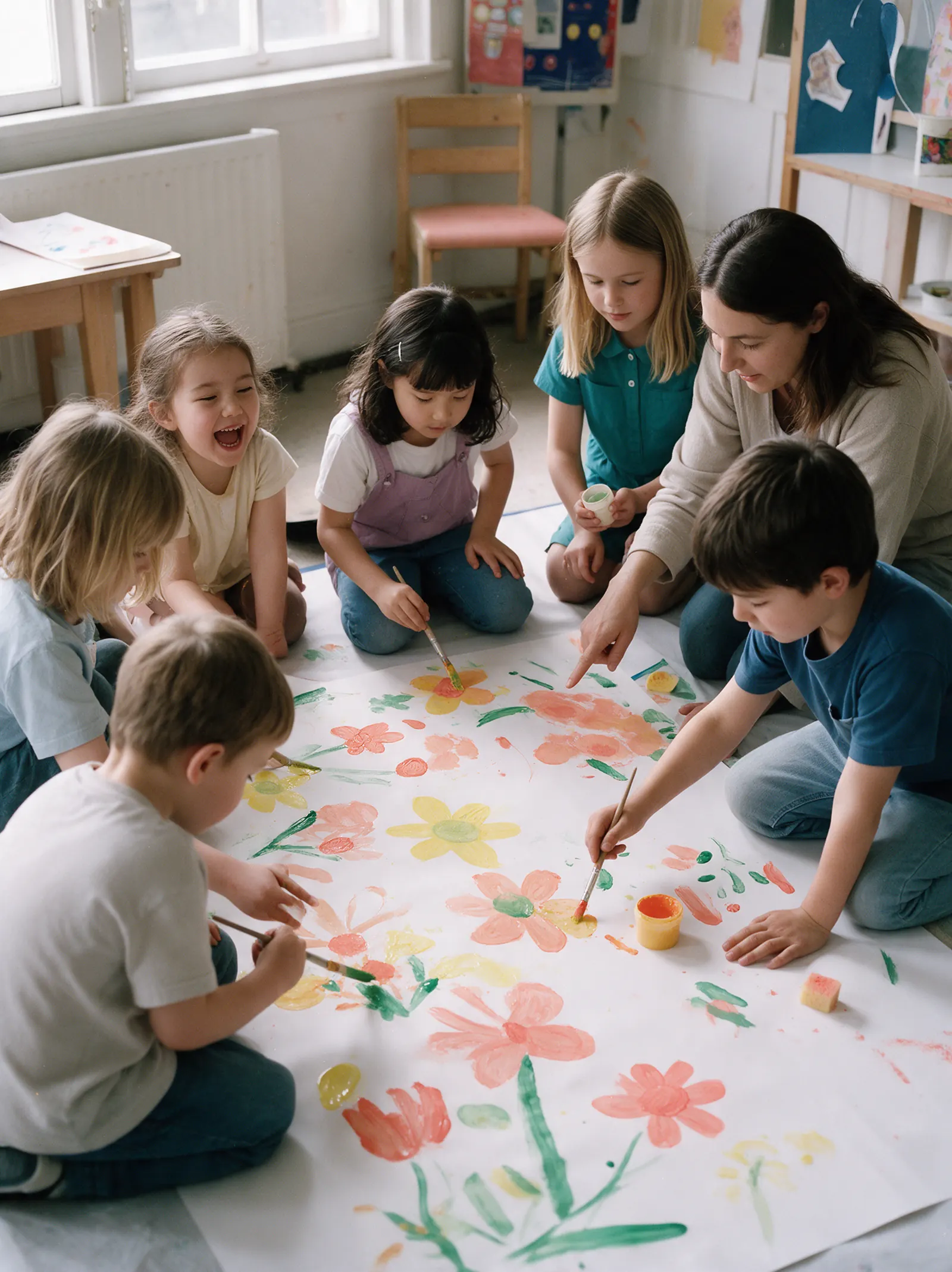
Drama, art and music
Short performances, arts & crafts, songs, storytelling.
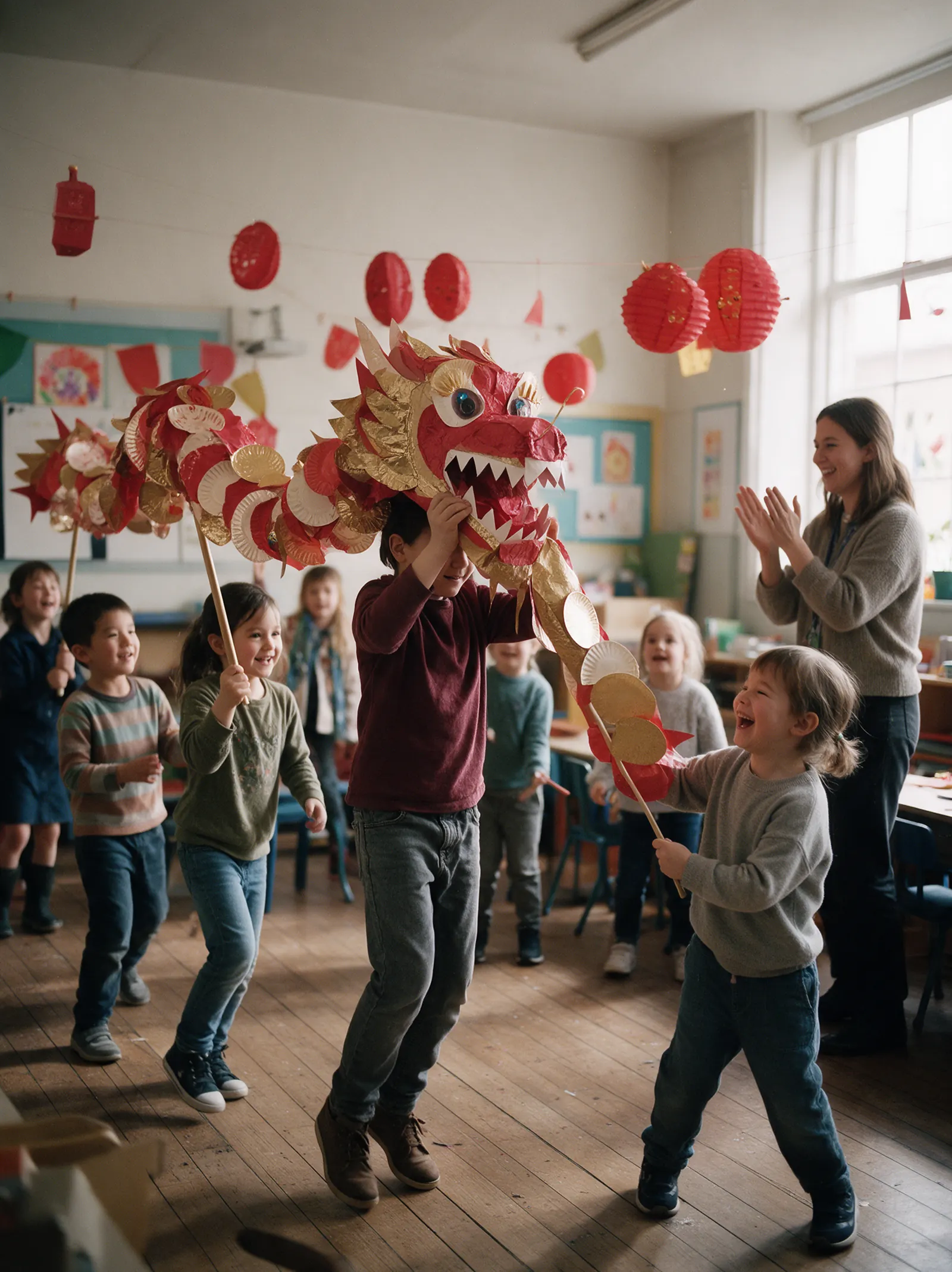
Festivals from around the world
Diwali, Chinese New Year, Christmas: traditions from all over the world, told and experienced in English.
The Creative Lab is included in the pathway and isn't bought separately: it's half of the KOKO Primary experience and one of the hallmarks of KOKOland's own method.
Every year, children work on all four skills: listening, speaking, reading and writing. The goals follow CEFR levels, the Common European Framework of Reference for Languages, and Cambridge exams for primary-school children.
Level
Primary 1 (age 7)
Level goals
Reading and writing words and short sentences; introducing themselves; family, school, animals, food
CEFR and reference exam
Pre A1 · Starters
Level
Primary 2 (age 8)
Level goals
Talking about the past; describing people and places; understanding longer stories; writing short messages
CEFR and reference exam
A1 · Movers
Level
Primary 3 (ages 9 and 10)
Level goals
Making comparisons and giving opinions; reading stories and writing short texts; holding conversations
CEFR and reference exam
A2 · Flyers
The exam is chosen based on the level reached, not just age: our teaching team suggests it when the child is ready.
Cambridge exams on site, from age 7
From age 7, KOKO Primary children can sit the first Cambridge exams: Pre A1 Starters, A1 Movers and A2 Flyers. They're held on site, at the end of the year, in the same classrooms where children learn every week: their comfort zone, with familiar faces and none of the stress of a new place.
Starters, Movers and Flyers have no pass or fail: every child receives a Cambridge certificate, with a score of 1 to 5 shields for each part of the test. The exam isn't the finish line: every child is prepared, the teaching team suggests the level, and the family chooses whether to go ahead, as a chance to test themselves. Everything about Cambridge exams
KOKOland is an independent school, founded in 2022. We're not a franchise: we decide the pathway here, with the children in our classrooms in mind.
Two sessions, two ways of learning
Dynamic learning with children of the same level, and the mixed-age Creative Lab, 60 minutes each.
Native-speaker or fully bilingual teachers only
Certified and trained in the KOKOland method: every week, children hear English with the sounds and rhythms of someone who speaks it every day.
A method of our own
Interactive whiteboards, activities that change every 15 minutes, a mixed-age Creative Lab: this is KOKOland's own method, born in our classrooms.
Resources stay in the classroom
We don't pay royalties or fees to a brand: we reinvest in the method, the classrooms, training and native-speaker teachers.
It's a lean school, and that means more English for every child: two hours a week and a lab that's part of the pathway, all year round.
Families tell their stories
What parents say
Many families stay with us year after year. Many children have been with us since KOKO Stars; some, after four years on the pathway, speak English fluently.
KOKO Primary is one stage on the KOKOland pathway, from age 1 to 18. Children coming from KOKO Stars find the same method, the Creative Lab and the same spaces again; at age 11, they move on to Junior, with LANGUAGE LAB and SPEAK UP, working towards A2 Key and B1 Preliminary for Schools.
KOKO Primary is KOKOland's English pathway for children aged 7 to 10. It has three levels, by age: Primary 1 for age 7, Primary 2 for age 8 and Primary 3 for ages 9 and 10. In dynamic learning, everyone stays with their own level; the Creative Lab is mixed-age.
How does dynamic learning work in KOKO Primary?
The KOKO Primary dynamic learning session lasts 60 minutes, with a maximum of 6 children at the same level. The theme of the week comes back in different forms, with activities changing roughly every 15 minutes: interactive whiteboard games, reading and writing in the Cambridge book, role play, songs. This keeps attention high throughout.
Is the Creative Lab included in the KOKO Primary pathway?
Yes. The Creative Lab is the second weekly session of KOKO Primary and is included in the pathway: it isn't bought separately. It lasts 60 minutes and brings together children aged 7 to 10, in groups of 10 to 16, with 2 native-speaker or bilingual teachers, through cooking, gardening, yoga, drama, art and festivals from around the world, all in English.
Which Cambridge exams can be taken in KOKO Primary?
In KOKO Primary, children prepare for the primary-school Cambridge exams: Pre A1 Starters, A1 Movers and A2 Flyers. At KOKOland, they're sat on site, at the end of the year. There's no pass or fail: every child receives a Cambridge certificate, with a score of 1 to 5 shields for each part.
Are Cambridge exams compulsory in KOKO Primary?
No. In KOKO Primary, the Cambridge exam is optional: every child is prepared during the year, then the teaching team suggests the right level and the family chooses whether to go ahead. The exam isn't the finishing line of the KOKOland pathway, but a chance to test themselves in classrooms the children already know.
Who teaches KOKO Primary?
In KOKO Primary, all teachers are native speakers or fully bilingual, certified and trained in the KOKOland method. The same team follows the children in dynamic learning and in the Creative Lab, and over the summer at KokoCamp.
Can you start KOKO Primary without having done KOKO Stars?
Yes. You can join KOKO Primary even without having previously attended KOKOland. There's a playful, non-evaluative online entry test, taking about 20 minutes, which helps the teaching team understand the starting point. You can also enrol once the school year has started, if there's space in the group.
Where does KOKO Primary take place, and how can I see it in person?
KOKO Primary takes place at both KOKOland schools: in Martina Franca, at Via dei Cedri 3/A, and in Monopoli, at Via Fiume 6, from September to June. To see it in person, you can book the free Demo Day on the Demo Day page of this website, or call the school office or use the Contact us form.
Free Demo Day
Come and see us in person
Book the free Demo Day: about 30 minutes in the classroom, in a small group of the same age, to see how children learn in KOKO Primary. If you then decide to enrol, you have a two-week guarantee: a full refund if it isn't the right fit.