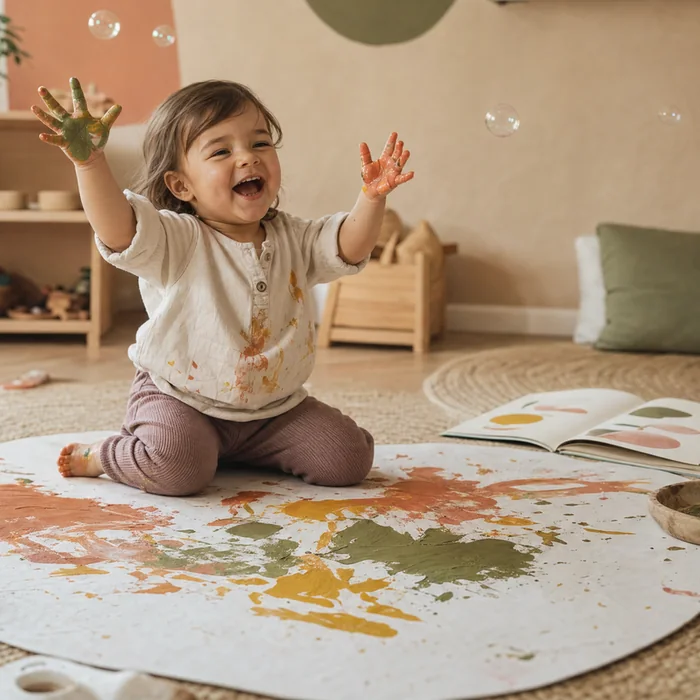
KOKO Babies is the first step on the KOKOland pathway, which guides children and teens all the way to age 18. It isn't a scaled-down version of school: it's a small English-speaking world made of hands, voices and play, where language arrives alongside everyday actions. Eating, saying hello, playing, going to sleep: it all becomes a little adventure, lived out in the classroom with mum or dad.
KOKO Babies is KOKOland's English pathway for children aged 1 and 2. It runs from October to June: one 45-minute session a week and two sensory labs a month, in groups of up to 5 children, each with a parent in the classroom.
Get to know the method and find the right pathway.
In brief
KOKO Babies
Age
1 (Babies 1) and 2 (Babies 2)
Duration
45 minutes per session
Frequency
1 session a week + 2 sensory labs a month
Group
Maximum 5 children, each with a parent in the classroom
Period
October to June
Where
At school, with a parent
Method
With Koko the gorilla and the Koko Friends, built on repetition
At home
No homework, no worksheets, no assessment
The level map
The levels: Babies 1 and Babies 2
One level for each year, each with its own goal. In each session, children are always with peers their own age, and every year they move up a step.
One session a week, together. Plus two sensory labs a month.
45′
every week
Together with mum or dad
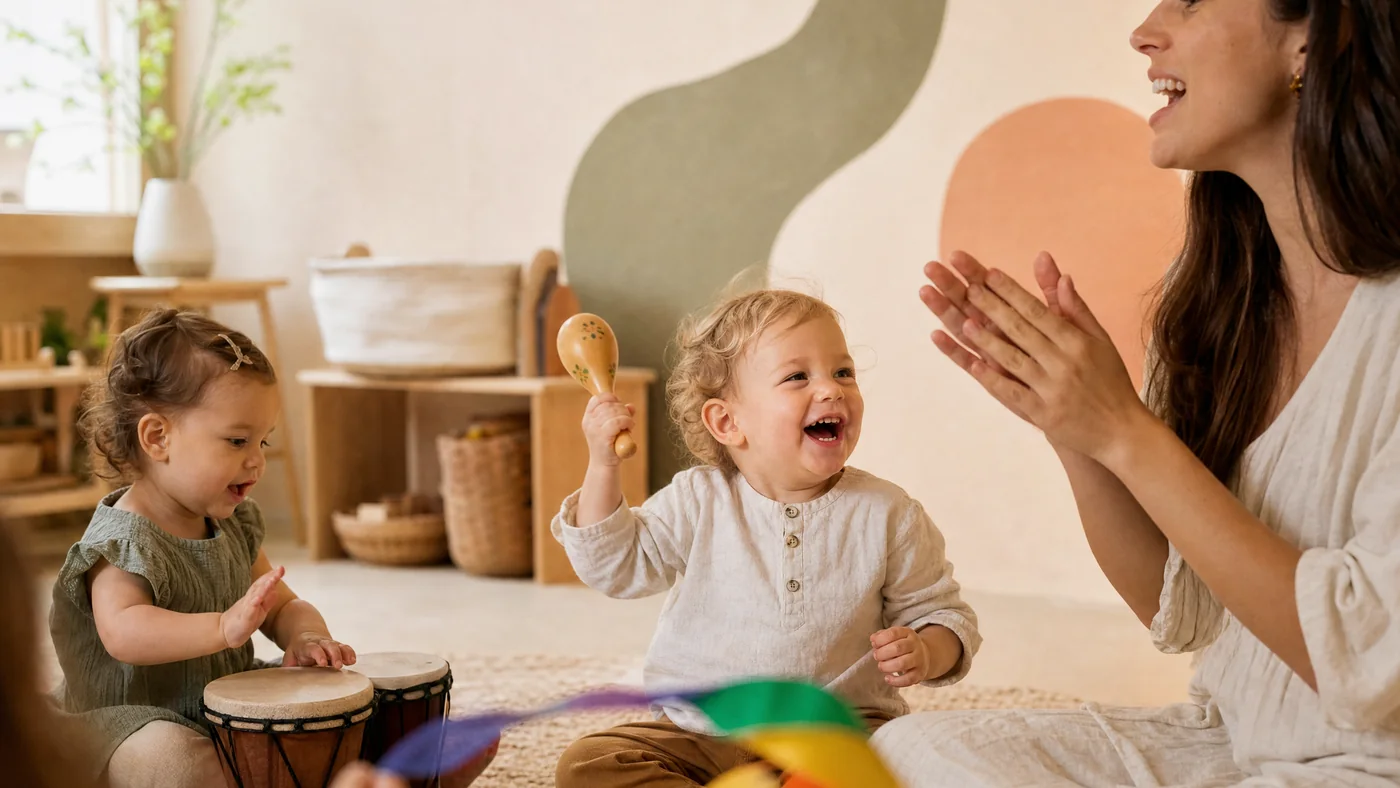
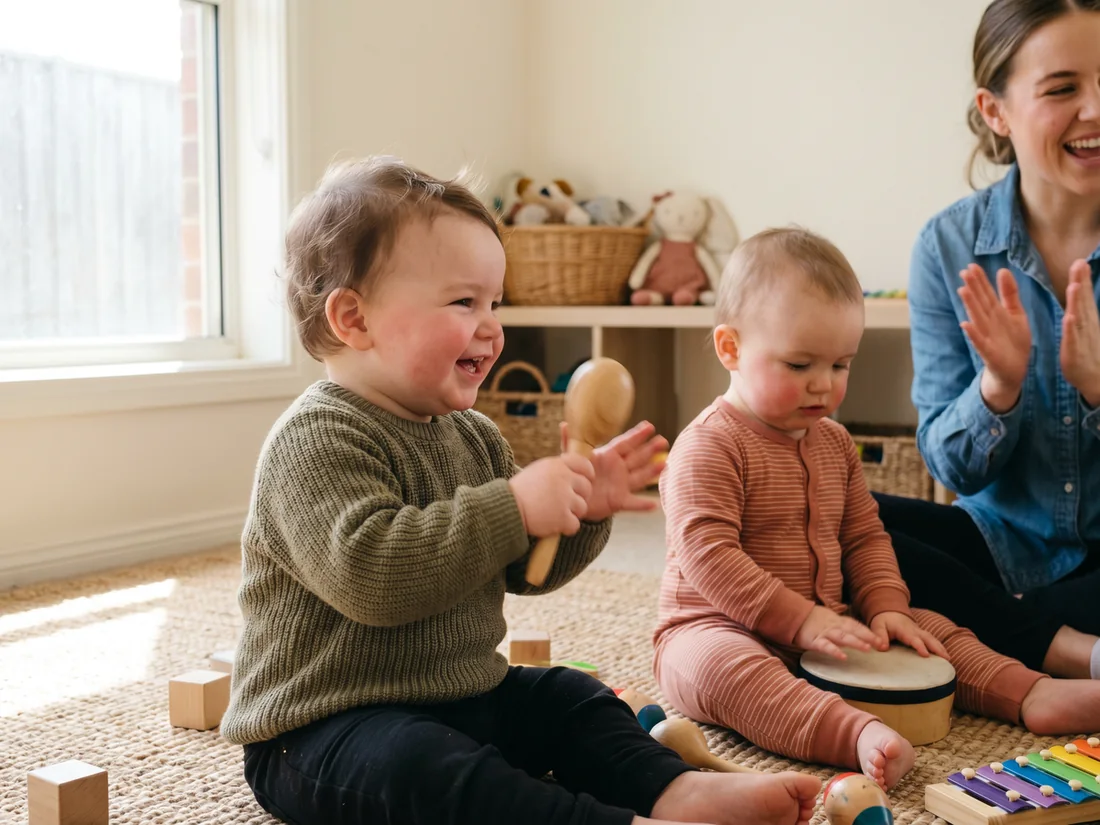
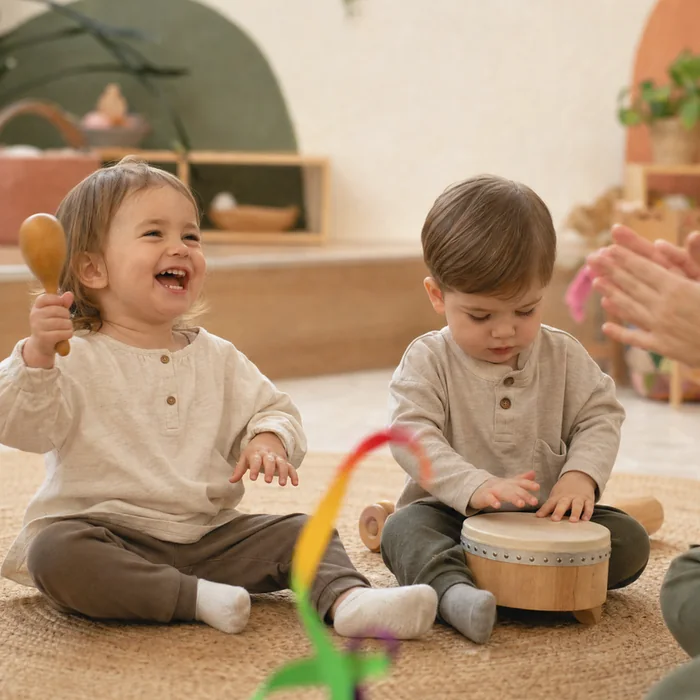
Songs, movement and Koko's stories: 45 minutes with a parent in the classroom, in groups of up to 5 children. From October to June.
2×
a month
Sensory labs
Two experiences a month, alongside the weekly session. Colours, sounds and materials to explore together, always in English.
Little discoveries with Koko
45 minutes to explore together, with a parent always close by. Lively and calm moments alternate, following the children’s pace.
Songs, stories and play follow the children's pace.
Welcome
A familiar hello, songs and time to explore.
Move
Clapping, swaying and playing together with a parent.
Discover
Short stories with Koko and sensory materials to touch, hear and explore.
Play together
Parent–child games bring the words of the day to life.
Say goodbye
A calm moment, a rhyme or a book, and a familiar goodbye song.
In Babies 2, the shape is the same, with more room for the children's own initiative: they look for Koko hidden in a new spot, they choose, they match, they take turns in a little game. The story runs a few minutes longer, and it's up to them to help Koko solve a problem.
The method: Koko, the Koko Friends and repetition
With Koko the gorilla and the Koko Friends, English becomes part of a story. Children help Koko, listen, watch and respond through gestures, movement and play.
Familiar characters, songs and everyday words return from week to week. Repetition helps children recognise what happens next and gradually connect sounds with meaning.
The sensory labs
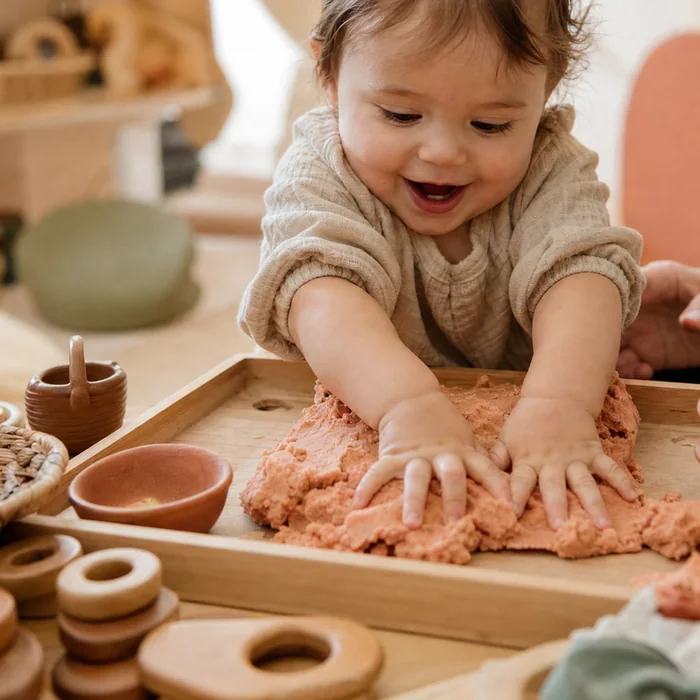
Twice a month, in addition to the weekly session, there's a sensory lab: a special session for discovering English hands-on. A new material to touch and knead, a sound to recognise, a colour to discover. Here too, the parent stays close to the child, and the English words arrive at the exact moment the child touches, listens or looks.
Touch
Listen
Discover colours
Mum or dad, always close by
In KOKO Babies, the parent doesn't just watch from the side: they play, sing and move together with their child. It's 45 minutes of quality time, phone-free. The parent is the safe base children explore from, and if they like, they can take a few songs home to sing together. No homework: at this age, it isn't needed.
Why start so early
In the first years of life, children are especially sensitive to the sounds of the languages they hear. Regular, affectionate contact with English, made up of voices, gestures and play, helps them get used to the sounds and rhythms of a second language, in much the same way they discover their first.
Hearing two languages doesn't cause confusion: research on language development shows that children learn to tell them apart naturally. And we don't promise miracles: at 1 and 2, the goal is to build familiarity, comprehension and a positive bond with the language. The rest comes with time, along the pathway.
Who it's for, and who it isn't
KOKO Babies is designed for:
✓families with children aged 1 or 2 who want to introduce them to English naturally
✓parents who want to be part of it: 45 minutes a week, in the classroom, together
✓anyone looking for small groups, a welcoming environment and a pathway that continues over the years
KOKO Babies isn't the right choice for:
↳anyone looking for a drop-off service: the parent always stays in the classroom
↳anyone expecting worksheets, homework or assessments: there are none at this age
↳anyone who can't attend regularly: week-on-week repetition is at the heart of the method
The journey continues
After KOKO Babies
At age 3, the move to KOKO Stars feels natural: the same world, the same method, the same spaces. From there, the KOKOland pathway guides children, stage by stage, all the way to age 18 and Cambridge certifications.
KOKO Babies welcomes children from age 1: Babies 1 is for 1-year-olds and Babies 2 for 2-year-olds; at age 3, children move on to KOKO Stars. Age is a guide: the group is chosen together with the family, based on the child's development.
What's the difference between Babies 1 and Babies 2?
In Babies 1, at age 1, children listen, watch, touch and move: they're not asked to speak, they respond with their bodies. In Babies 2, at age 2, children understand, choose, take turns and start saying their first words in English, at their own pace. The two KOKO Babies levels are always kept separate.
Does the parent have to stay in the classroom during KOKO Babies?
Yes. In KOKO Babies, every child takes part with a parent, always present in the classroom. The parent doesn't just watch from the side: they play, sing and move together with the child, acting as their point of reference. That's why KOKO Babies isn't a drop-off service, but quality time to be shared.
How long does a KOKO Babies session last, and how often is it held?
A KOKO Babies session lasts 45 minutes and is held once a week, from October to June. Two sensory labs a month are added to this. Every session follows the same structure, with songs, movement, sensory play and a mini-story with Koko the gorilla and the Koko Friends.
What are the KOKO Babies sensory labs?
The KOKO Babies sensory labs are two extra sessions a month, on top of the weekly one, where children discover English hands-on: materials to touch and knead, sounds to recognise, colours to discover. The English words arrive at the exact moment of the experience, with the parent close by.
How many children are there in a KOKO Babies group?
A KOKO Babies group has a maximum of 5 children, each with a parent. It's a deliberately small number: it lets the teacher follow every child, call them by name and adapt the pace of the session. In KOKOland's later pathways, from KOKO Stars onwards, classes have a maximum of 6 children.
Can a 1-year-old really learn English?
Yes, in their own way. At age 1, a child can already start getting used to the sounds of English. In KOKO Babies, the goal is to build listening, comprehension and a positive bond with the language, through songs, gestures and play. First words usually appear in Babies 2, around age 2, at their own pace; the rest grows along the pathway.
Where does KOKO Babies take place, and how can I see it in person?
KOKO Babies takes place at both KOKOland schools: in Martina Franca, at Via dei Cedri 3/A, and in Monopoli, at Via Fiume 6. To see it in person, you can book the free Demo Day on the Demo Day page of this website, or call the school office or use the Contact us form.
Free Demo Day
Come and meet Koko
Book the free Demo Day: about 30 minutes in the classroom, with little ones in arms and Koko ready to say hello.