


Our pathways · Ages 14–18

Teens: English course for young people aged 14 to 18

English through real communication

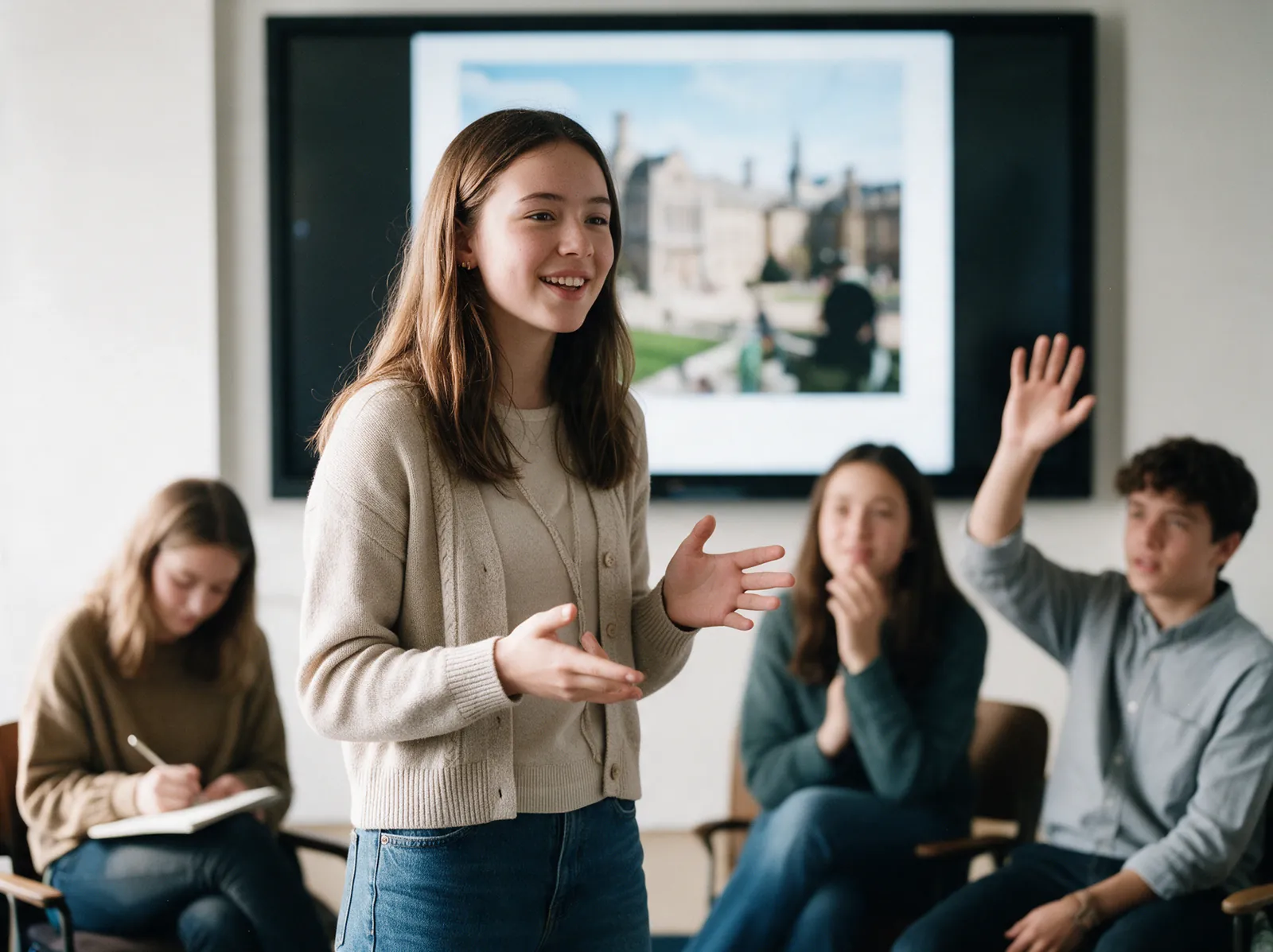
A seventeen-year-old presenting a project in English to the group

Passport

14–18years

At a glance

  • LevelsTeens 1 · Teens 2 · Teens 3
  • 120′a week: LANGUAGE LAB + SPEAK UP
  • Max 6students, in both sessions
  • B1 → B2towards B1 Preliminary and B2 First

Teens

Teens is KOKOland's English pathway for young people aged 14 to 18. Every week there are 120 minutes of English, in two sessions: LANGUAGE LAB and SPEAK UP, always in groups of up to 6. The pathway leads towards B1 Preliminary and B2 First for Schools.

KOKOLANDFREEDEMO DAY

Get to know the method
and find the right pathway.

In brief

Age

14 to 18, throughout secondary school

Every week

Two weekly 60-minute sessions (120 minutes): LANGUAGE LAB — building the language and SPEAK UP — using the language

The two sessions

LANGUAGE LAB and SPEAK UP

Group

Maximum 6 students, in both sessions

Teachers

Native-speaker or fully bilingual only, all certified

Levels

From B1 to B2 on the CEFR, covering all four skills

Cambridge

B1 Preliminary and B2 First for Schools, on site and optional

When

September to June

At home and in the app

Cambridge One (ages 3 to 18, optional) and the KOKOland Live app with the teachers' activities

The level map

The levels: Teens 1, Teens 2 and Teens 3

One level for each year, each with its own goal. In LANGUAGE LAB, children are always with peers their own age, and every year they move up a step.

Scroll and Koko walks with you. Or tap a stop.

Age 18: university, travel, work
  1. Stop 1 of 3

    Teens 1Age 14
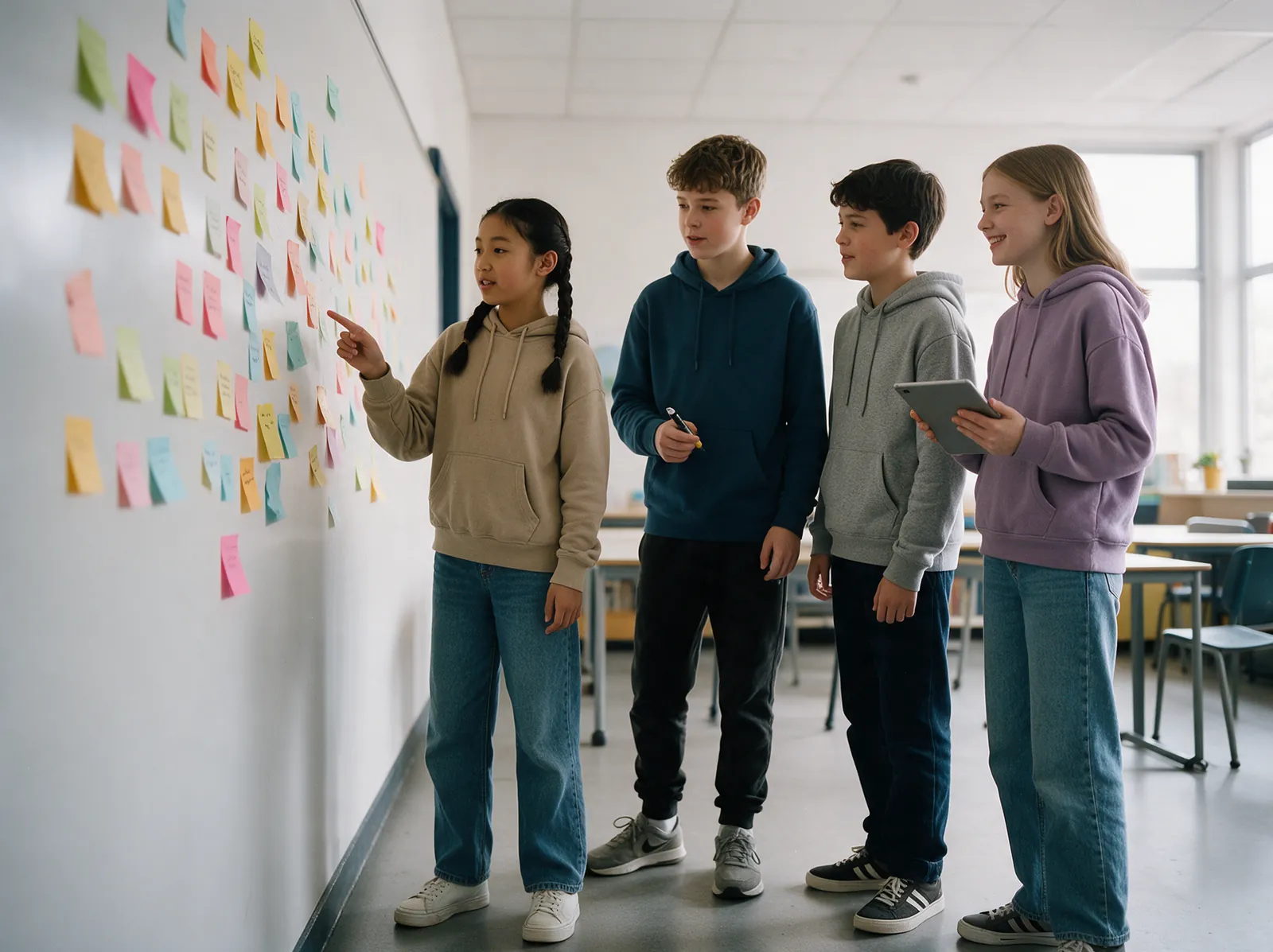
    Fourteen-year-olds preparing a debate in English

    “From knowing how to do, to knowing how to speak your mind”

    This year's goal: expressing their own ideas and standing up for them.

    By the end of the year:

    • Gives their opinion and backs it up
    • Understands real videos, articles and podcasts
    • Writes emails, stories and articles
    • Exchanges views with pupils from all over the world

    Discover Teens 1
  2. Stop 2 of 3

    Teens 2Age 15

    Fifteen-year-olds discussing in English

    “The year of independence”

    This year's goal: independent English, in and out of the classroom.

    By the end of the year:

    • Discusses and debates school, society and the future
    • Writes structured, persuasive texts
    • Follows real conversations without getting lost
    • If they want to, earns a Cambridge certification recognised worldwide
    Discover Teens 2
  3. Stop 3 of 3

    Teens 3Ages 16 to 18

    A seventeen-year-old presenting a project in English

    “English for the future: study, travel, work”

    This year's goal: arriving ready for university, travel and work.

    By the end of the year:

    • Builds an argument and holds their own in a discussion on complex topics
    • Writes essays, reviews and reports
    • Understands English in all its forms
    • If they want to, aims for the Cambridge certification required by many universities
    Discover Teens 3
  4. See the full pathway, ages 1 to 18

A typical week

Two 60-minute sessions: 120 minutes to have your say in English.

60′

max 6 students

LANGUAGE LAB — building the language

Grammar and vocabulary in context: conversation, pair and group activities, language games, problem solving and Cambridge preparation.

60′

max 6 students

SPEAK UP — using the language

Use English to discuss, express opinions, collaborate and handle real situations, building confidence, fluency and independence.

Two 60′ sessions (120′): LANGUAGE LAB + SPEAK UP

Build the language. Use it together.

Conversation, pair and group activities, language games and problem solving: grammar and vocabulary take shape in a practical context, alongside Cambridge preparation.

Explore an activity

Listen, express opinions and exchange ideas in English.

An illustrative example: the order of activities changes from week to week.

Discover dynamic learning

English through real communication

English through real communication: English becomes a tool for self-expression. Students use English to discuss, express opinions, exchange ideas, solve problems and handle real situations. Speaking, listening, vocabulary and grammar develop through communicative activities, group work and Cambridge preparation, building confidence, fluency and independence.

DISCUSS • EXPRESS • THINK • COMMUNICATE

The KOKOland method

Inside our method

LANGUAGE LAB — building the language

The first 60-minute session develops grammar and vocabulary in a practical context, through communicative activities and Cambridge preparation.

What this looks like in practice:

Advanced grammar

All verb tenses, conditionals, the passive voice, reported speech, phrasal verbs, always embedded in real texts.

Vocabulary and register

Collocations, synonyms, the difference between formal and informal English, current topics.

Reading, Use of English and listening

Modelled on B1 Preliminary and B2 First for Schools, with exam strategies and timing.

Writing

Essays, articles, reviews, emails and letters, formal and informal: the text types required by the exams, written, corrected and rewritten to a higher standard.

Even at 17, games still work: quizzes, team challenges and interactive whiteboard games designed for their age reinforce what's just been studied and keep attention high throughout the 60 minutes. The method is updated every year, with topics chosen partly together with the students.

60′The second session of the week

A voice that travels

SPEAK UP — using the language

In the second 60-minute session, students use English in conversation, pair and group activities and problem solving, building confidence and independence.

Conversation

Use English to understand and interact.

Pair and group work

Collaborate and exchange ideas.

Problem solving

Reason together and communicate solutions.

Cambridge preparation

Develop communicative skills.

With a maximum of 6 students per group, everyone speaks at length: it's exactly the practice needed for an oral exam, a year abroad or an interview.

Milestones, year after year

What students learn in Teens

The goals follow CEFR levels, the Common European Framework of Reference for Languages, and the Cambridge for Schools certifications. Students work on all four skills: listening, speaking, reading and writing.

Stage

Ages 14 and 15

Skills and goals
Understanding the main points of texts and talks; talking about experiences and plans; justifying an opinion; writing clear emails, articles and stories
CEFR and reference exam
B1 · B1 Preliminary for Schools

Stage

Ages 16 to 18

Skills and goals
Understanding complex texts, films and articles; discussing current affairs and abstract topics; writing essays, articles and reviews; speaking naturally
CEFR and reference exam
B2 · B2 First for Schools

B2 is a level often required by universities and study-abroad programmes: reaching it during secondary school means having a head start.

Cambridge: B1 Preliminary and B2 First for Schools

B1 Preliminary for Schools and B2 First for Schools are Cambridge certifications recognised internationally, useful for university, study-abroad programmes and work. B2 First has four papers: Reading and Use of English, Writing, Listening and Speaking. At KOKOland, they're sat on site, at the end of the year, in classrooms the students already know: their comfort zone.

The certificate records the level reached: with an excellent result, B2 First also certifies C1 level. Everyone is prepared; the teaching team suggests the level, and then students and families choose whether to sit the exam. It isn't the finish line of the pathway: it's a way to test yourself. Everything about Cambridge exams

An independent school and its method

Why it's different from a franchise course

KOKOland is an independent school, founded in 2022. In secondary school, what counts is time spent actually using English, and a group where everyone has room to grow.

Two sessions a week

LANGUAGE LAB and SPEAK UP, 120 minutes in total, always in groups of up to 6.

Native-speaker or fully bilingual teachers only

Certified and trained in the KOKOland method: it's our standard, with no exceptions.

English beyond the classroom

Calls with partner schools abroad and My Writing Pal: students use the language with peers from other countries.

Resources stay in the classroom

We don't pay royalties or fees to a brand: we reinvest in the method, the spaces, training and our teachers.

A lean school means more attention for every student, in a group where everyone speaks.

Families tell their stories

What parents say

Many families stay with us year after year. Some students have been with us since they were younger and, after four years on the pathway, speak English fluently.

Parents share their experiences in the video “Mums tell their stories” on our YouTube channel, and in the Google reviews of our two schools: the original school and the new one.

Mums talk about KOKOland

The journey continues

From KOKO Babies to Teens

Teens is the final stage of the KOKOland pathway, which starts at age 1 with KOKO Babies. Students coming from Junior find the same method and team again; the goal is to reach 18 bilingual, confident and certified. In the summer, from age 10 to 18, there are also study holidays in England with the KOKOland team.

Every question matters

Frequently asked questions about Teens

What age is Teens at KOKOland for?

Teens is KOKOland's English pathway for young people aged 14 to 18, throughout secondary school. You can join at any age within this range, even without having previously attended KOKOland: a non-evaluative online entry test helps choose the right group by age and level.

How is the week structured in Teens?

Teens has two weekly 60-minute sessions (120 minutes): LANGUAGE LAB — building the language and SPEAK UP — using the language.

What is SPEAK UP in Teens?

In the second 60-minute session, students use English in conversation, pair and group activities and problem solving, building confidence and independence.

Which Cambridge exams are prepared for in Teens?

In Teens, students prepare for B1 Preliminary for Schools and B2 First for Schools, Cambridge certifications recognised internationally. At KOKOland, exams are sat on site, at the end of the year. Preparation is built into the two weekly sessions, with official materials and mock exams.

What is the B2 First for Schools certification for?

B2 First for Schools is the Cambridge certification for B2 level on the CEFR, designed for school-age students. It certifies confident English, useful for university, study-abroad programmes and work. At KOKOland, it's prepared for within the Teens pathway and can be sat on site.

Are Cambridge exams compulsory in Teens?

No. In Teens, the Cambridge exam is optional: every student is prepared during the year, the teaching team suggests the right level, and then students and families choose whether to go ahead. At KOKOland, the exam isn't the finishing line of the pathway: it's a way to test yourself and gain a recognised result.

Who teaches Teens, and how many students are in a group?

In Teens, all teachers are native speakers or fully bilingual, certified and trained in the KOKOland method. Every group has a maximum of 6 students, in both LANGUAGE LAB and SPEAK UP: this way, everyone speaks at length and gets personal feedback on pronunciation, writing and argument.

Where does Teens take place, and how can I find out more about the pathway?

Teens takes place at both KOKOland schools: in Martina Franca, at Via dei Cedri 3/A, and in Monopoli, at Via Fiume 6, from September to June. To find out more about the pathway, you can book the free Demo Day on the Demo Day page of this website, or call the school office or use the Contact us form.

Free Demo Day

The first step is getting to know each other

Book the free Demo Day: about 30 minutes in the classroom with students of the same age, to see how Teens works. If you then decide to enrol, you have a two-week guarantee: a full refund if it isn't the right fit.

Want to know if Teens is the right pathway?

Leave your details and we'll call you back to arrange a visit or a place at the next free Demo Day.

Updated on 25 September 2026