
Cambridge exams for children: a guide to Starters, Movers and Flyers
25 September 20265 min read
In brief
- Pre A1 Starters, A1 Movers and A2 Flyers are the three Cambridge English exams for children in primary and lower secondary school, running from Pre A1 to A2 level.
- No one fails: every child receives a certificate with up to 5 shields for each of the three papers — listening, reading and writing, and speaking.
- At KOKOland, exams are sat on-site, at the end of the year, from age 7: preparation is part of the pathway, while the choice of whether to sit the exam stays with the family.
“What level is Starters?”, “What comes after Flyers?”, “Can children fail?” The first two show up among the questions Google suggests to anyone searching for Cambridge exams for children; we hear the third often from parents. We’ve gathered the answers, with official data from Cambridge English.
Cambridge certifications for children, now called Cambridge English Qualifications for Young Learners and often referred to by the acronym YLE, are three progressive exams designed for primary and lower secondary school: Pre A1 Starters, A1 Movers and A2 Flyers. The name of each exam contains its level on the Common European Framework of Reference for Languages (CEFR).
The three levels in brief
Pre A1 Starters
- Level: Pre A1, the first step.
- Papers: Listening (about 20 minutes), Reading and Writing (20 minutes), Speaking (3–5 minutes).
- Total length: about 45 minutes.
A1 Movers
- Level: A1, the target set by Italian schools for the end of primary school.
- Papers: Listening (about 25 minutes), Reading and Writing (30 minutes), Speaking (5–7 minutes).
- Total length: about an hour.
A2 Flyers
- Level: A2, the target set for the end of lower secondary school.
- Papers: Listening (about 25 minutes), Reading and Writing (40 minutes), Speaking (7–9 minutes).
- Total length: about an hour and 15 minutes.
Speaking is the shortest paper, and it’s done one-to-one: one child, one examiner. Before going in, an assistant explains to the child, in their own language, what will happen. In Starters, for example, the child points to objects in a large illustration, moves small cards around the scene, and answers simple questions, including about themselves. The format is always the same, so a well-prepared child finds no surprises.
The other papers are designed for children too: colouring, matching, spot-the-difference. In the Listening paper, children colour things in, and Cambridge asks candidates to bring coloured pencils.
Shields and certificate: how to read the results
In the Starters, Movers and Flyers exams, there’s no pass or fail. Every child who completes the exam receives a certificate, with a score in shields for each of the three papers: Listening, Reading and Writing, Speaking. The maximum is 5 shields per paper, so 15 in total. One shield means the child completed the paper but still has plenty of room to improve; five shields mean it went very well.
On the back of the certificate you’ll find how the score maps to CEFR levels, and results are also reported on the Cambridge English Scale. The certificate usually arrives three or four weeks after the exam.
What age are they for
Cambridge designs these exams for children in primary and lower secondary school. More than age, what matters is level: the right exam is the one a child is ready for. At KOKOland, children work with Cambridge materials as early as KOKO Stars, from ages 3 to 6, with no exams. From age 7, with KOKO Primary, they can sit Starters, Movers and Flyers on-site, one at a time, when the teaching team sees they’re ready.
What these levels mean compared with school targets
For Italian schools, the English target is level A1 by the end of primary school and A2 by the end of lower secondary school. According to INVALSI, in 2026, 91% of Italian pupils reached A1 in reading and 85% in listening by the last year of primary school. In lower secondary school, A2 in listening was reached by 70% of pupils nationally and 62% in Puglia.
A good result in Movers, which certifies A1, therefore matches the primary school target; Flyers, at A2, matches the lower secondary target. There’s no need to rush: what matters is arriving there solidly, especially in listening and speaking.
How we prepare for exams at KOKOland
For us, the exam isn’t the destination, but a milestone. Children are prepared regardless, as part of the pathway, and it’s the parents who choose whether to sit it. At the end of the year, the exam takes place in KOKOland classrooms, in surroundings the children already know: it’s the calmest way to face it.
- Speaking happens every session. In groups of up to 6, every child speaks, every week: Speaking becomes a conversation like any other.
- Cambridge materials from an early age. Cambridge books and activities are part of the pathway from age 3.
- The format becomes familiar. Colouring, matching, listening and answering: the exam activities are already familiar long before exam day.
A tip for home: talk about the exam as a challenge to approach with curiosity, and celebrate the shields, whatever the number. The certificate is a snapshot of a moment, not a judgement of the child.
Frequently asked questions
What level is Starters?
Pre A1 Starters corresponds to the Pre A1 level of the Common European Framework of Reference for Languages: it’s the first of the three Cambridge exams for children. It lasts about 45 minutes, split into three papers (Listening, Reading and Writing, Speaking), and covers everyday English on topics familiar to children.
Can children fail the Starters, Movers and Flyers exams?
No. There’s no pass or fail in the Cambridge exams for children: everyone receives a certificate with a score of 1 to 5 shields for each paper. The system is designed to celebrate what a child can already do, and to show, paper by paper, where they can still improve.
What comes after Flyers?
After A2 Flyers, the Cambridge pathway continues with the “for Schools” exams, designed for teenagers: A2 Key for Schools, B1 Preliminary for Schools and B2 First for Schools. At KOKOland, Junior and Teens students prepare for these levels, always sitting the exam on-site and always by choice.
Let’s talk in person
Want to understand where the child stands and which exam is worth preparing for? Come to Demo Day, our free, roughly 30-minute open day at our Martina Franca and Monopoli schools: children take part in an English activity, and you can talk to us about levels and exams. Full details are on the Cambridge Exams page.
Sources
- Cambridge English, Pre A1 Starters
- Cambridge English, Pre A1 Starters exam format
- Cambridge English, A1 Movers exam format
- Cambridge English, A2 Flyers exam format
- Cambridge English, Pre A1 Starters: Frequently Asked Questions
- Cambridge English, Qualifications for young learners
- Cambridge English, Pre A1 Starters, A1 Movers and A2 Flyers: Handbook for teachers (2024)
- Cambridge English, A2 Key for Schools
- INVALSI, 2026 national report: press release of 16 July 2026
- INVALSI, 2026 INVALSI test report (regional English-language data)
Keep reading


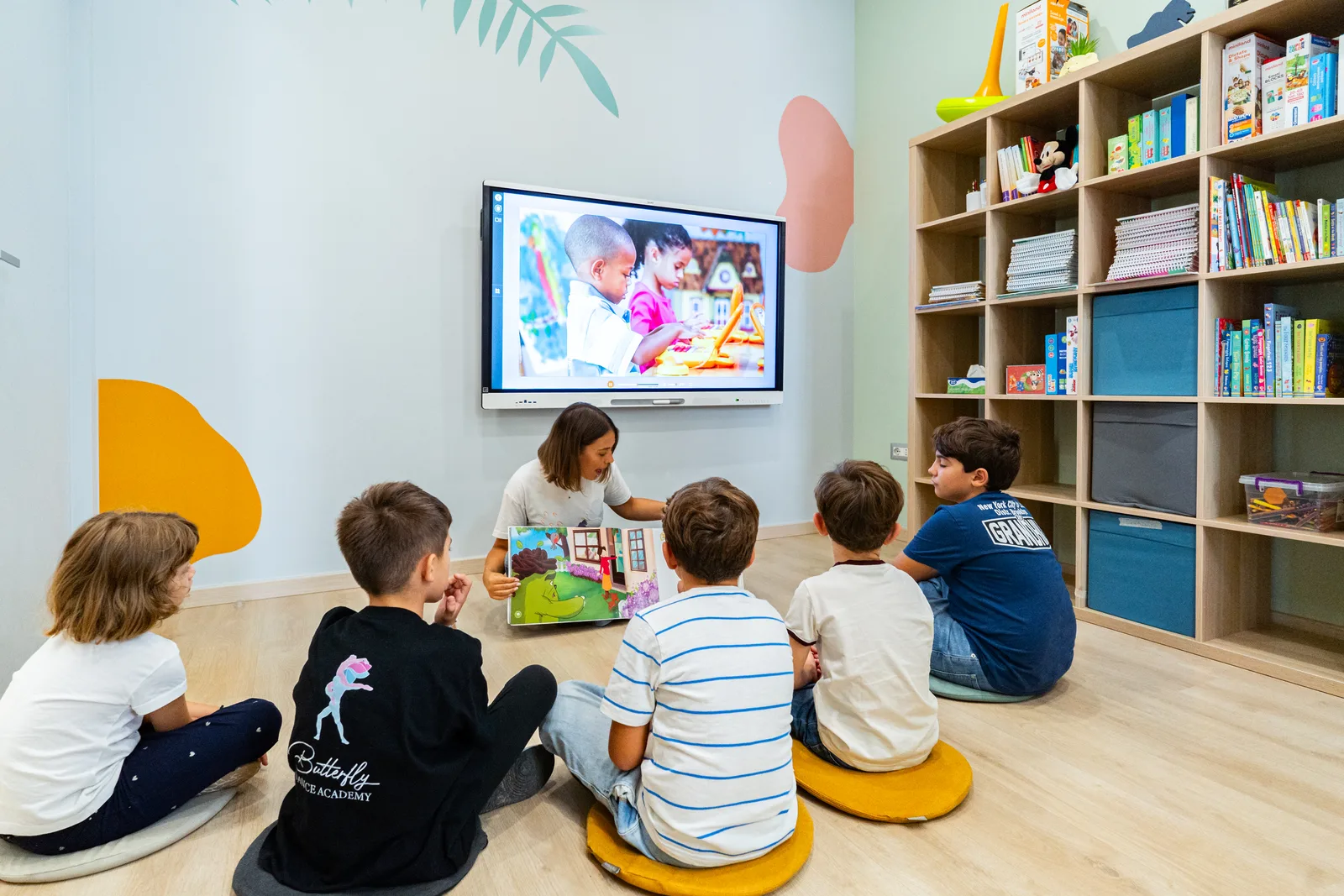
Free Demo Day
Try a free Demo Day.
A dynamic learning activity in English, in a small group of children their own age, with the teaching team.