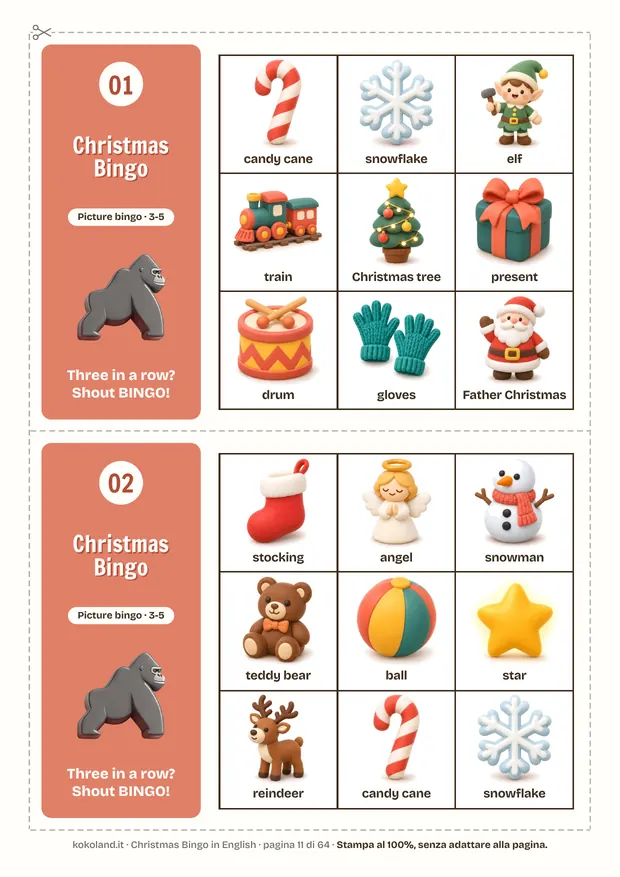
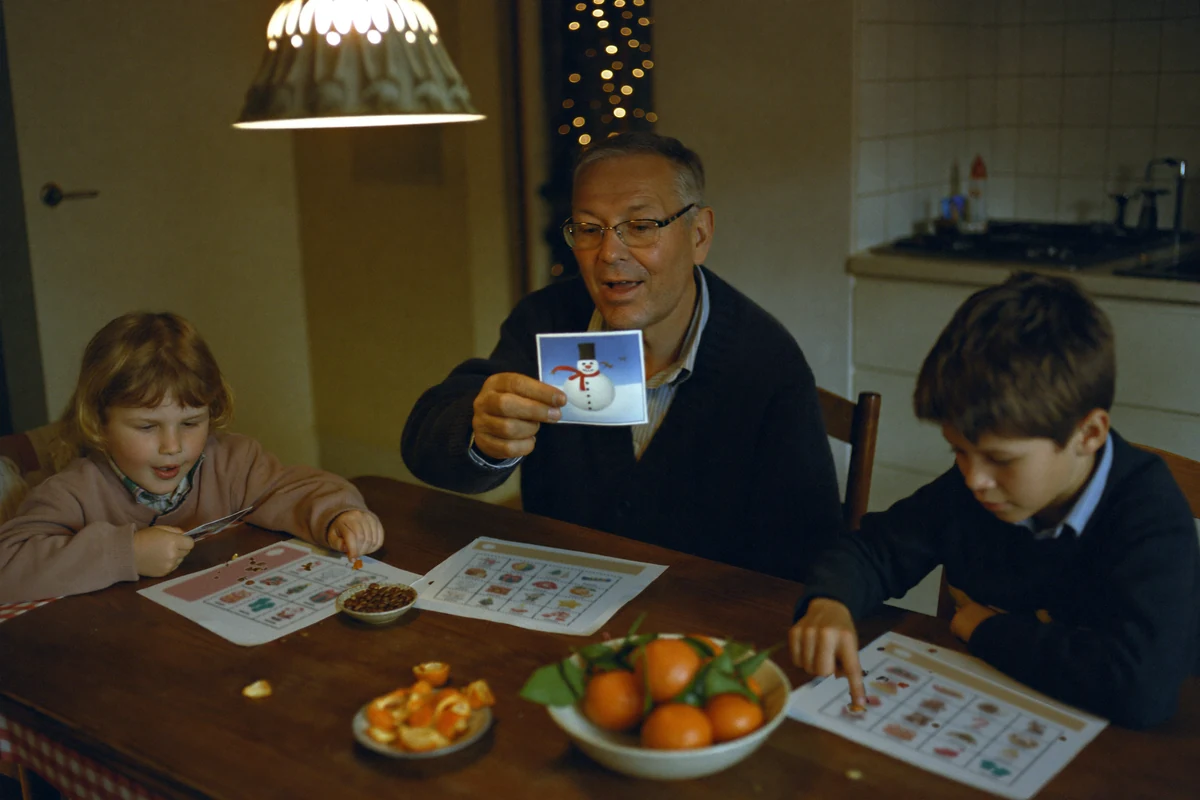
Christmas bingo is a picture bingo: the caller draws a card and says the word, players cover the picture, and the first to finish a line shouts “Bingo!”.
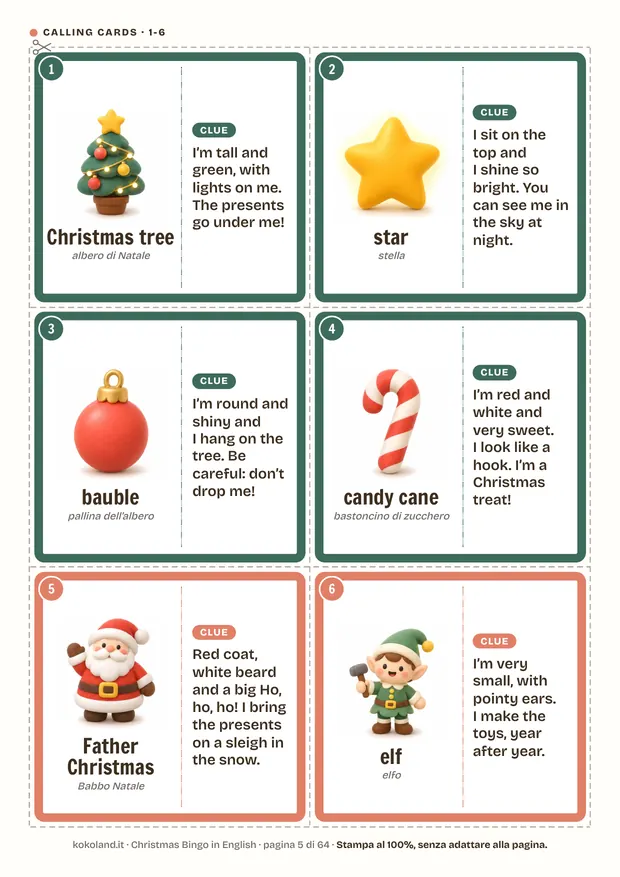
The PDF has 50 different cards in three levels for ages 3 to 12, plus 36 calling cards, each with a riddle in English.
Every word and phrase has an audio button with a British voice, so the game works even if the grown-up is not confident in English.
There are three activities for before and after the game at home, and a 45-minute lesson plan for the classroom.
Bingo makes children hear the same words again and again, and each time they have a reason to listen, because that picture might be on their card. A game takes a few minutes, you can start again straight away, and siblings of different ages, grandparents and a whole class can play together.
Five phrases to start playing
the caller’s signal that the game is starting
how each card is called
what players say when they cover a picture
shouted when a line is complete
before anyone celebrates
Say them the same way at the same moment of every game, and after a couple of rounds the children start saying them. We call him Father Christmas, as in the UK; Santa works just as well.
What is Christmas bingo and how do you play it?
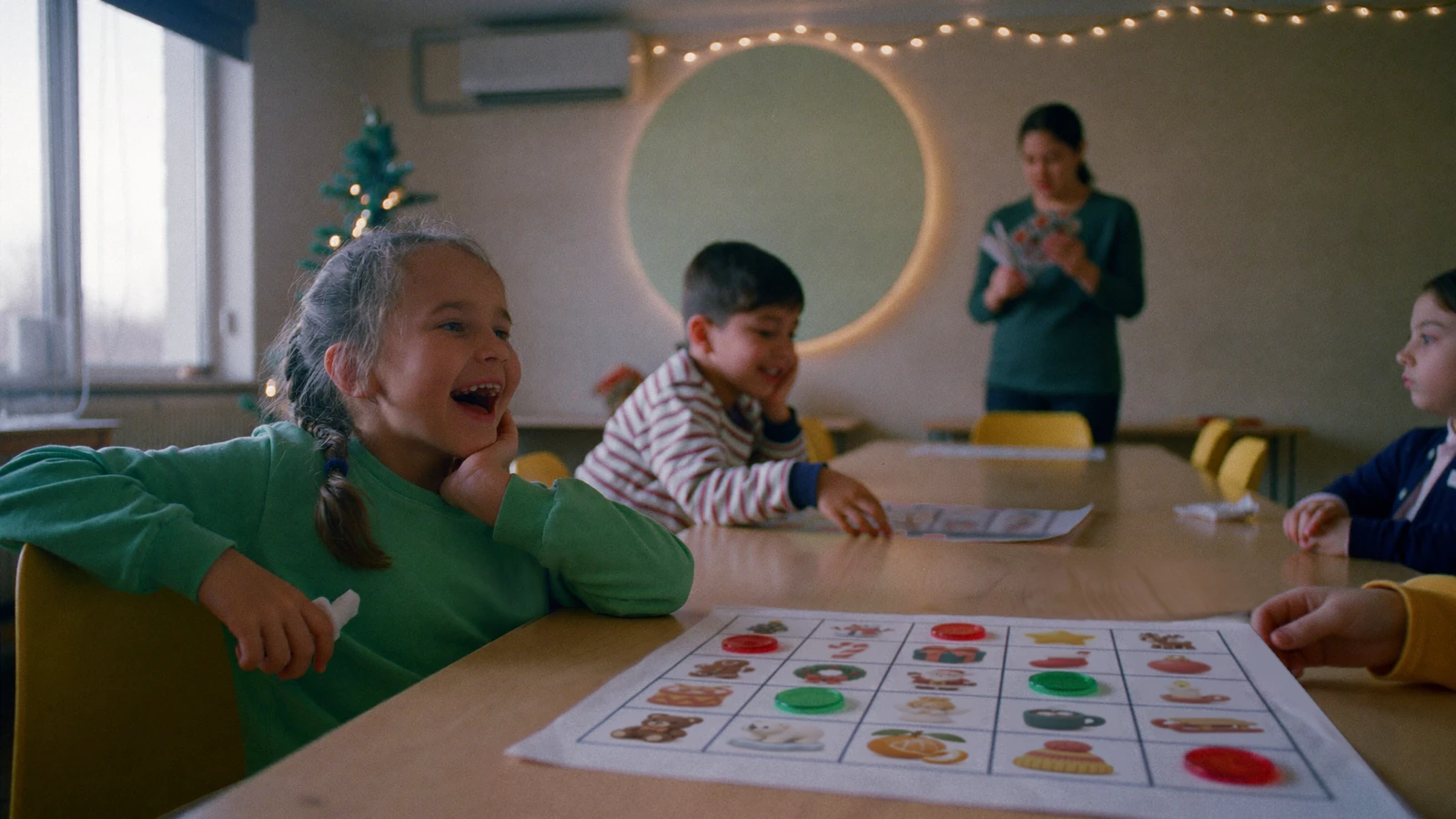
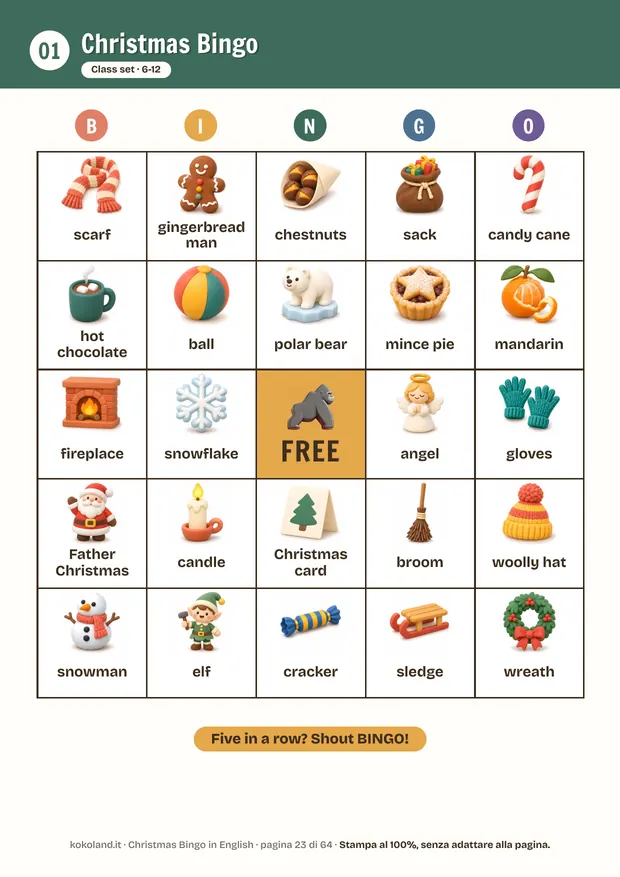
Christmas bingo is bingo with Christmas pictures instead of numbers. Each player has a grid card, the caller draws a card and says the word in English, anyone with that picture covers it with a counter, and the first to complete a line, across, down or diagonally, wins.
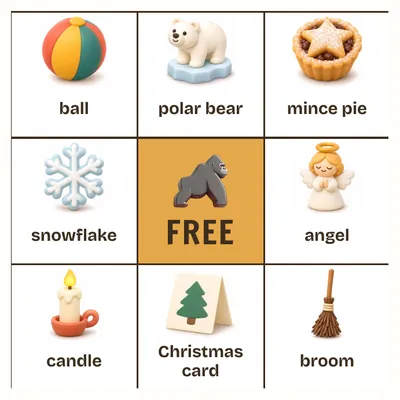
The square in the middle of the big cards says FREE: it counts as covered for everyone from the start, which is why a 5 × 5 card has 24 pictures rather than 25. That is the American way of playing; British bingo uses tickets of three rows and nine columns, much like the Italian tombola.
Below are three ways to play, one for each age group, with the steps in pictures and every phrase to listen to.
1. Christmas Bingo the classic, for everyone
6-12years
10 minutes to cut out
2-30 players
The caller says the word in English and everyone looks for the picture: the first full line wins.
One card and a handful of counters each; FREE is already covered.
The caller draws a card and says it twice.
Anyone with that picture covers it and answers.
A full line: “Bingo!”, then everyone checks it.
Sound box4 phrases, 6 more and 20 words
The script
the signal to start
how every card is called
the answer when you have it
before anyone celebrates
Words on the cards
Add these once the game is going
the caller asks
when it isn’t there
when someone missed it
the caller asks after a few cards
for the winner
for a second game, to the full card
Easier or harder, by age
Ages 6-8The caller says the word and only shows the card afterwards, so children play by listening. With younger siblings at the table, use the 4 × 4 family cards.
Ages 9-12After the first line, keep going to a full card: whoever covers it all shouts “Full house!” and reads every picture back in English.
All agesChange caller every game: the caller says each word twice, and that is the role where children speak the most.
Why it works: each word is heard twice and searched for with the eyes, and the final check has the winner say the words again.
2. Picture Bingo for little ones
3-5years
5 minutes to cut out
1 adult and 1-6 children
The adult shows the picture and says the word; the child finds it and repeats it. Three in a row wins.
The caller reads the riddle; the card stays hidden.
Everyone guesses silently and covers the picture.
After three games, a child becomes the caller.
Strong players keep going to a full card.
Sound box4 riddles and 4 phrases
Four riddles to listen to
the snowman
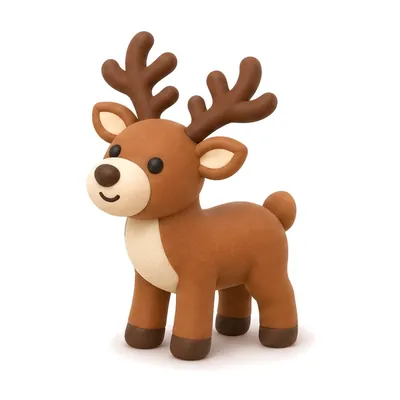
the reindeer
the present
the panettone
Phrases for the game
after every riddle
said only at the check
when a child takes over
the full card
Easier or harder, by age
Age 9Read each riddle twice, slowly; at the check, the winner reads out the riddle for every picture in the line.
Ages 10-11A child calls and reads the riddles from the cards: the caller reads and speaks more than anyone.
Age 12Everyone writes a riddle for one word on the worksheet on page 62, and the class plays with its own riddles.
Why it works: to guess, children have to understand the whole sentence rather than a single word, and every riddle is English heard in context.
Which Christmas words are on the bingo cards?
There are 36, one for each calling card, and the first sixteen are the easy ones on the little ones’ cards. The last four come from an Italian Christmas, from mandarins to the nativity scene: children in Italy see them on the table every December. Tap a word to hear it.
Word
On the little ones’ cards
The riddle on its calling card
yes
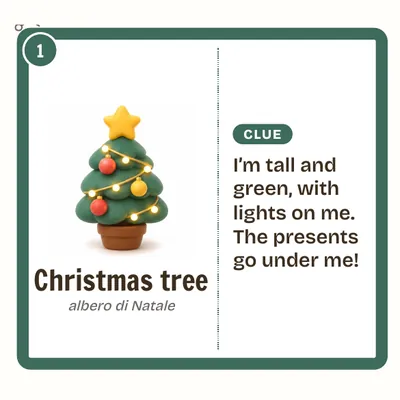
I’m tall and green, with lights on me. The presents go under me!
yes
I sit on the top and I shine so bright. You can see me in the sky at night.
I’m round and shiny and I hang on the tree. Be careful: don’t drop me!
yes
I’m red and white and very sweet. I look like a hook. I’m a Christmas treat!
yes
Red coat, white beard and a big Ho, ho, ho! I bring the presents on a sleigh in the snow.
yes
I’m very small, with pointy ears. I make the toys, year after year.
yes
I pull the sleigh across the sky. I’ve got four legs, but I can fly!
yes
I’ve got two wings and I’m white and bright. I sit on the tree on Christmas night.
yes
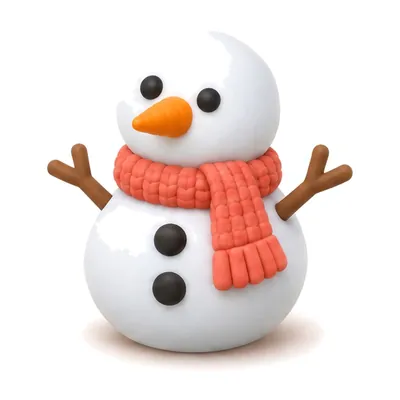
I’ve got a carrot for a nose. When the sun comes out, away I go!
yes
I’m small and white and very cold. No two of us are the same, I’m told!
Sit on me and hold on tight. Down the hill in the snow so white!
I’m big and white and I love the snow. I swim in the sea where cold winds blow.
I’m a biscuit, brown and sweet, with two little arms and two little feet.
I’m a little pie, round and sweet. Leave me out for Father Christmas to eat!
I’m a tall, soft cake from Italy. There are raisins inside. Have a slice of me!
I’m brown and warm and I’m in a cup. Blow on me first, then drink me up!
yes
I’ve got paper and a bow on top. Open me up: rip, rip, pop!
yes
I’m a long red sock with a white top. Fill me with sweets right up to the top!
Two people pull me: one, two, three… BANG! There’s a paper hat inside me!
I’m big and brown and full of toys. Father Christmas brings me to girls and boys.
I give a little yellow light. Blow me out at the end of the night.
I’m round and green with a big red bow. I hang on the door to say hello!
There’s a warm fire inside me. Hang your stocking on me, and wait and see!
Open me up and read me through: Merry Christmas, I love you!
yes
I’m soft and brown and I love a hug. At night I sleep in your bed, all snug.
yes
I’m round, I bounce, I roll away. Kick me, throw me, let’s go and play!
yes
Boom, boom, boom! Hit me with a stick. I’m very loud: cover your ears, quick!
yes
Choo, choo! I go along the track. I take you there and I bring you back.
I’m long and soft and I keep you warm. Wrap me round your neck in a winter storm.
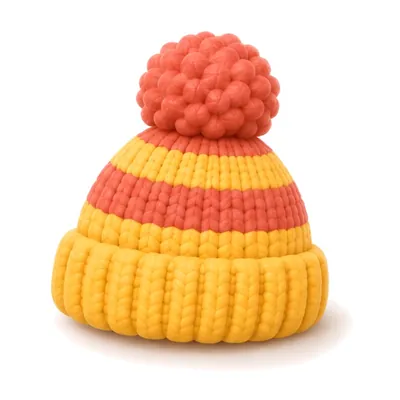
Put me on your head when you go out. I keep your ears warm, there’s no doubt!
yes
There are two of us, warm and snug: ten little fingers get a woolly hug!
I’ve got a reindeer on my front. Wear me at Christmas, just for fun!
I’m small and orange, round and sweet. Peel me first, and then you eat!
We’re brown and shiny, hard and small. Roast us on the fire, then eat us all!
On the night before Epiphany, the Befana flies through the sky on me!
Little houses, sheep and a shining star. Italian families build me: there you are!
Which card for ages 3-5, 6-8 and 9-12?
The smaller the grid, the shorter the game. We measured the lengths below on 18 November 2026 by simulating 20,000 games with the actual cards in the PDF, counting how many calls it takes before someone completes a line.
Age
Card
Winning line
A game lasts
3-5
Picture bingo 3 × 3, 12 cards
3 squares
about 6 calls, with 4 children
6-12, at home
Family set 4 × 4, 6 cards
4 squares
about 14 calls, with 4 players
6-12, in class
Class set 5 × 5 with FREE, 32 cards
5 squares (4 through the centre)
about 11 calls, with 30 children
With thirty cards in play, nearly one game in five ends with two children shouting “Bingo!” on the same call: whoever passes the check first wins, and the other one calls the next game.
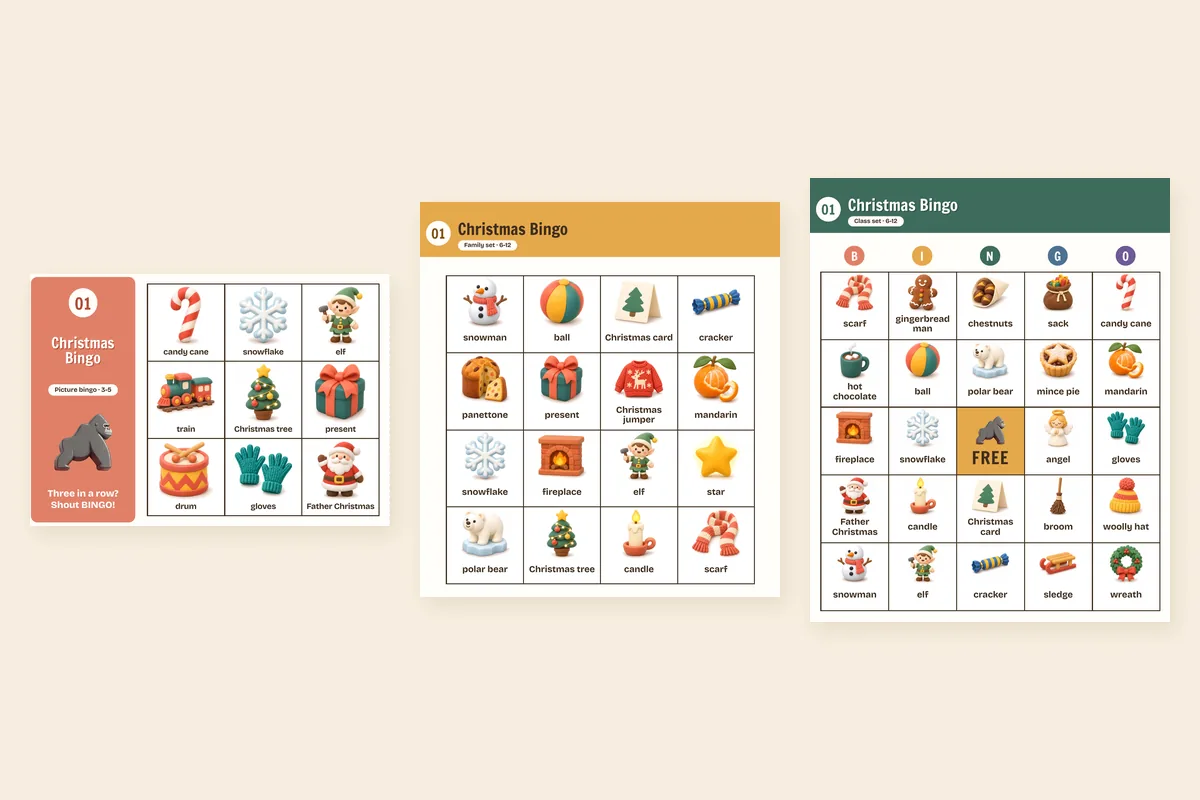
Three grids, one for each age group, with the same pictures.
How do you play bingo in English at home, before and after the game?
At home, bingo works best as the middle of a short evening, with one activity before to warm up the words and one after to use them.
Before: Christmas word hunt. With page 57, hunt around the house for twelve Christmas things, from the star on the tree to the gloves by the door, ticking each one as you say it: “Where’s the star?”, “Here it is!”.
During: swap roles. You call the first game, a child calls the second. Anyone who doesn’t speak English plays like everyone else and asks “Can you say it again, please?”: grandparents are usually the sharpest players.
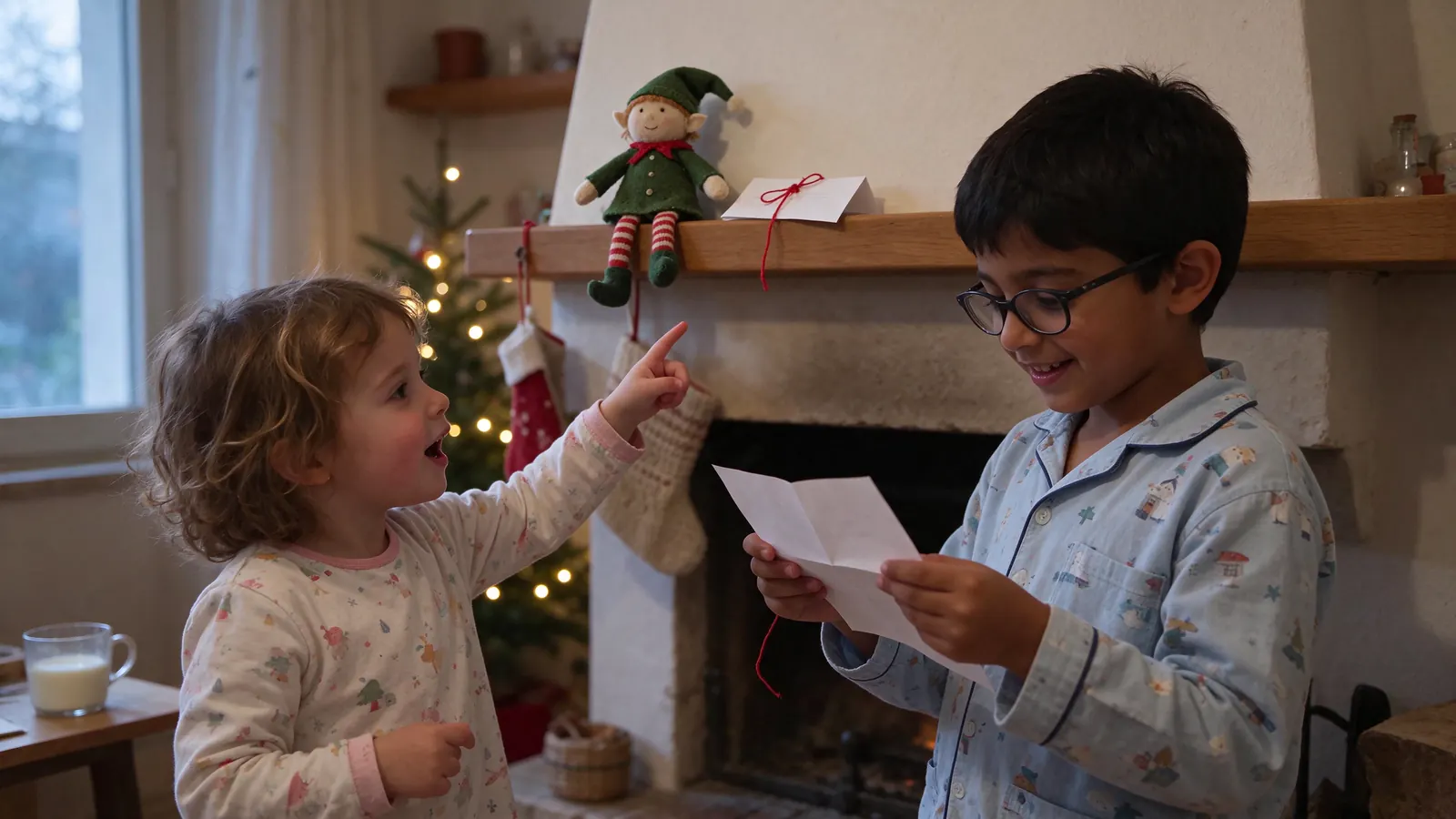
After: My bingo line. On page 58 the child draws the pictures from the winning line and says them in one sentence: “I’ve got a star, a present and a snowman!”.
The next day: Make your own bingo card. With the blank grid on page 59, the child draws their own card from sixteen words on the list, and the next game is played with it too.
Lentils, buttons and bits of mandarin peel all make good counters.
How do you use Christmas bingo in an ESL lesson? A 45-minute plan
In the classroom, bingo can carry a whole lesson if the words come before the game and return afterwards in writing. The plan is written for primary classes and the last year of nursery, and it is also printed on page 60 of the PDF.
Minutes
What happens
What the teacher says
0-5
Warm-up: six cards shown one at a time; the class guesses.
What’s this? Yes, it’s a star!
5-15
The words: twelve cards on the board, repeated in chorus, quietly and loudly; then the teacher points and the class says.
Say it with me. Whisper! Now loud!
15-20
The rules in two minutes, with a pretend game on the board.
Eyes down! I’ve got it! Bingo!
20-30
First game: the teacher calls and shows the card only afterwards.
The next one is… a reindeer!
30-37
Second game: the winner of the first one calls; from the fourth game, play Clue bingo.
Who’s got a line? Let’s check!
37-43
Worksheet A (ages 6-8) or worksheet B (ages 9-12), alone or in pairs.
Look and match. Read the clue.
43-45
Exit: everyone says one word from their card before putting it away.
I’ve got a snowman!
The 32 classroom cards are all different and no winning line appears on two cards, so there are enough for a full class with two spare. Laminate them and use a dry-wipe pen instead of counters, and they will last until next Christmas. For the rest of December there are our Christmas activities in English for primary school, one for each year group.
What mistakes should you avoid when playing bingo in English?
Translating straight away. Say the English word and show the picture; translate only if a child is really stuck.
Giving little ones the big card. For ages 3 to 5, 24 pictures are too many: the 3 × 3 grid with three in a row keeps attention up.
Calling too fast. Say every word twice, and draw the next card once everyone has looked at their card.
Celebrating without checking. The check, “Let’s check!”, is when the winner says the whole line in English.
Stopping after one game. In the second game a child calls, and that is where the most English gets spoken.
What is in the printable PDF?
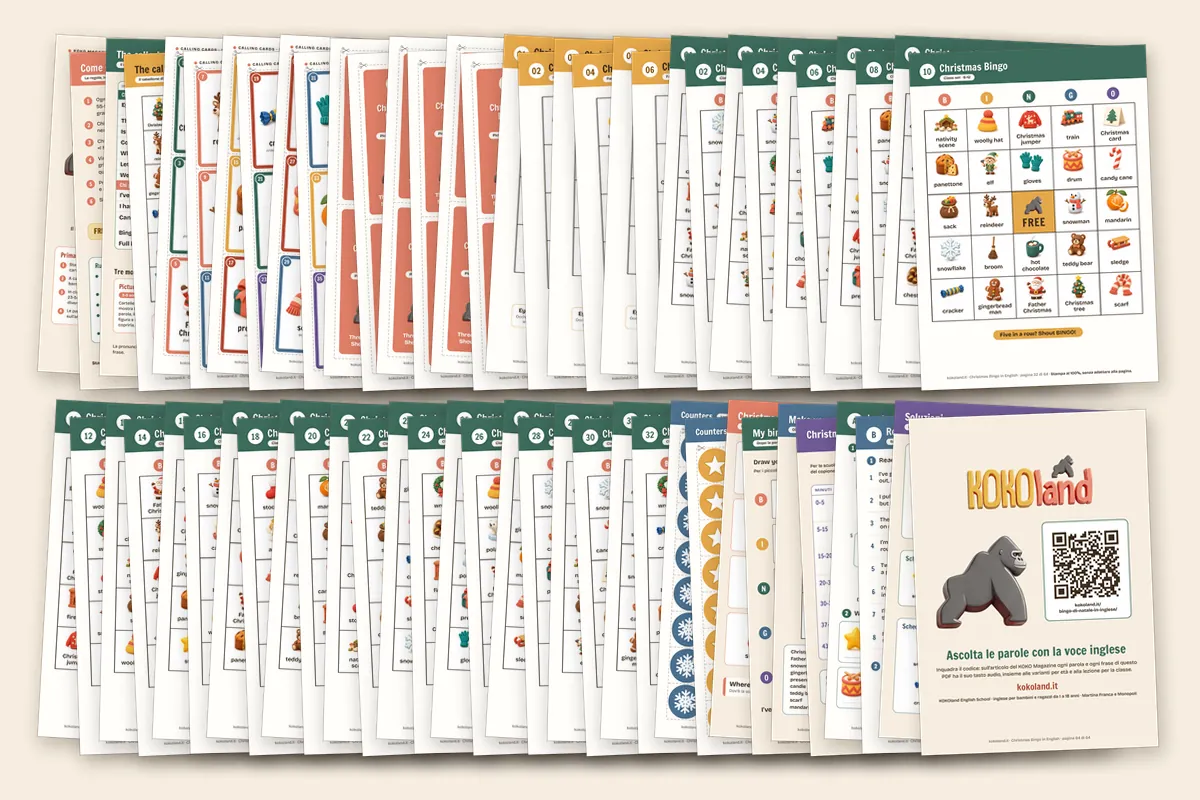
There are 64 A4 pages and you don’t need to print them all: at home, the rules, the calling cards and the cards for your level are enough; in class, one card per child. Print at 100%, without fitting to the page: the squares are full size, 37 mm on the classroom cards and 40 mm on the little ones’ cards.
The rules (in Italian, with a short version in English), the caller’s script and the three ways to play (pages 2-3).
The caller’s board and the 36 calling cards, each with a riddle in English (pages 4-10).
12 Picture bingo cards, 6 Family set cards and 32 Class set cards, all different (pages 11-16, 17-22 and 23-54).
Cut-out counters, three activities for home, the lesson plan, two worksheets and the answers (pages 55-56-63).
Each child has a card of pictures; the caller draws a card and says the word in English twice, and anyone with that picture covers it. The first to complete a line shouts “Bingo!” and reads it back in English for the check.
What does FREE mean in the middle square?
It is a free space that everyone has covered from the start. That is why a 5 × 5 card has 24 pictures, and lines through the centre need only four.
What is the difference between bingo and the Italian tombola?
In tombola, numbers from 1 to 90 are drawn and prizes go to two, three, four or five numbers in a row and to the full card. American bingo uses a 5 × 5 grid with a FREE square and a line wins; British bingo has tickets much like tombola, with prizes for a line, two lines and a full house.
Can I play bingo in English if I don’t speak English?
Yes: the caller’s phrases are few and always the same, and every word has an audio button with a British voice. You can also let a child be the caller while you play.
How many bingo cards do I need for a class?
One per child, all different: the PDF has 32 for the classroom. With thirty cards in play the first line comes after about ten calls on average, and if two children shout together, whoever passes the check first wins.
Can children who can’t read yet play?
Yes, with the 3 × 3 Picture bingo cards: the pictures are big, the adult shows the card and says the word, and the child only has to find the picture and repeat it.



 Sound box4 phrases, 6 more and 20 words