
Christmas in English for children: words, songs and a letter to Father Christmas
14 October 202611 min read
In brief
- To enjoy Christmas in English with children you only need a few words heard often, an easy greeting such as and one activity to do together: a song, a game, a letter.
- Below you will find 23 Christmas words with audio, the right greetings for every card and the differences between a British Christmas and an Italian one, from Father Christmas to Boxing Day.
- At the end there is a letter to Father Christmas in English, with a greeting card, to print and write together.
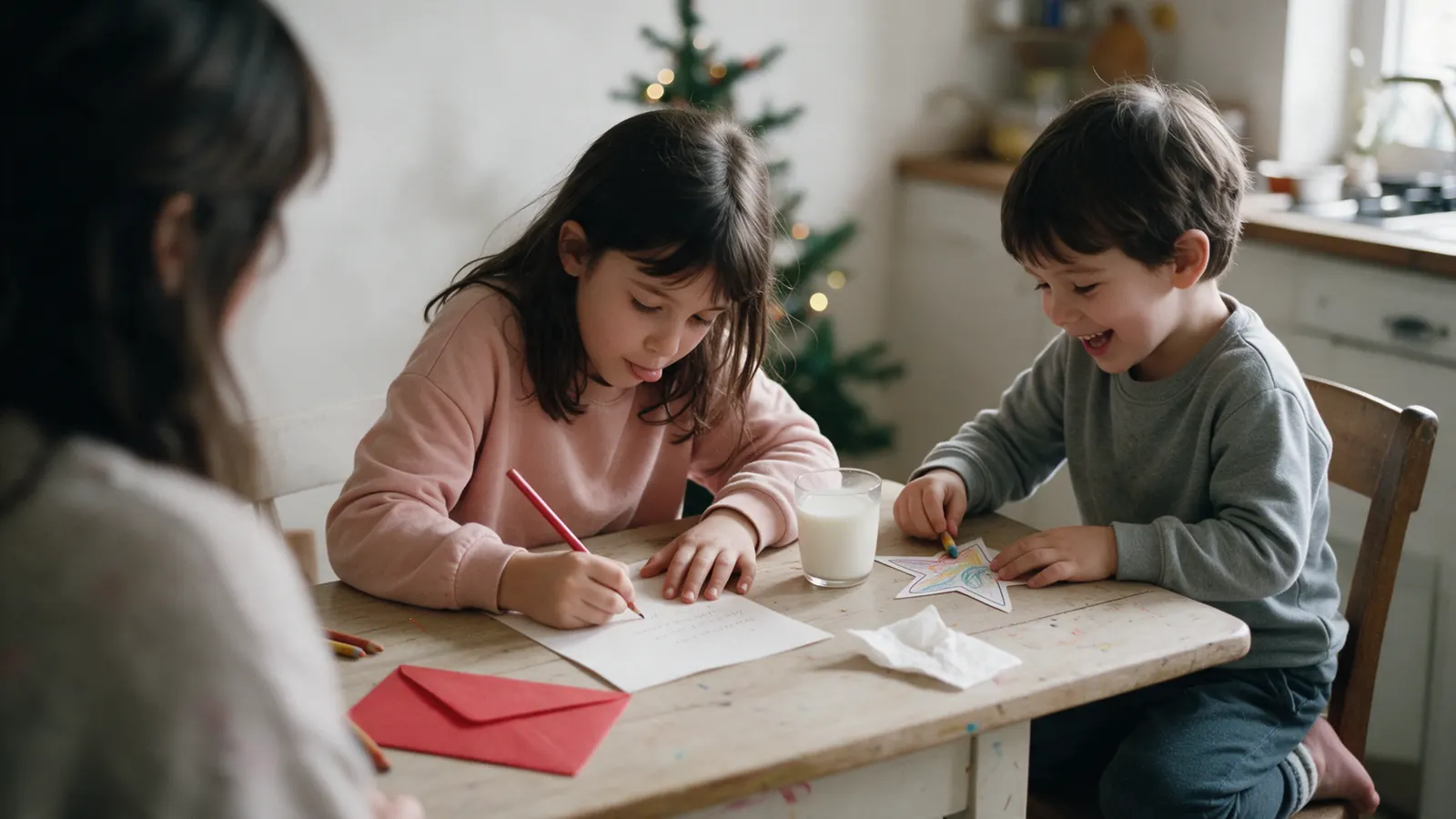
At Christmas, English comes into the house almost on its own, through songs and films. To turn it into real learning you need three things: a few words, repeated often, a phrase to use for real (greetings to grandparents, to the teacher, to friends) and an activity to do together. Whatever your own English is like, you can simply press the buttons on this page and listen to the pronunciation with the children.
Which Christmas words should children learn in English?
Here are 23 words and phrases, grouped by moment: tap each one to hear it in a British voice. One tip: do not read them all at once. Three words a day, repeated in front of the tree, are worth far more than a list learned by heart.
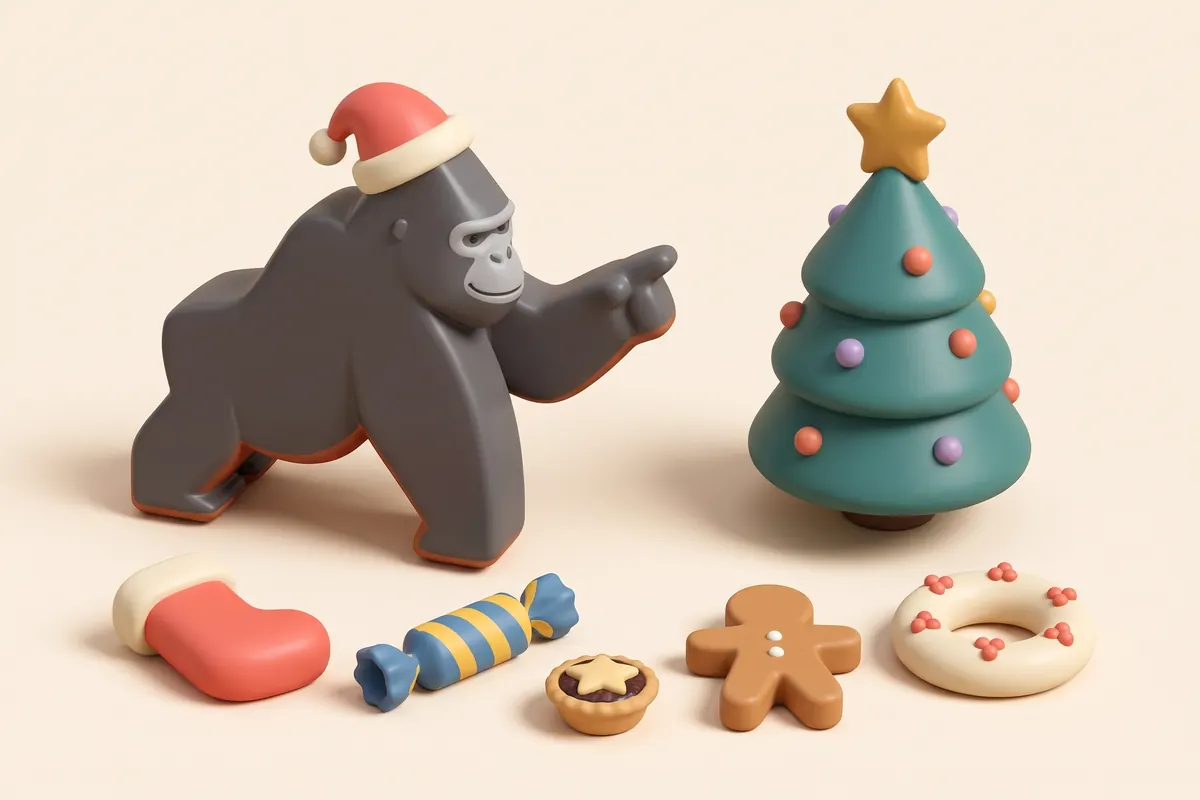
The tree and the house
- : the tree the family decorates, real or artificial
- : it goes on the top of the tree, or an angel does
- : a round decoration that hangs from a branch
- : shiny, wiggly strands to drape over the branches
- : the little lights on the tree and around the window
- : a ring of leaves and berries hung on the front door
- : the long sock hung up for small presents
- : a gift you wrap, give and open
- : for the table, with a grown-up always close by
The characters
- : the traditional British name for the man in the red suit; in Italian he is Babbo Natale
- : the same person, under the name used all over the English-speaking world; British children say Santa too
- : they pull the sleigh (the plural stays the same: one reindeer, two reindeer)
- : one of Father Christmas’s helpers (the plural is elves)
- : the figure at the top of the tree or in the school nativity play
- : the figure you build when it snows, or draw on a card
At the table and in the parcel
- : a spiced biscuit shaped like a little man, with icing buttons
- : a small pie of spiced dried fruit, with no meat in it, left out for Father Christmas
- : the dark, rich fruit pudding of the 25 December lunch, as important as panettone is in Italy
- : a paper tube that two people pull until it goes “bang”
Things to do
- : the phrase to say when the box of baubles comes out
- : for paper, sticky tape and a lot of ribbon
- : a carol is a traditional Christmas song
- : for the first flakes, or for a film at home
Two pronunciation secrets. In Christmas the t is silent: it is said Chris-mas, not Christ-mas. And reindeer has nothing to do with the verb to read: its first syllable sounds like rain. Children love discovering these “tricks” of the language, and they remember them for a long time.
How do you wish someone a happy Christmas in English?
The most common greeting is , which suits everyone: grandparents, friends, teachers. Here are the most useful phrases, from the simplest to the most complete.
- : the classic wording on a card.
- : very common in the UK, and used by the royal family too.
- : warm and friendly, ideal for someone you will not see before the holidays.
- : neutral and a little formal, perfect for a card to a teacher or to a family you do not know well.
- : more common in the United States.
- : to teach before the 25th!
On a card, the English open with Dear followed by the name (Dear Granny) and close with Love from and the signature (Love from Giulia). It is a very simple structure, which even a six-year-old can copy alone.
What are the days of the festive season called?
| Day (and its name in Italy) | What to say in English |
|---|---|
| 24 December (la Vigilia) | Christmas Eve: the evening children hang up their stockings; in Britain the big meal comes on the 25th, not the night before |
| 25 December (Natale) | Christmas Day |
| 26 December (Santo Stefano) | Boxing Day, also called St Stephen’s Day, especially in Ireland |
| 31 December (Vigilia di Capodanno) | New Year’s Eve |
| 1 January (Capodanno) | New Year’s Day |
| 6 January (Epifania) | Epiphany: the Befana is an Italian custom with no real British equivalent, and in Britain many families take the decorations down around now |
| The party with friends or at school | the Christmas party (or the school Christmas party) |
| The break from school | the Christmas holidays: children “break up” when term ends |
How is Christmas celebrated in the UK?
Telling children how their English-speaking peers live Christmas shows them that English is the language of real people. The differences are many, and surprising.
| In the UK | In Italy | |
|---|---|---|
| Who brings the presents | Father Christmas, or Santa, during the night between 24 and 25 December, coming down the chimney | Babbo Natale; in some areas also Santa Lucia or St Nicholas; and on 6 January the Befana, a kindly old woman on a broomstick who fills the stockings with sweets |
| Where they are found | In the stocking, hung by the fireplace or at the end of the bed, and under the tree | Under the tree; the stocking belongs to the Befana |
| What is left out for him | A mince pie and a glass of milk or sherry, and a carrot for the reindeer | Milk and biscuits, in many families |
| The festive meal | Lunch on the 25th: roast turkey, Brussels sprouts, Christmas pudding | Often a big dinner on Christmas Eve and a lunch on Christmas Day, with dishes that change from region to region |
| At the table | Crackers: two people pull, they go “bang” and inside there is a paper crown, a joke and a small gift | Family tombola, a kind of bingo |
| The day after | Boxing Day, a bank holiday | Santo Stefano, a public holiday |
| The message on TV | The King’s speech, on 25 December at 3 pm | The end-of-year message of the President of the Republic, on 31 December |
A few curiosities to tell at the table. Crackers are a Victorian invention: a London confectioner, Tom Smith, came up with them in the 1840s, and people still wear the paper crown throughout lunch. The sovereign’s Christmas speech has been broadcast at 3 pm since 1932, when King George V spoke for the first time on the radio. And the name Boxing Day has nothing to do with boxing: according to the most common explanation, it comes from the Christmas boxes, the boxes of gifts and tips once given on 26 December to the people who had worked for the family all year.
Which Christmas songs are best for children?
Melody and repetition work together: a verse sung a hundred times is never forgotten. These are the traditional songs we recommend, so old that they belong to everyone.
- Jingle Bells (1857): the chorus is perfect from age 3, with its sleigh bells and the galloping sleigh to mime.
- We Wish You a Merry Christmas: it already contains the complete greeting, “We wish you a Merry Christmas and a Happy New Year”. Children learn it by singing.
- Deck the Halls: the tune is Welsh; the “fa la la la la” lets even the youngest sing along with the older ones.
- The Twelve Days of Christmas: a song that builds up verse after verse, ideal for revising the numbers from one to twelve from age 6 upwards.
- Silent Night (1818) and Away in a Manger: two Christmas lullabies, slow and gentle, for the evening.
- O Christmas Tree: born in Germany, sung all over the world, with simple words about the tree.
A trick that works: sing just one song for a week, always the same one, perhaps in the car. Then let the child “teach” it to a grandparent. Explaining to others is the strongest way to revise. It is the same principle on which we built the illustrated songs and KOKO Karaoke in KOKO Play, our app for learning English at home: every song becomes a video clip, and images and music fix the words in memory.
How do you write a letter to Father Christmas in English?
Writing to Father Christmas in English is a valuable activity, because it has a real purpose: children are not writing “for practice”, they are writing to be understood. In the UK many children post their letter to a special Royal Mail address; others, by tradition, leave it by the fireplace so that it “flies” up the chimney.
Here is the outline you will also find in the printable PDF. The parts in brackets are filled in together.
- Dear Father Christmas, (the greeting, always followed by a comma)
- My name is … and I am … years old. (who is writing)
- I live in … , Italy. (the town, then the country)
- This year I have been very good: I … (one good thing the child has done)
- For Christmas I would like … (the wish, with a or an before one gift)
- How are the reindeer? (a question of their own makes the letter feel real)
- Thank you! Love from … (the warm ending, then the name)
Listen to the opening and the ending of the letter: … … .
How to adapt it to the age. From 3 to 5 years the child dictates, you read it back in English, they repeat it and draw the presents. From 6 to 8 years they copy the sentences and fill in the dots, perhaps with a few words in Italian. From 9 years they write alone and add a question of their own: English becomes personal expression.
Download the letter to Father Christmas and the greeting card (printable PDF)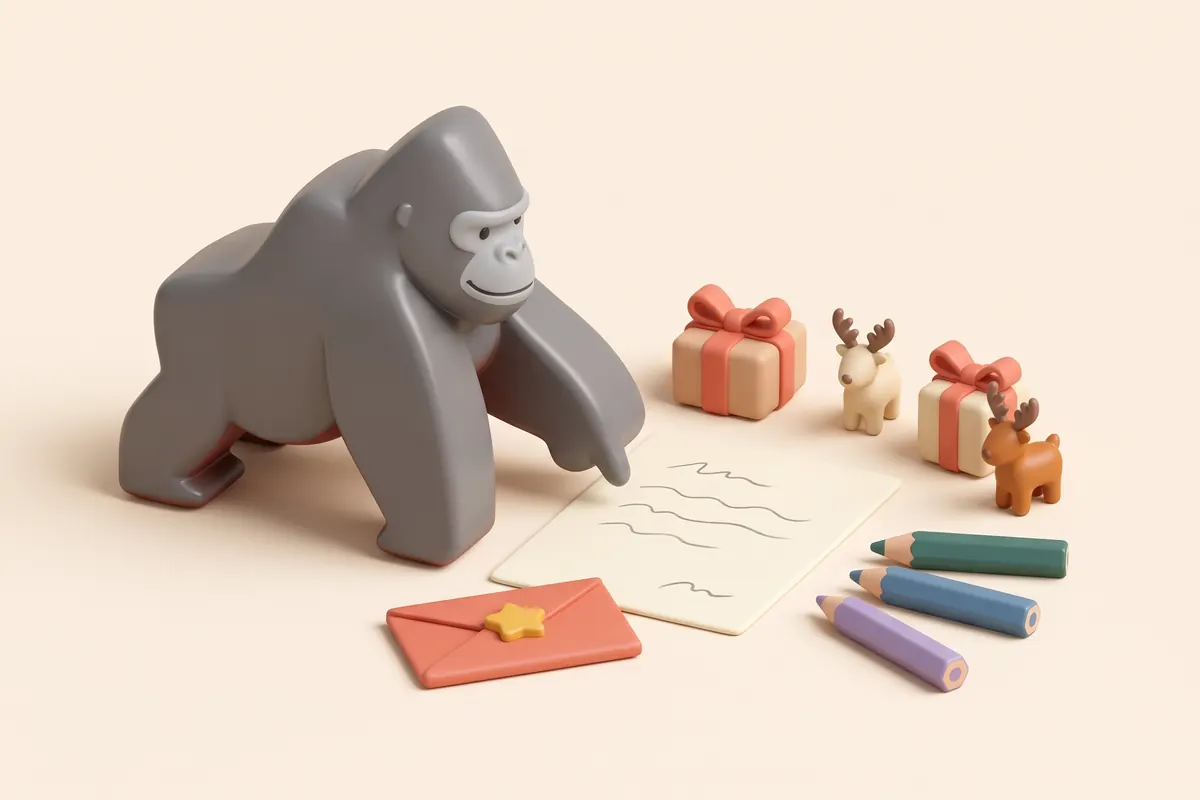
Which Christmas games can you play at home in English?
Five games that work with the family, even if you do not speak much English.
- I spy, under the tree. “I spy with my little eye something… red!” The child looks for a red object among the decorations and names it in English, if they know it.
- What’s in my stocking? Put three Christmas objects in a stocking: the child feels them without looking and tries to guess. “It’s a… star!”
- Christmas bingo. Ordinary bingo (the Italian tombola), with words in place of numbers: whoever calls reads the word, the others look for the picture on their card.
- Pass the parcel. A classic of British parties: a parcel wrapped in many layers is passed from hand to hand until the music stops, and whoever holds it unwraps one layer. Before unwrapping, they say a Christmas word in English.
- Father Christmas says… The game of “Simon says”, in a Christmas version: “Father Christmas says: touch the tree!”
If you are looking for more ideas for the whole year, you will find them in our article on English games for children to play at home.
What works best at each age?
As teachers, every year we see the same theme work differently depending on age. In class the activities change about every 15 minutes, and at home the same rule applies: little, often and on the move.
| Age | What to try | A realistic goal |
|---|---|---|
| 3–6 years | Jingle Bells with actions, I spy under the tree, a letter dictated and drawn | Recognise 8–10 words and say Merry Christmas! alone |
| 7–10 years | Christmas bingo, the letter with the outline, The Twelve Days of Christmas | Use 15–20 words and write the greeting card |
| 11 years and over | A Christmas film in English with English subtitles, cards to friends, British traditions | Follow a Christmas story and explain the differences between the two Christmases |
In the Creative Lab, the second weekly session of KOKO Stars and KOKO Primary, festivals from around the world are among the children’s favourite themes: English becomes the means of making something lovely together. A festival lived in English teaches more than any list.
Frequently asked questions
What is Father Christmas called in English?
In the UK the traditional name is Father Christmas; Santa Claus, or simply Santa, is the name used throughout the English-speaking world and is now very common among British children too. Either is fine, and both translate the Italian Babbo Natale.
How do you wish someone a happy Christmas in English?
The simplest greeting, suitable for everyone, is Merry Christmas! On cards you often write Merry Christmas and a Happy New Year!, while Season’s Greetings is a more neutral, formal way of wishing happy holidays. In the UK people often say Happy Christmas! as well.
What is a Christmas party called in English?
It is called a Christmas party, for example the school Christmas party. The Christmas holidays are the Christmas holidays, 24 December is Christmas Eve and 26 December is Boxing Day.
Which English Christmas songs are best for children?
For the youngest, Jingle Bells and We Wish You a Merry Christmas, which are easy and full of repetition; from age 6, The Twelve Days of Christmas, excellent for numbers; for the evening, Silent Night and Away in a Manger. They are all traditional songs, sung for generations.
How do you write a letter to Father Christmas in English?
Open with Dear Father Christmas, introduce yourself with My name is… and I am… years old, ask for the present with For Christmas I would like… and close with Thank you! Love from… and the name. On this page you will find an outline to print, to adapt to the child’s age.
Come and meet us
If Christmas in English has made you curious to see how children learn in our classes, book the Demo Day: a free session inside a real KOKOland class, with children of the same age, in Martina Franca or in Monopoli. All our courses, from 1 to 18 years, are on the courses page. For any question, send us a request: we will reply personally.
Sources
Keep reading

Free Demo Day
Book a free Demo Day.
A real, free lesson in a KOKOland class of children the same age. You stay at the school and we explain the method.