Elf on the Shelf ideas in English: 24 printable notes, one for every December morning

17 November 2026 12 min readAudio article, 4 minutes long
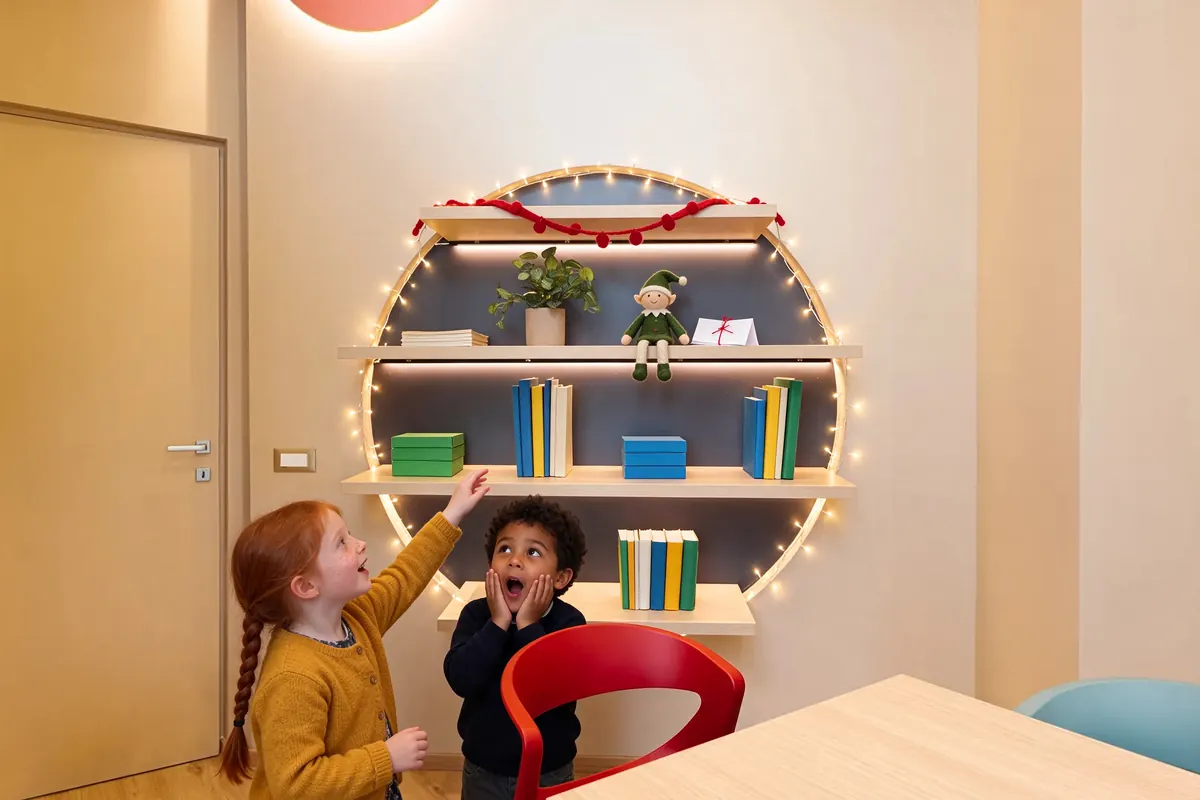
Two children on tiptoe look up at a felt elf on a classroom shelf while the teacher reads its note

In brief

  • 24 Elf on the Shelf ideas: one English note for each morning, 1 to 24 December.
  • Three lines for three ages, 3-5, 6-8 and 9-12, so brothers and sisters play together.
  • Every sentence has audio; it all prints from the PDF at the end.

From 1 December to Christmas Eve the elf moves every night and leaves a note in English for the children to work out.

Three phrases are all you need

  • when the note is found
  • before reading it
  • when the mission is done

Say them every morning: soon the children will say them for you.

What is the Elf on the Shelf, and what is it called in Italian?

It is an American tradition from a 2005 picture book, called elfo sulla mensola in Italian: the elf, one of Father Christmas’s helpers, flies to the North Pole every night and comes back to a new spot. Any toy at home can play the elf.

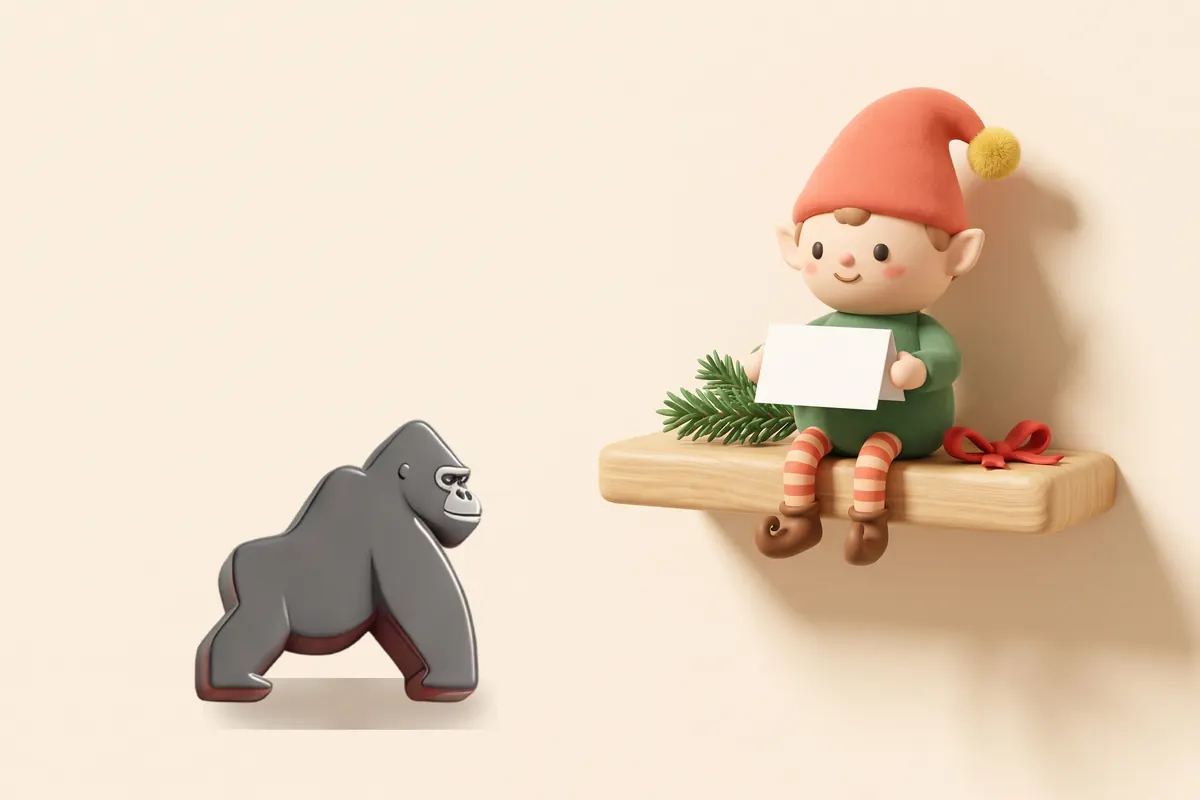
A felt elf sitting on a wooden shelf next to a folded note, with KOKO looking up at it from below
Any toy at home can be the elf.

How does a note with three lines for three ages work?

Each note has a single mission, written in three coloured lines. Here are the lines for 2 December:

AgeThe lineOn 2 December
Ages 3-5coral: one word
Ages 6-8green: a sentence
Ages 9-12blue: a messageLast night I turned five things upside down…
Two children discover a felt elf sitting on the round bookcase of a classroom decorated for Christmas
In class the elf is greeted, never touched.

What does the elf write in the arrival letter, and what should you call him?

The rules and the card of names come with it; on Christmas Eve, a goodbye letter.

The elf’s letters arrival, rules, name and goodbye

  • 5 minutes on 30 November
  • the whole family

Two letters open and close the month, with rules and a name between.

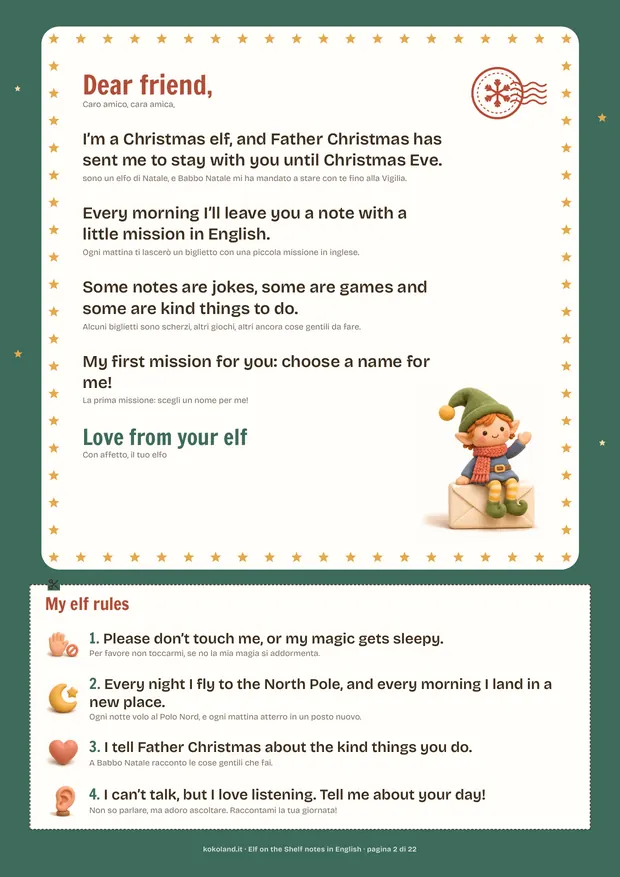
Page 2 of the PDF: the elf’s arrival letter with its starry border and, below, the card of his rules to cut out
Download to print the arrival letter, the rules, the names and the goodbye letter (PDF)

How to play

  1. The elf sitting on an envelope
    On 1 December he arrives with his letter.
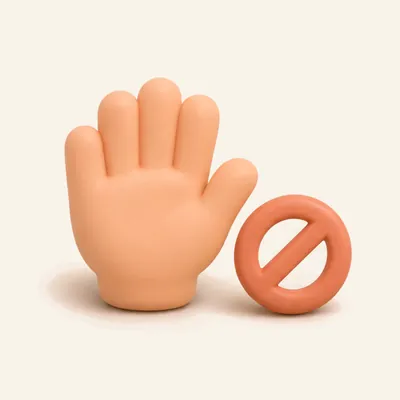
  2. An open hand next to a no sign
    No touching; if it happens, say the magic words.
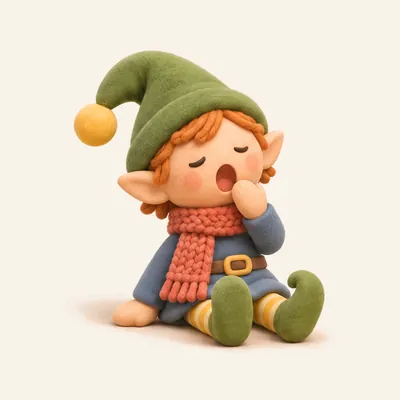
  3. The elf yawning, sitting downSorry!
    Missed an evening? There’s a sorry note.
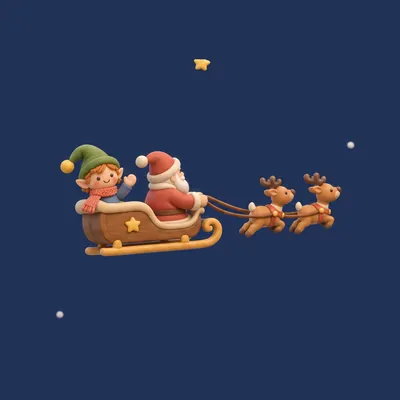
  4. Father Christmas’s sleigh in the night sky, with the elf waving
    On the 24th he leaves a goodbye letter.
Sound boxLetters, rules and 10 names
The arrival letter
  • the greeting
  • who he is and how long he stays
  • the daily note
  • what the notes hold
  • the first mission
  • the signature
The elf’s rules
  • rule 1, the most famous
  • rule 2, why he moves
  • rule 3, the kind elf
  • rule 4, a reason to talk to him
  • said three times if someone touches him
Ten names for the elf
  • the sound of sleigh bells
  • the sparkle of stars
  • a biscuit
  • the coloured bits on cakes
  • buttons
  • the shiny garland on the tree
  • dessert, in British English
  • the spice, and a redhead
  • a seed, for a very small elf
  • a snowflake
The sorry note
  • for the morning the elf has not moved
The Christmas Eve goodbye letter
  • the greeting
  • the goodbye
  • the thank you
  • a promise
  • the last mission
  • the signature
Easier or harder, by age
  • Ages 3-5You read the letter slowly, tapping each sentence to hear it; the children choose the name out loud from the card.
  • Ages 6-8They read the short lines with you, “Dear friend” and “Love from your elf”, and write the name on the card of names.
  • Ages 9-12They read the letter and the rules on their own; on 22 December they write back, and their best sentence returns in the goodbye letter.

Why it works: a letter in English addressed to them is the strongest reason there is to want to understand it.

24 Elf on the Shelf ideas, day by day

Six cards of four days: elf pranks, challenges, word games and kind acts. The template for the 10 December letter to Father Christmas is in our article on Christmas in English for children.

Hello, elf! 1 to 4 December

  • 2 minutes each evening
  • the whole family

A hello, a prank, good mornings and a friend frozen in ice.

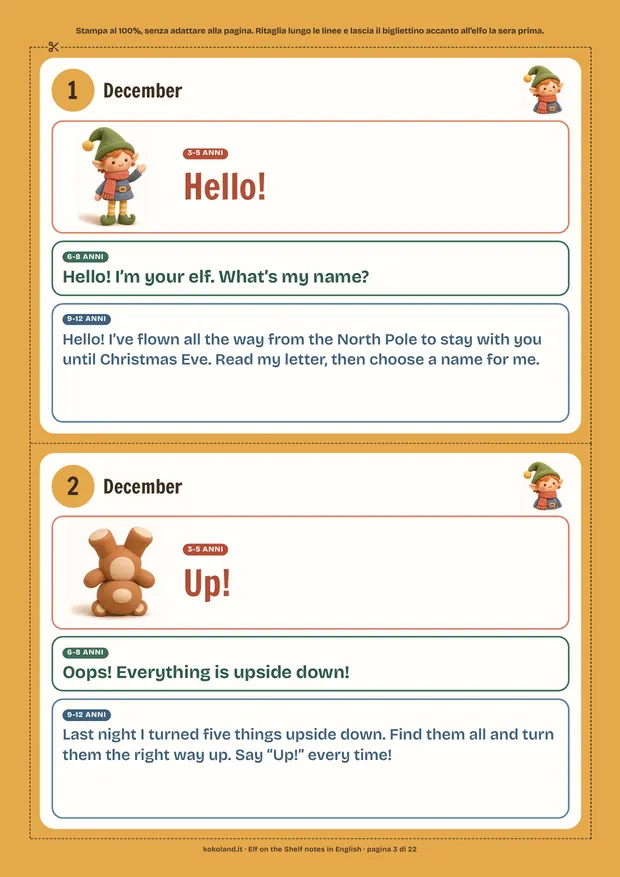
Page 3 of the PDF: the notes for 1 and 2 December at full width, each with three coloured lines for three ages; 3 and 4 December are on page 4
Download to print the notes for 1 to 4 December (PDF)

How to play

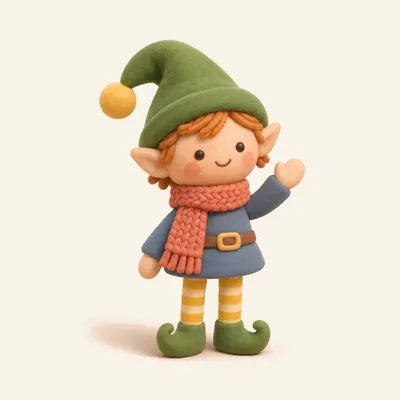
  1. The picture on the 1 December note: the felt elf waving hello
    He arrives with a letter, waiting for a name.
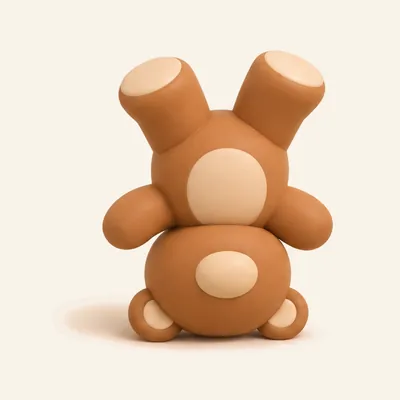
  2. The picture on the 2 December note: a teddy bear upside down
    Five things upside down, elf included, to turn back.
  3. The picture on the 3 December note: the sun rising behind a breakfast mug
    Nothing to prepare: “Good morning!” to everyone.
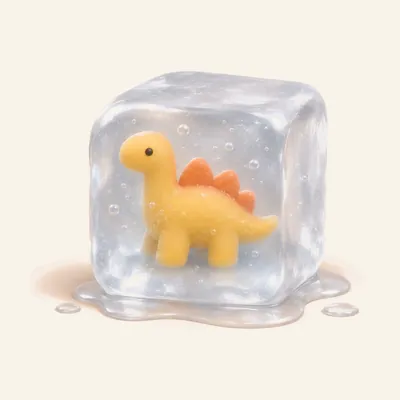
  4. The picture on the 4 December note: a toy dinosaur inside an ice cube
    A toy frozen in ice, freed with warm water.
Sound box4 lines, with audio
The sentences on the notes
  1. 1 December: the elf says hello
  2. 2 December: the first prank
  3. 3 December: said before breakfast
  4. 4 December: the rescue begins
Easier or harder, by age
  • Ages 3-5The word under the picture is enough, “Hello!”, “Up!”, “Ice!”: you say it, and the child repeats it while doing the mission.
  • Ages 6-8You read the green line slowly and the child repeats it; after a few mornings they try reading it alone.
  • Ages 9-12They read the blue line on their own: on 3 December, for example, they say “Good night!” to their grandparents too, on the phone.

Why it works: the first notes ask for a single word, so children find out straight away that they understand the elf.

Elf training 5 to 8 December

  • 2 minutes each evening
  • the whole family

Training, a band of pans, the fridge and the tree.

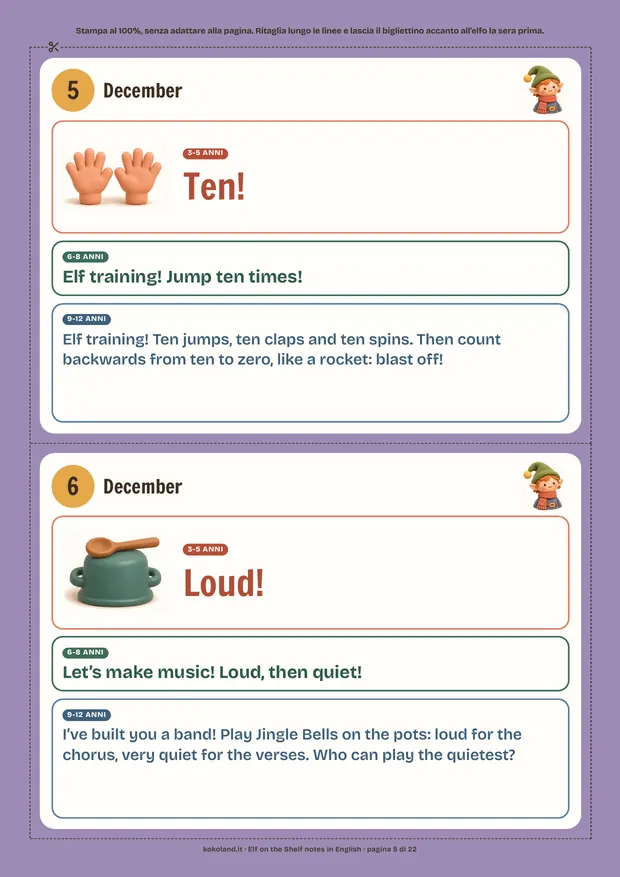
Page 5 of the PDF: the notes for 5 and 6 December at full width, each with three coloured lines for three ages; 7 and 8 December are on page 6
Download to print the notes for 5 to 8 December (PDF)

How to play

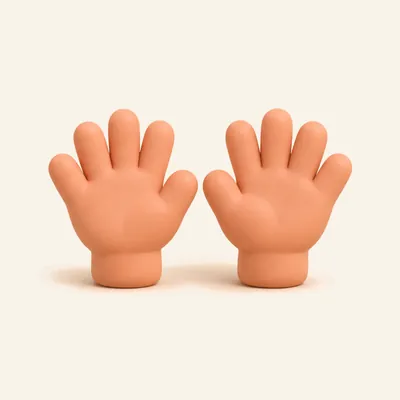
  1. The picture on the 5 December note: two open hands, ten fingers
    A hair band on the elf, then ten jumps.
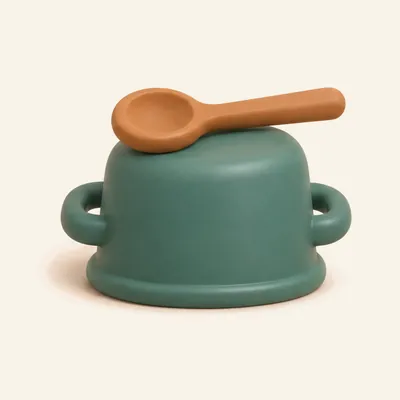
  2. The picture on the 6 December note: an upturned pot with a wooden spoon
    Upturned pans and wooden spoons: loud, then quiet.
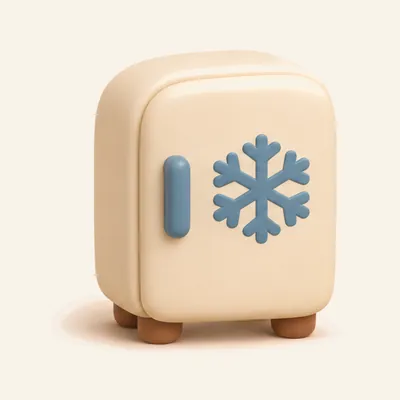
  3. The picture on the 7 December note: a fridge with a snowflake on the door
    The elf in the fridge, just for the mission.
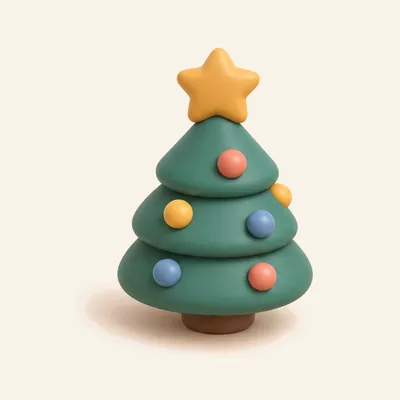
  4. The picture on the 8 December note: a Christmas tree with coloured baubles
    Hang each bauble and say its colour.
Sound box4 lines, with audio
The sentences on the notes
  1. 5 December: the warm-up
  2. 6 December: the band strikes up
  3. 7 December: opening the fridge door
  4. 8 December: tree day
Easier or harder, by age
  • Ages 3-5“Ten!” is counted on fingers, “Loud!” is said while banging the pot: the word always goes with a movement.
  • Ages 6-8Read the green sentence and the child acts it out: ten jumps counted in English, then the band, loud and then quiet.
  • Ages 9-12They count down from ten to zero like a rocket, and on 7 December they name five things in the fridge in English.

Why it works: numbers and opposites are learnt through the body, jumping and drumming, so they stay longer.

Snowball fight 9 to 12 December

  • 2 minutes each evening
  • the whole family

Snowballs, a letter, a teddy breakfast and a snowman.

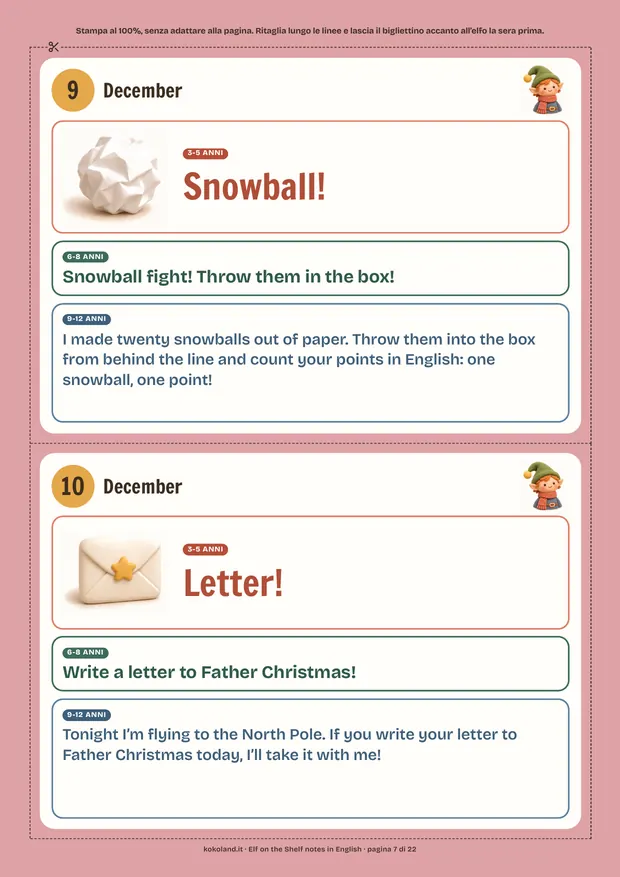
Page 7 of the PDF: the notes for 9 and 10 December at full width, each with three coloured lines for three ages; 11 and 12 December are on page 8
Download to print the notes for 9 to 12 December (PDF)

How to play

  1. The picture on the 9 December note: a crumpled paper snowball
    Twenty paper snowballs to throw into a box.
  2. The picture on the 10 December note: a sealed envelope with a star
    Paper and an envelope; at night the letter vanishes.
  3. The picture on the 11 December note: a teacup on its saucer
    Teddies at the table, served only with “please”.
  4. The picture on the 12 December note: a snowman with a scarf and a hat
    Cushions, a scarf and a carrot: an indoor snowman.
Sound box4 lines, with audio
The sentences on the notes
  1. 9 December: before the first throw
  2. 10 December: the letter to the North Pole
  3. 11 December: the teddy breakfast
  4. 12 December: the indoor snowman
Easier or harder, by age
  • Ages 3-5Every throw comes with a shout of “Snowball!”, and at breakfast the teddies only get their cup after a “Please!”.
  • Ages 6-8They count the snowball points in English, “one, two, three”, and serve the teddies saying “Here you are!”.
  • Ages 9-12They write the letter to Father Christmas on their own, before the elf takes it away, and give the cushion snowman an English name.

Why it works: polite words are learnt by using them at the table, and teddies are the most patient audience there is.

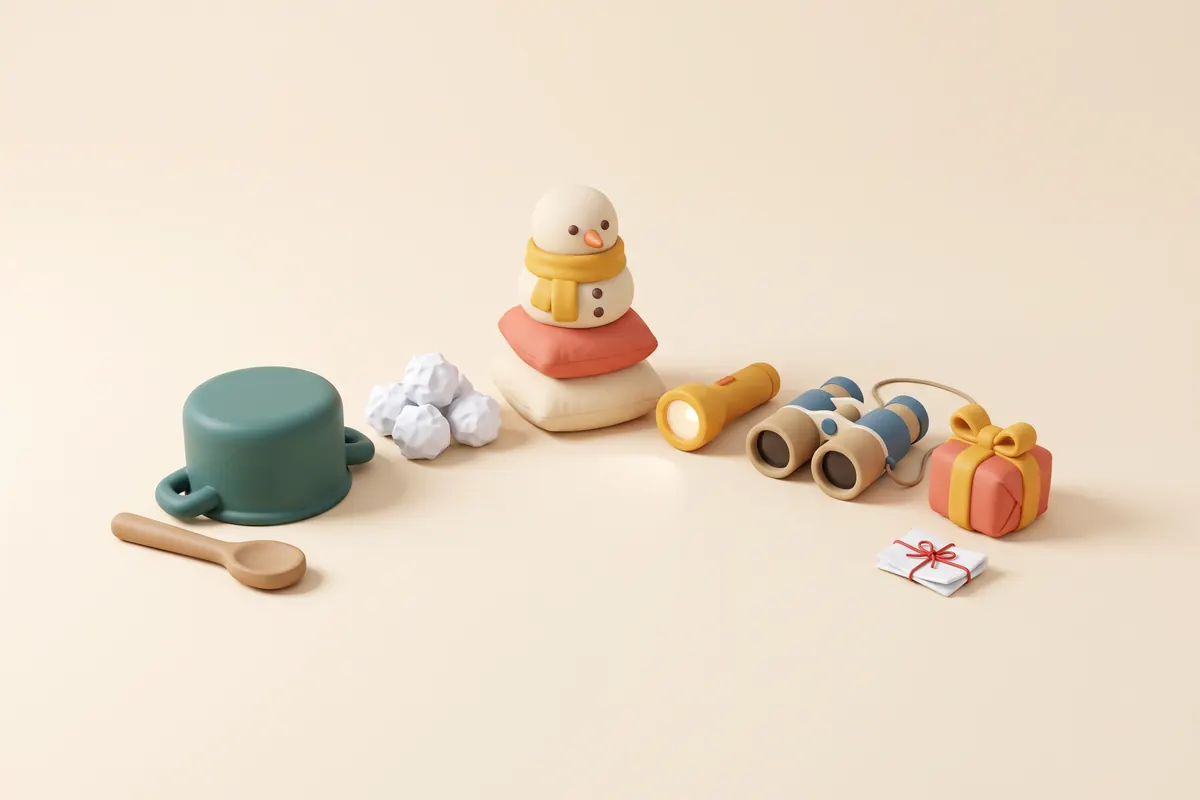
The objects for the elf’s missions in toy style: pans and a wooden spoon, paper snowballs, a cushion snowman, a torch and a carrot
You need nothing new for the 24 missions.

Rhyme time 13 to 16 December

  • 2 minutes each evening
  • the whole family

A tongue twister, a mirror, a tidy-up race and rhymes.

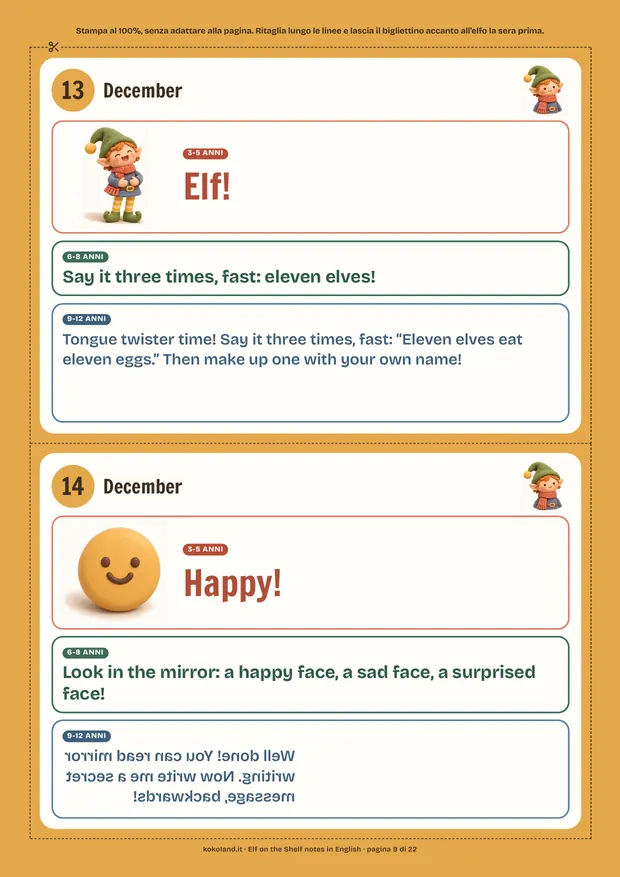
Page 9 of the PDF: the notes for 13 and 14 December at full width, each with three coloured lines for three ages; 15 and 16 December are on page 10
Download to print the notes for 13 to 16 December (PDF)

How to play

  1. The picture on the 13 December note: the felt elf laughing
    Eleven pegs in a row, and the tongue twister.
  2. The picture on the 14 December note: a smiling yellow face
    Three faces in the mirror, and a backwards message.
  3. The picture on the 15 December note: a full toy box with a teddy
    A tidy-up race before the song ends.
  4. The picture on the 16 December note: a woolly hat next to a cat
    A sock on the elf’s head: the rhyme hunt.
Sound box4 lines, with audio
The sentences on the notes
  1. 13 December: the tongue twister
  2. 14 December: three faces in the mirror
  3. 15 December: the start of the race
  4. 16 December: the rhyme hunt
Easier or harder, by age
  • Ages 3-5They pull a happy, a sad and a surprised face in the mirror, and clap at every rhyme: “Hat, cat!”.
  • Ages 6-8The tongue twister is said three times, faster each time, and rhymes are hunted round the house: sock and clock, bed and red.
  • Ages 9-12The blue line on the 14th is printed backwards and can only be read in a mirror; then they write the elf a secret message.

Why it works: rhymes and tongue twisters tune the ear to the sounds of English, even before reading.

Sun or rain? 17 to 20 December

  • 2 minutes each evening
  • the whole family

Weather, shadows, the table and a compliment for everyone.

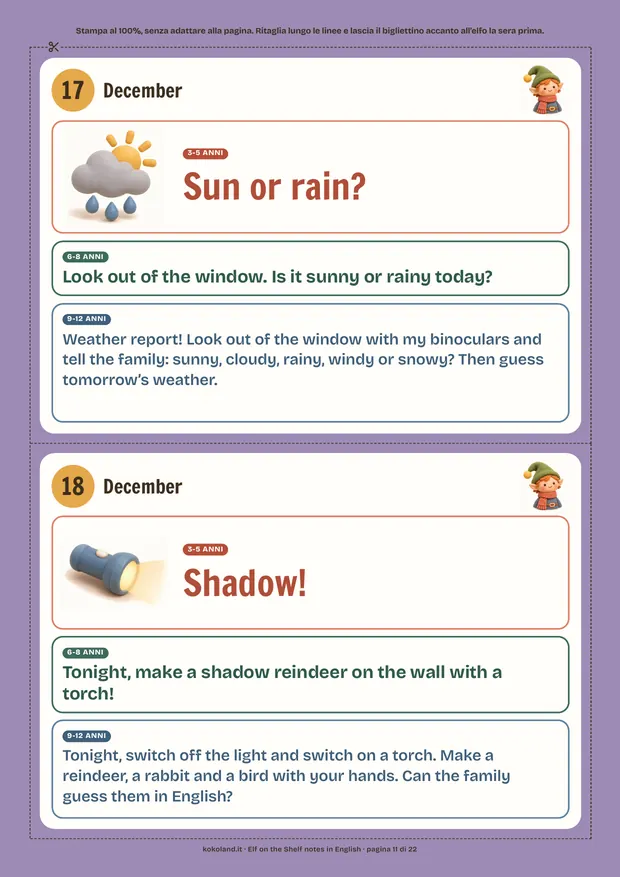
Page 11 of the PDF: the notes for 17 and 18 December at full width, each with three coloured lines for three ages; 19 and 20 December are on page 12
Download to print the notes for 17 to 20 December (PDF)

How to play

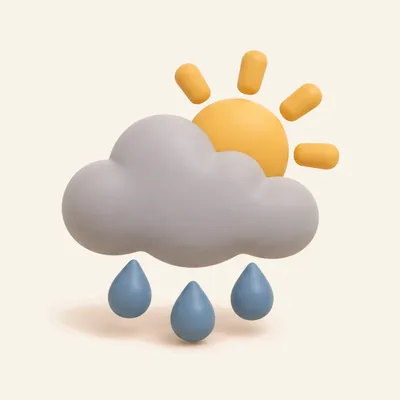
  1. The picture on the 17 December note: the sun behind a rain cloud
    Cardboard binoculars on the windowsill: today’s weather.
  2. The picture on the 18 December note: a torch switched on, with its beam
    A torch, never a candle: shadows on the wall.
  3. The picture on the 19 December note: a plate with a fork and a spoon
    The child lays the table and calls everyone.
  4. The picture on the 20 December note: a heart
    A kind sentence for everyone at home.
Sound box4 lines, with audio
The sentences on the notes
  1. 17 December: the weather report
  2. 18 December: the shadow show
  3. 19 December: calling everyone to dinner
  4. 20 December: a compliment for everyone
Easier or harder, by age
  • Ages 3-5They look outside and choose between two words, “Sun” or “Rain”; in the evening they make a reindeer shadow with the torch.
  • Ages 6-8They lay the table saying “spoon” and “fork”, and on 20 December they tell everyone “You’re kind!” or “You’re funny!”.
  • Ages 9-12They give the family the weather report and on 19 December they are the waiters: only the oldest handle the knives.

Why it works: talking about the weather and paying a compliment are the first real conversations, and here the audience is the family.

Two more sleeps! 21 to 24 December

  • 2 minutes each evening
  • the whole family

A present, a letter to the elf, a bag and Christmas Eve.

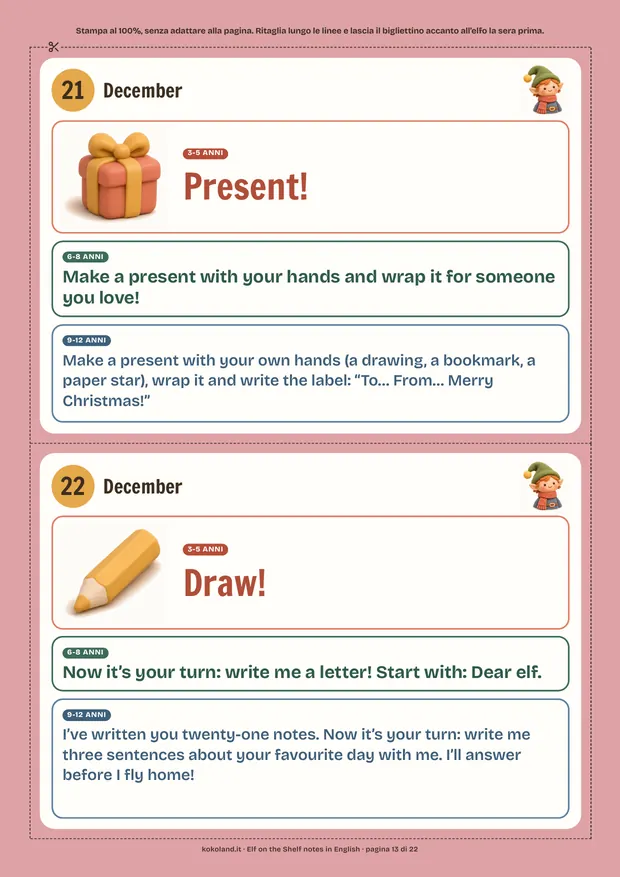
Page 13 of the PDF: the notes for 21 and 22 December at full width, each with three coloured lines for three ages; 23 and 24 December are on page 14
Download to print the notes for 21 to 24 December (PDF)

How to play

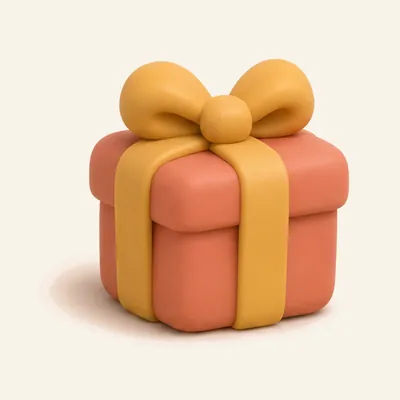
  1. The picture on the 21 December note: a present with a bow
    A handmade present, wrapped in newspaper.
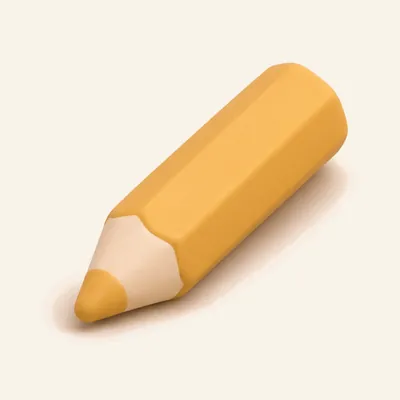
  2. The picture on the 22 December note: a yellow pencil
    This time the child writes to the elf.
  3. The picture on the 23 December note: a small green suitcase
    Pack a small box for the North Pole.
  4. The picture on the 24 December note: a carrot
    A carrot for the reindeer, then the elf leaves.
Sound box4 lines, with audio
The sentences on the notes
  1. 21 December: the handmade present
  2. 22 December: the child’s turn to write
  3. 23 December: packing for the North Pole
  4. 24 December: the last note
Easier or harder, by age
  • Ages 3-5They draw the present and the letter to the elf, and on Christmas Eve they put the carrot on the plate themselves: “Carrot!”.
  • Ages 6-8On the 22nd they start their letter with “Dear elf”, and on the 23rd they name in English what goes in the bag.
  • Ages 9-12They write three sentences about their favourite day with the elf; you copy the best one into the goodbye letter.

Why it works: in the last week the children write to the elf, and English becomes a way to say goodbye to someone they care about.

The printable elf notes, in PDF

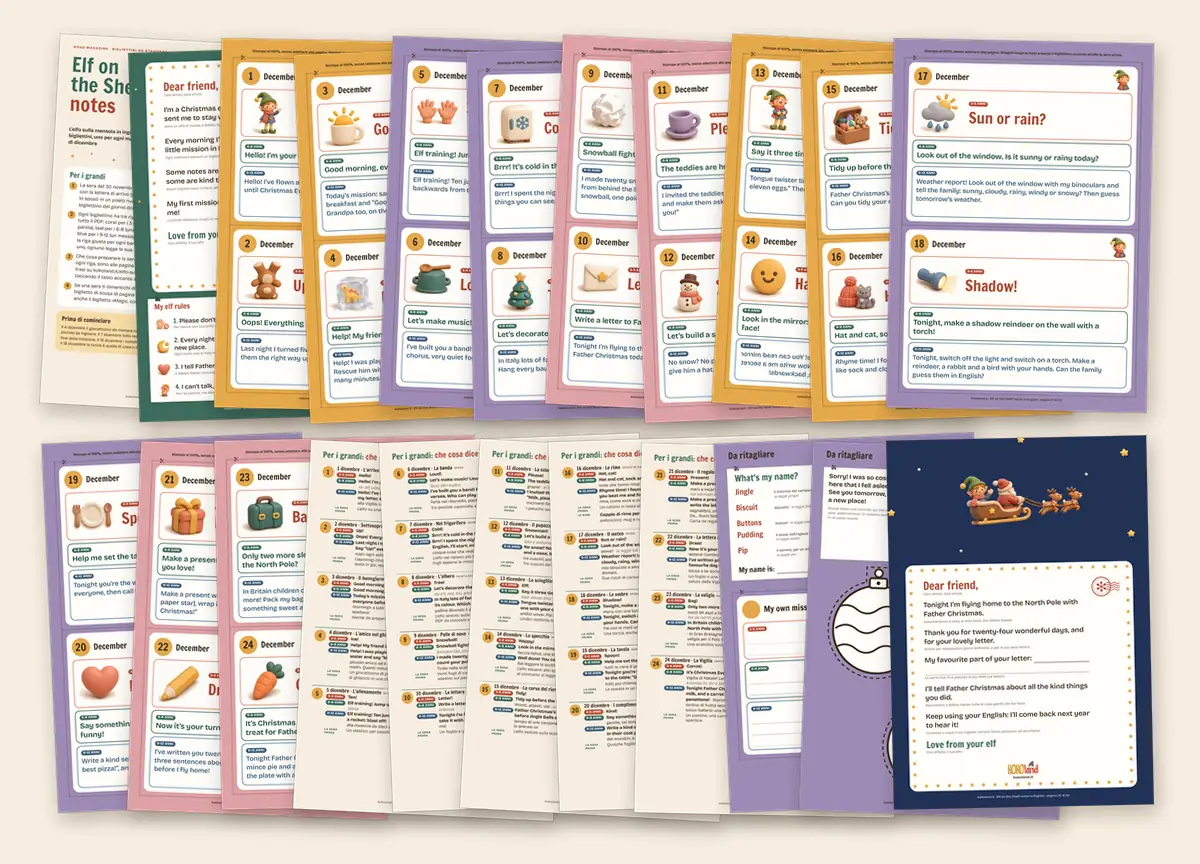
Twenty-two pages that also print well in black and white: notes, letters, rules, names, sorry notes and five pages for grown-ups, with translations, pronunciation and preparation. Print at 100%, without fitting to the page: the notes come two to a sheet, at full size.

The printable pages: the 24 elf notes in three lines, the arrival letter, the goodbye letter and the sorry note
Notes, letters and pages for grown-ups.

Download the elf’s notes and letters (PDF)

No elf at home? Try our printable advent calendar in English.

Frequently asked questions

What do you do with an Elf on the Shelf?

You move it every night, and each morning the children find a new note beside it.

When does the elf arrive and when does it leave?

It arrives on 1 December with a letter and leaves on Christmas Eve.

What happens if someone touches the elf?

It loses its magic: say “Magic, come back!” three times and sprinkle a pinch of sugar beside it.

What if you forget to move the elf?

Leave the sorry note from the PDF beside it: the elf fell asleep.

What should we call our elf?

A short name chosen by the children, such as Jingle or Snowflake.

What is the Elf on the Shelf called in Italian?

Elfo sulla mensola, a literal translation.

The game goes on in class

At KOKOland children learn English like this all year, in groups of up to 6 with native or bilingual teachers, in Martina Franca and Monopoli; at home, enrolled families carry on with KOKO Play, 20 minutes a day.

More ideas are in our 5 Christmas games in English and, for teachers, in our Christmas activities for primary school.

To see how English is played in a real classroom, join us at our free Demo Day.

Keep reading

Free Demo Day

Book a free Demo Day.

A real, free lesson in a KOKOland class of children the same age. You stay at the school and we explain the method.