

In brief
- Artificial intelligence translates in real time, but it doesn’t build relationships: to work, study and make friends across the world, people will still need to speak English themselves.
- By 2030, 39% of the core skills required by jobs will change. Alongside digital skills, it’s the deeply human ones that are growing fastest: creativity, flexibility, curiosity, leadership, the ability to communicate.
- English and the ability to communicate are trained together, and the early years are the best time to start: in small groups, through play, talking with real people.
It’s evening, in a kitchen in Monopoli. A nine-year-old girl is talking to a friend in Madrid on the computer, in English. She laughs, stops mid-sentence, searches for a word, finds it with her hands before she finds it with her voice. On the screen there’s a button that would translate everything in an instant. She doesn’t even look at it. She’s doing something no machine can do in her place: she’s building a friendship.
Many parents today ask themselves the same question: if artificial intelligence can translate any language in real time, does it still make sense for children to learn English? The data give a clear, and perhaps surprising, answer. In the age of AI, English doesn’t matter less. It matters more, together with everything a machine can’t do: listen, persuade, collaborate, make yourself understood.
With artificial intelligence, do children still need to learn English?
Yes, for a simple reason: translating isn’t communicating. An automatic translator helps you read a menu or make sense of a document. But a real conversation is made of timing, banter, glances, trust. Anyone speaking through an app always arrives a second late, and that second matters in a job interview, in a meeting, in a friendship.
There’s also a fact that’s often forgotten. According to Ethnologue estimates, English is spoken by around 1.5 billion people, of whom about 1.1 billion are not native speakers. English is the language used by an Italian engineer and an Indian colleague, a student from Puglia and her Polish Erasmus classmate. It’s the common language of people from different places: those who speak it walk into the room; those who don’t are left outside, reading the subtitles.
What today’s children will need for the world of work
Children who are 5 years old today will enter the world of work around 2040. No one knows exactly which jobs they’ll do, but the trends are already clear. The World Economic Forum’s Future of Jobs Report 2025, built on responses from more than a thousand major companies, estimates that by 2030, 39% of the core skills required of workers will change, with 170 million new jobs created and 92 million disappearing.
The fastest-growing skills are those tied to artificial intelligence and data. Right behind them, though, come the deeply human ones: creative thinking, resilience and flexibility, curiosity and lifelong learning, leadership and the ability to influence others. In 2025, LinkedIn also placed communication, relationship-building, conflict management and adaptability alongside AI literacy.
It’s the paradox of our times: the better machines get at repetitive tasks, the more valuable what’s left to people becomes. Explaining an idea, understanding who you’re talking to, working as a team with colleagues from other countries. And more and more often, all of this happens in English.
The skills no machine can have instead of a child
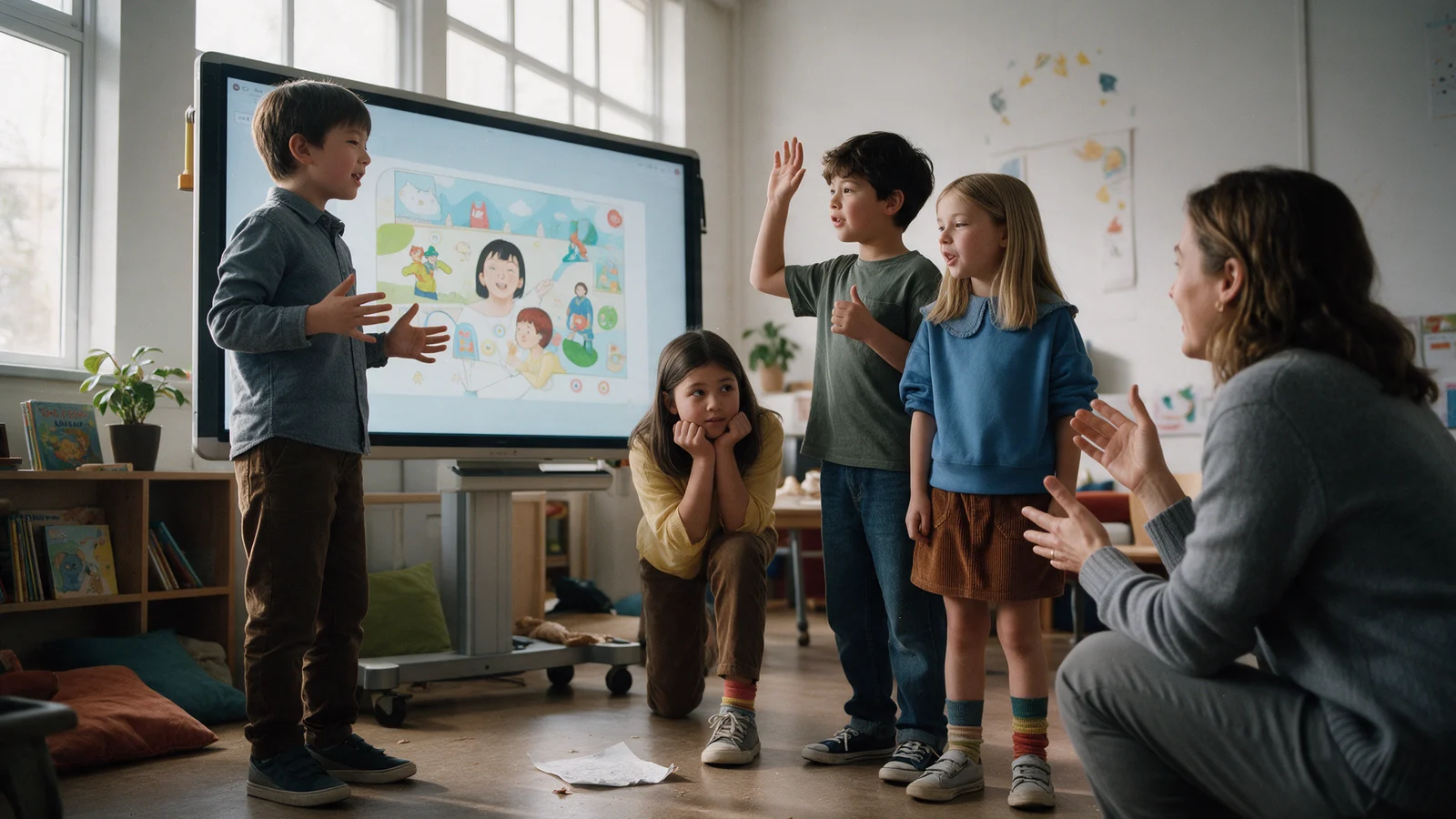
We call them soft skills, but there’s little that’s soft about them: they’re the abilities that make the difference between those who follow and those who lead. For children, they have very concrete names:
- Speaking up: raising a hand, saying what you think even when you’re not sure.
- Really listening: waiting your turn, understanding what the other person means, replying on point.
- Collaborating: building something together, sharing tasks, helping whoever is struggling.
- Handling mistakes: getting a word wrong, laughing, trying again. Without freezing up.
- Making yourself understood by someone different from you: finding another way to say something when the first one doesn’t work.
None of these is learned from a tutorial. They’re learned by doing, with other people, a little at a time, over years. And here’s the best news for families: a good English course is the perfect training ground for all five.
Why English and the ability to communicate are learned together
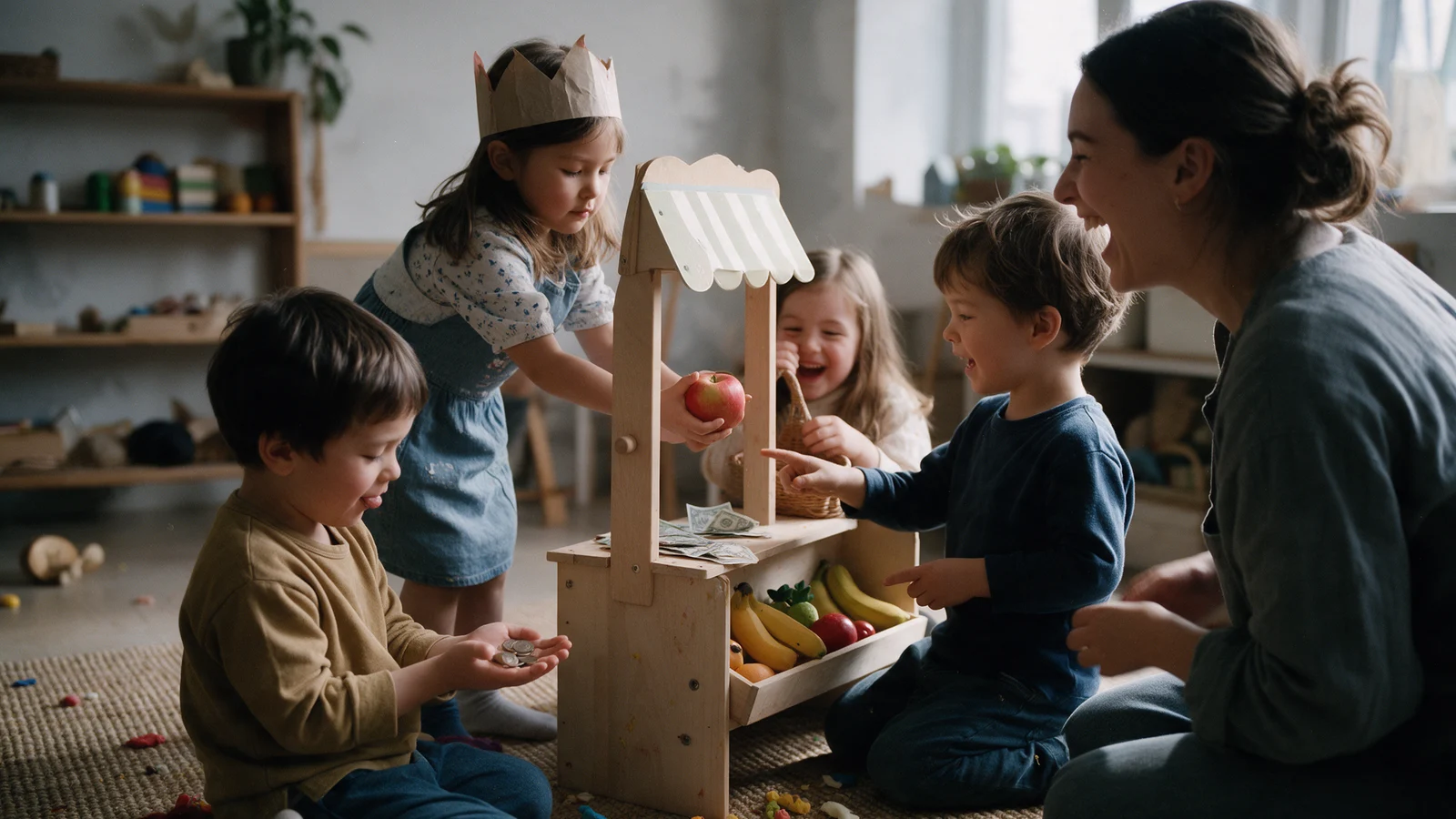
When a child learns a new language in a small group, they do exactly what they’ll do as an adult in an international meeting: search for words, watch reactions, rephrase, ask, negotiate meaning. Every time they tell a story in English in front of their classmates, they’re practising public speaking. Every role-play game, at the pretend supermarket or restaurant, is a small negotiation.
This is why the early years are so precious. Young children learn the sounds of a language with an ease that fades in adults, and above all, they’re not yet afraid of getting things wrong. A 4-year-old who laughs while trying out a new word is, in all likelihood, going to be a 15-year-old who isn’t afraid to speak up in a debate. Confidence in speaking is built early, and it stays.
Italy starts behind: one more reason not to wait
The EF English Proficiency Index 2025, based on 2.2 million tests worldwide, gives Italy 513 points out of 700: the lowest score in the European Union. Germany, for comparison, scores 615. This means that many Italian teenagers studying English at school today will enter the world of work at a disadvantage compared with the European peers they’ll be competing alongside.
The next snapshot will come from the OECD: with PISA 2025, for the first time, 15-year-olds from 21 countries were also assessed in English as a foreign language, in reading, listening and speaking. Results are expected in 2027. Whatever they show, one thing is already clear: children who start early and keep at it consistently reach adolescence with an enormous advantage.
What families can do, age by age
- 1 and 2 years old: songs, nursery rhymes, small routines in English shared with mum or dad. The goal is for English to become a familiar sound of home.
- From 3 to 6 years old: play, movement, stories and plenty of friends to talk to. It’s the age when children fall in love with English and discover that talking to others is fun.
- From 7 to 10 years old: reading, writing, telling stories. It’s the moment to speak up in front of the group and, for those who want to, to try the first Cambridge exams for children.
- From 11 to 13 years old: conversing, working in teams, talking with peers from other countries. English stops being a school subject and becomes a way of getting to know the world.
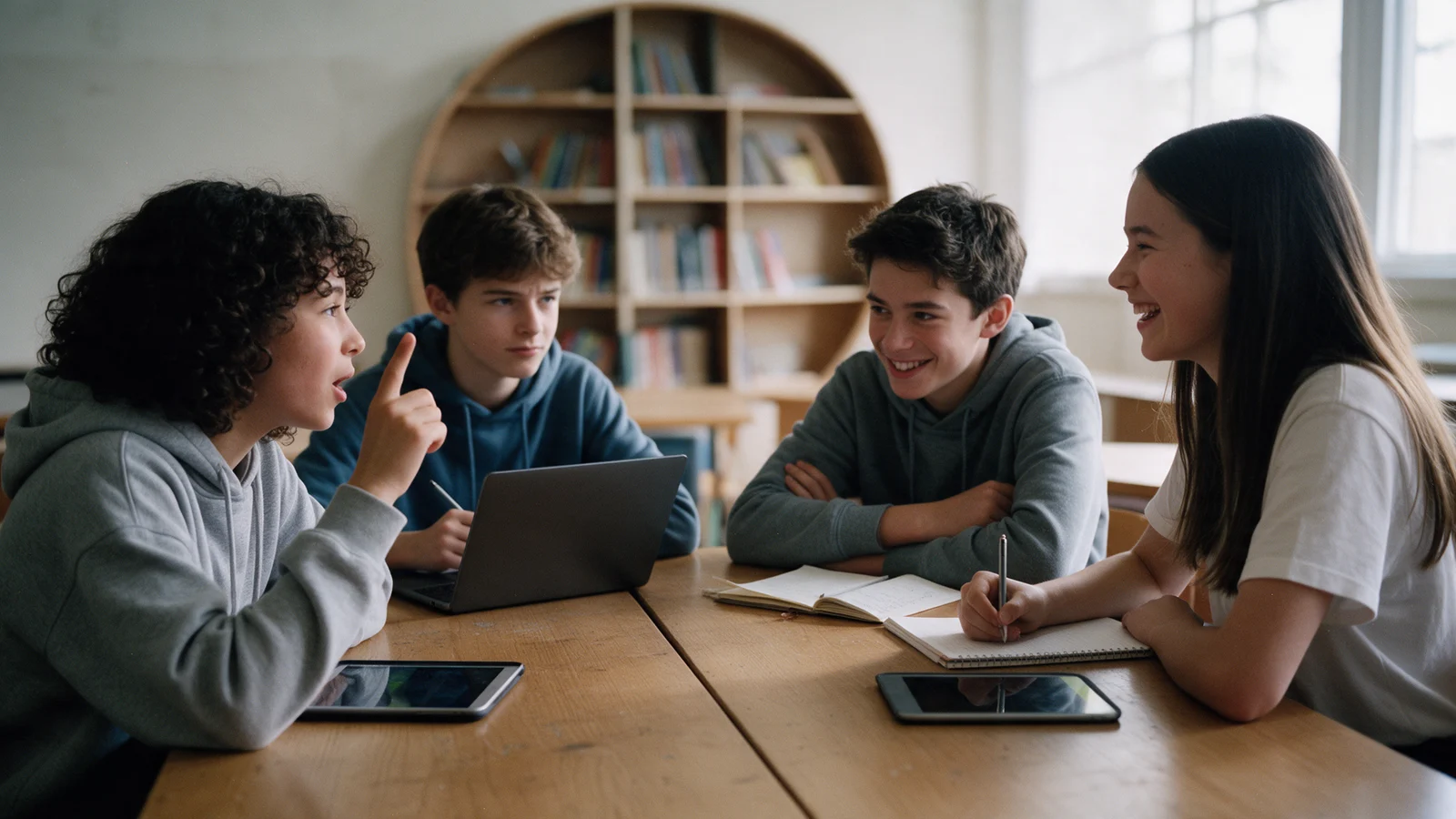
- From 14 to 18 years old: arguing a point, presenting, debating. This is the English that will be needed for university, travel and a first job.
And artificial intelligence? It can be a great training partner: a voice assistant to practise the week’s words with, an app to play with pronunciation. Our advice is to use it together with the children, as one more game, and never instead of real conversations, which remain the heart of it all.
How we work on English and communication at KOKOland
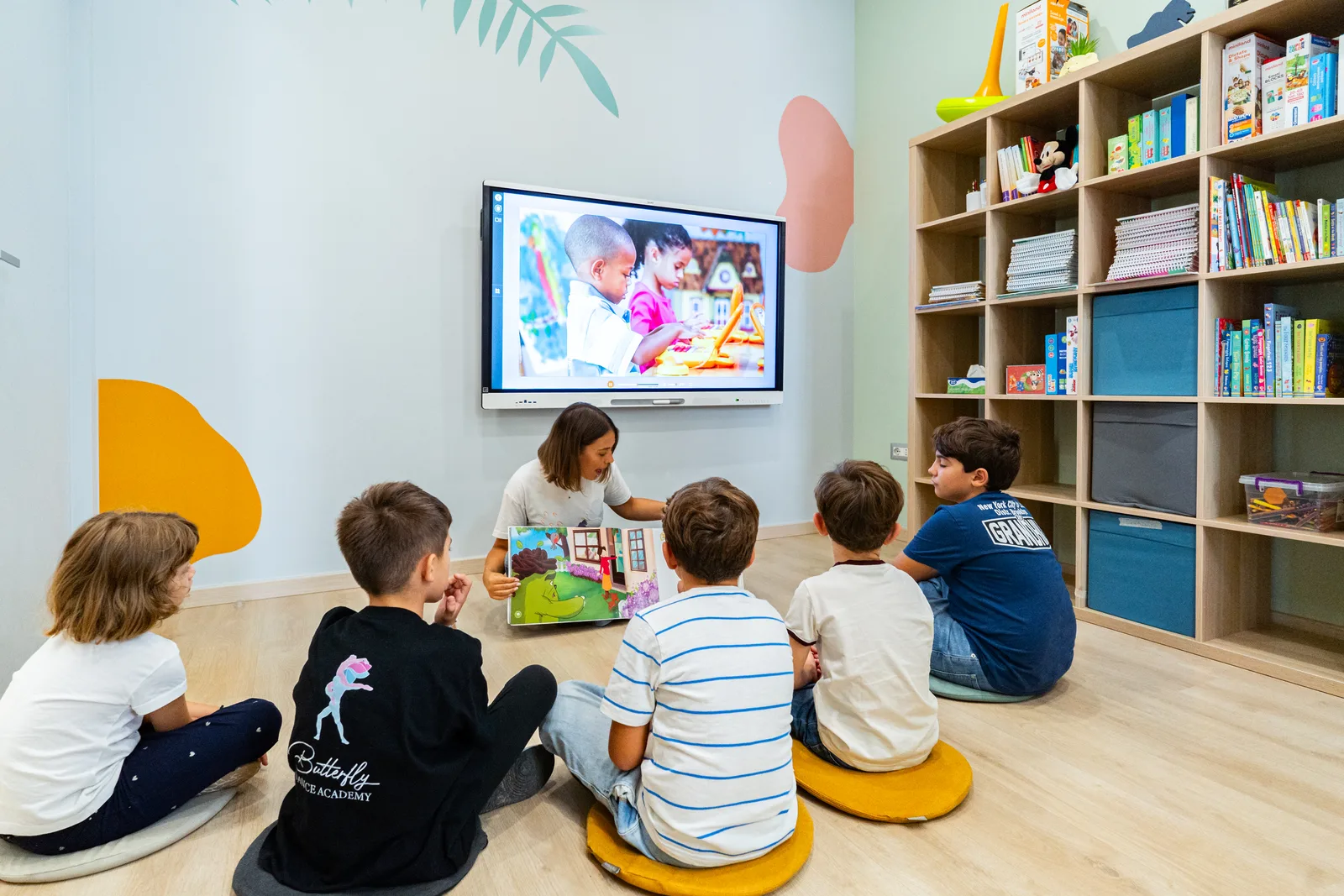
At KOKOland, English and the ability to communicate grow together by design. Dynamic learning sessions are held in groups of up to 6 children of the same age, so everyone speaks every time, not just now and then. From ages 3 to 10, the second session of the week is the Creative Lab, where English is used for cooking, building, acting and collaborating with children of different ages. From age 11, the week includes two weekly 60-minute sessions (120 minutes): LANGUAGE LAB — building the language and SPEAK UP — using the language.
The pathway is divided into levels, one for every age, from 1 to 18, and every year has its own goal: from the first “hello” in mum or dad’s arms, all the way to the English needed for university and work. To find out more, read also what age to start English and how many hours of English a week a child needs.
Frequently asked questions
With artificial intelligence, do children still need to learn English?
Yes. Automatic translators help you understand a text or a sign, but they don’t replace the ability to hold a conversation, persuade, make friends and work as a team with people from other countries. English is the common language of around 1.5 billion people, most of them non-native speakers: anyone who speaks it can step straight into those conversations, with no filter in between.
Which soft skills will today’s children need in the world of work?
According to the World Economic Forum’s Future of Jobs Report 2025, alongside digital skills, the fastest-growing ones will be creative thinking, resilience and flexibility, curiosity and a taste for lifelong learning, and leadership and influence. In 2025, LinkedIn also placed communication, relationship-building, conflict management and adaptability among the most in-demand skills.
What’s the best age to start English?
As early as possible, in ways suited to their age. In the early years, children learn the sounds of a new language with an ease that fades later on, and starting early gives them time to reach adolescence with fluent English. At KOKOland, the pathway starts at age 1, with a parent in the classroom, and runs all the way to 18.
Can artificial intelligence help children learn English?
Yes, if it’s extra practice and not a shortcut. A voice assistant or an app can help children repeat words, correct pronunciation, and play games. But the decisive part stays human: talking with real people, in a group, with someone who listens and responds. That’s where children also learn to communicate.
How can you help a shy child speak English?
With small groups, plenty of play, and no rush. In a group of a few peers, every child has room to try, get it wrong, and try again in front of people they know. When English becomes an activity they enjoy and feel capable in, shyness gives way to the wish to speak up.
Come and see it for yourselves
The best way to understand how children learn to speak English, and to speak with others, is to watch them in action. At the free Demo Day children take part in an English activity in a small group their own age, and parents get to know our method, spaces and teaching team.
Sources
- World Economic Forum, The Future of Jobs Report 2025 (Skills outlook)
- World Economic Forum, press release: 78 million new job opportunities by 2030
- Forbes (2025), LinkedIn Reveals The Most In-Demand Skills On The Rise For 2025
- EF English Proficiency Index 2025: Italy
- The Local Italy (26/11/2025), Italy drops to bottom of EU ranking for English language skills
- Visual Capitalist, based on Ethnologue data (2025), The World’s Most Spoken Languages
- OECD, PISA 2025 Foreign Language Assessment
Keep reading


Free Demo Day
Try a free Demo Day.
A dynamic learning activity in English, in a small group of children their own age, with the teaching team.