
Study holiday abroad: what age to go and how to tell if a child is ready
13 October 202611 min read
In brief
- Many study holidays abroad accept teenagers from 10–11, with an Italian group leader; before that age, an English summer works better close to home, with a day camp.
- Readiness matters more than age: sleeping away from home without difficulty, coping with small everyday things, really wanting to go and knowing how to ask for help in English.
- Below you will find a 10-question checklist, the documents for the UK, the research advice on homesickness and a plan for preparing their English in the months before departure.
“What age can they go?” is the question parents ask us most often when we talk about summer. The honest answer is that there is no right age for everyone: there is a minimum age, set by the organisers, and there is the age at which this boy or girl is ready. Agencies sell departures; as an English school, we would rather give you a way of choosing, and a few honest signs that it is better to wait a year.
What age can a child go on a study holiday abroad?
As a rule, many college programmes start from 10–11, always with a group leader travelling with the group, and run up to 17–18. For younger children an English summer makes sense, but in a different form. Here is how we see it, age group by age group.
| Age | Best-suited format | Why |
|---|---|---|
| 4–9 years | Day camp in English, close to home | Immersion in the language without a night away from home: they come back in the evening, tell you about it, and go again the next day |
| 10–13 years | First study holiday in a college, with a group and a group leader from their own school | Everything is organised and protected: lessons, activities, meals, outings. Independence grows inside a safe frame |
| 14–17 years | College or host family, even for several weeks | More freedom and more chances to talk with young people from other countries; good independence is needed |
The ages are only a guide: a very independent 10-year-old can be readier than a 13-year-old. That is exactly why, more than age, it is worth looking at readiness.

How can you tell if a child is ready for a study holiday?
We have gathered 10 questions to ask yourself calmly, perhaps together with the other parent. It is not an exam: it is a way of looking at the young person in everyday life.
- Have they already slept away from home, at their grandparents’, at a friend’s, on a school trip, without ringing you in tears at midnight?
- Do they want it themselves? The wish has to come from the young person, not only from you.
- Do they pack for themselves: school bag, clothes, sports kit?
- Do they look after themselves: shower, teeth, changing clothes, without constant reminders?
- Do they ask for help from an adult they do not know, for example a shop assistant or a new coach?
- Do they eat different things from the usual, or at least taste them?
- Can they cope with a full day of activities without collapsing from tiredness or bad temper?
- Do they follow the rules of a group, even when they do not like them?
- Can they manage their phone with agreed rules, without spending the day on it?
- In English, can they introduce themselves, ask questions and say they have not understood, even with simple sentences?
How to read the answers. With 8 yeses or more, they are probably ready. Between 5 and 7, they are ready with a little preparation: choose a very well-organised format and work on the weak points in the months before. Below 5, it is better to wait a year, or choose a day camp. Questions 1, 2 and 5 weigh more than the others: if one of these is a firm no, it is worth waiting.
Download the “Are they ready for a study holiday?” checklist (PDF to print)Signs that it is better to wait
- The holiday is your idea, and they are just putting up with it.
- They have recently had a big change: a house move, a new school, a difficult time in the family.
- Even one night away from home still causes strong anxiety.
- They see the departure as a punishment or as a “you need to improve your English”.
Waiting a year is not a failure: it is often the choice that turns a first study holiday into a wonderful memory instead of a tiring one.
Is a minimum level of English needed?
Usually not: many colleges give a placement test on the first day and form classes by level. But arriving with the basics changes everything. Someone who can say a few essential sentences feels capable straight away, dares to talk to the other international students, and comes back with much more fluent English. Someone who cannot risks spending two weeks with the other Italians.
These are the 10 “survival” phrases we recommend having in your pocket before leaving. Listen to them together.
- : hello, I’m Marco, I’m from Italy.
- : excuse me, can you help me?
- : sorry, I haven’t understood.
- : can you repeat that, please?
- : can you speak more slowly?
- : how do you say “zaino” (the Italian word for backpack) in English?
- : where is the toilet, please?
- : I don’t feel well.
- : I’m allergic to nuts (adapt it to the allergy in question).
- : what time shall we meet?
In our Junior and Teens classes there is a workshop, SPEAK UP, designed for exactly this: using English by speaking it, even in international calls with peers from other countries. Once a teenager has already spoken English with a stranger on the other side of the world, the first day at college is much less frightening.
What if they feel homesick?
It is normal, and it is good to say so beforehand. A review published in Pediatrics by the American Academy of Pediatrics (Thurber and Walton, 2007) reports that about 90% of children and teenagers who go to summer camp feel a little homesick, and that for a minority it becomes real distress. The good news is that it can be prevented, above all through what parents do before departure. Here is the authors’ main advice.
- Involve them in the choice: feeling part of the decision gives a sense of control and confidence.
- Do a trial run: two or three nights at their grandparents’ or with relatives, a few weeks earlier.
- Talk about it as something normal: “You might miss home, it happens to almost everyone, and it passes”.
- Use a calendar to show how long the trip lasts.
- Avoid saying you will miss them terribly, or showing that you are anxious: they will worry about you instead of enjoying the trip.
- Do not make a “pick-up pact” (“if you don’t like it, I’ll come and get you”): according to the authors it communicates a lack of trust and prepares them to experience the holiday badly.
On the phone, a practical tip: agree a fixed time to talk beforehand, for example a short call every evening. Constant calls keep a young person’s mind at home.
What documents are needed for a study holiday in the UK?
Since Brexit the rules have changed, and they should always be checked on the official sites before booking.
- Passport: to enter the United Kingdom, citizens of the European Union need a passport; the identity card is no longer enough. It is best to apply for it months in advance.
- ETA (Electronic Travel Authorisation): the British electronic travel authorisation is needed by every traveller, including children and babies, and is requested online on the British government website; a parent can apply on behalf of a minor.
- Accompaniment declaration: for minors under 14 travelling without at least one parent, the Italian State Police provide for a declaration signed by the parents, stating who the young person is entrusted to. It is requested at the Questura (the local police headquarters) or online.
- Health cover: check with the organiser which insurance is included, and bring the health card.
When is the best time to book?
Study holidays take place in July and August, but they are chosen much earlier: places on the best programmes fill up between November and March. If you are a public-sector employee or pensioner, keep an eye on the Estate INPSieme calls (the summer programmes of INPS, Italy’s social security institute), which in recent years have opened applications between January and February; the one for study abroad is reserved for secondary school students.
Here is a realistic calendar for preparing the English too.
| When | What to do |
|---|---|
| November–February | Choose the format, talk about it together, book, apply for the passport |
| March–May | Train spoken English: the 10 phrases, a TV series in English with English subtitles, short conversations |
| May–June | The “dress rehearsal”: two or three nights away from home, the suitcase packed alone, the ETA requested |
| The last week | Agree the call times, read the programme together again, say goodbye with confidence |

KOKOland study holidays and camps
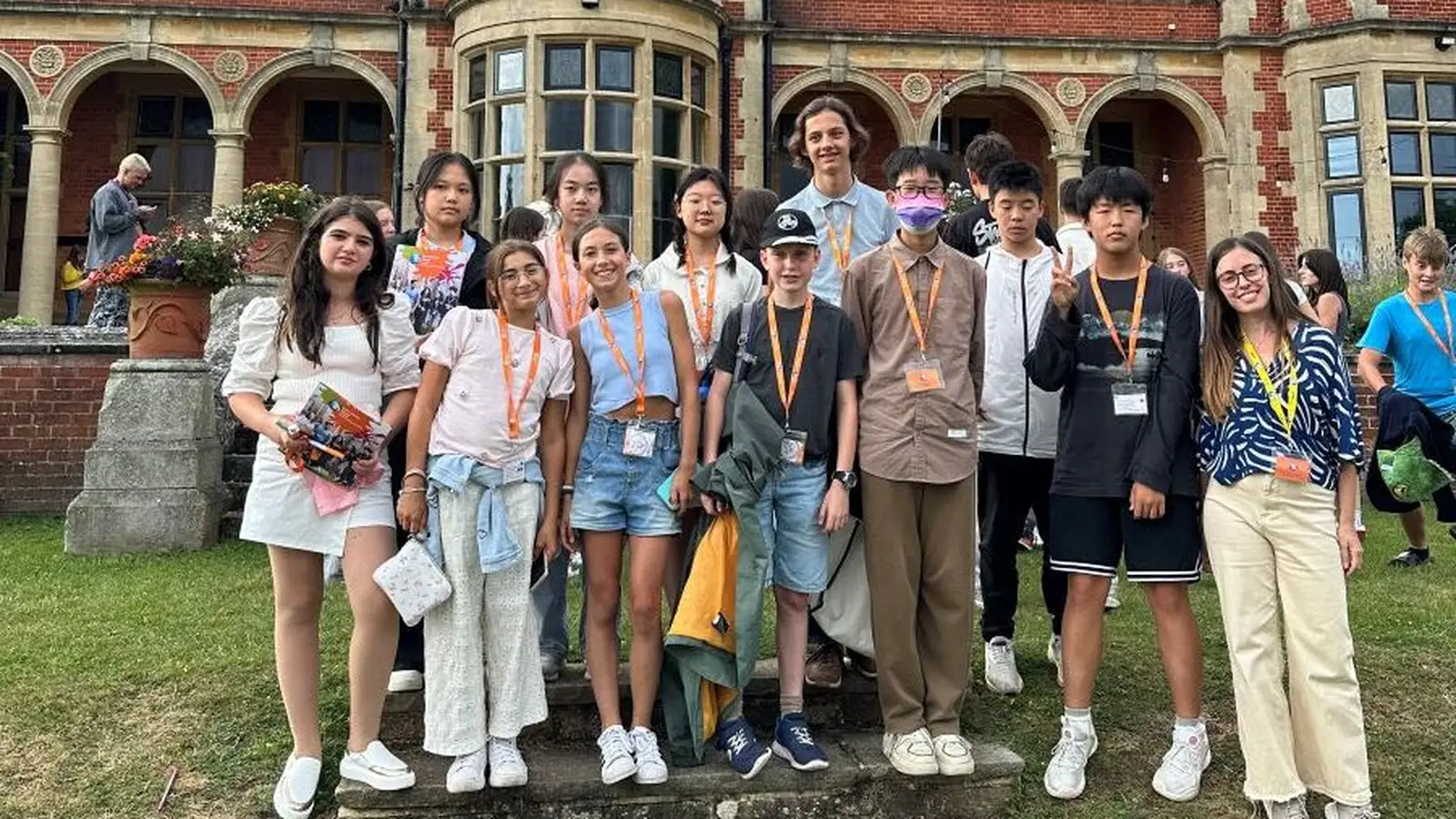
For young people aged 10 to 18 we organise study holidays in England: two weeks in a carefully chosen college, accompanied by the KOKOland team, with English in class, sport, art, drama and cooking workshops, visits and excursions, alongside students from all over the world. In summer 2026 the group went to Oxford, as guests of St Edward’s School. For Oxford 2027 the dates and programme are still being defined, and the waiting list is open: those who join it receive all the information first.
For children aged 4 to 12 there is KokoCamp, our summer camp in English at the Casale dei Pini in Martina Franca: the whole day is spent outdoors, with horse riding, sport and workshops, and in the evening they go home. It is the ideal first step for those who are still too young to leave, and for those who want a whole summer of English close to home. Registrations for summer 2027 open in January.
During the year, the English that goes in the suitcase is built at school and at home: with the 120 weekly minutes of LANGUAGE LAB and SPEAK UP for Junior and Teens and, every day, with KOKO Play, the app for learning English at home, over 4 hours of English a week. If you do not know what level they are starting from, our online English test gives you a first idea in about 20 minutes.
Frequently asked questions
What age can a child go on a study holiday abroad?
Many college programmes accept young people from 10–11, always with a group leader who travels with the group; some start even earlier. KOKOland study holidays in England are for young people aged 10 to 18. For younger children a day camp in English is more suitable, such as KokoCamp, for ages 4 to 12.
How can you tell if a child is ready for a study holiday?
Readiness matters more than age: having already slept away from home without difficulty, really wanting to go, coping with small everyday things, asking an unknown adult for help and being able to introduce themselves in English. If what is mostly missing is the wish and the habit of being away from home, it is better to wait a year.
Is a minimum level of English needed for a study holiday?
Usually not: many colleges give a placement test and form classes by level. Arriving with a few essential phrases, however, helps enormously to feel capable and to talk to the international students from the very first day.
What documents does a minor need to travel to the United Kingdom?
A passport is needed, because the identity card is no longer accepted, and the ETA, the British electronic travel authorisation, which is also required for children. For minors under 14 travelling without at least one parent, the accompaniment declaration from the Italian State Police is needed. Always check the up-to-date rules on the official sites.
What should you do if they feel homesick during the study holiday?
It is normal and almost always passes. Preparing beforehand helps: talk about it as something that happens to everyone, do a trial run of a few nights away from home, agree a fixed time for calls and avoid the “I’ll come and get you if you don’t like it” pact. During the trip, the group leaders are the first point of reference.
When should you book a study holiday for the summer?
Between November and March, when places on the best programmes are still available. For the KOKOland study holiday in Oxford 2027 the waiting list is already open; for KokoCamp 2027 registrations open in January.
Thinking about next summer?
If you are considering a first study holiday, or a summer of English close to home, send us a request: we will tell you the dates and programme of Oxford 2027 and of KokoCamp 2027 as soon as they are ready, and we will help you work out which format is right for their age.
Sources
Keep reading


Free Demo Day
Book a free Demo Day.
A real, free lesson in a KOKOland class of children the same age. You stay at the school and we explain the method.